


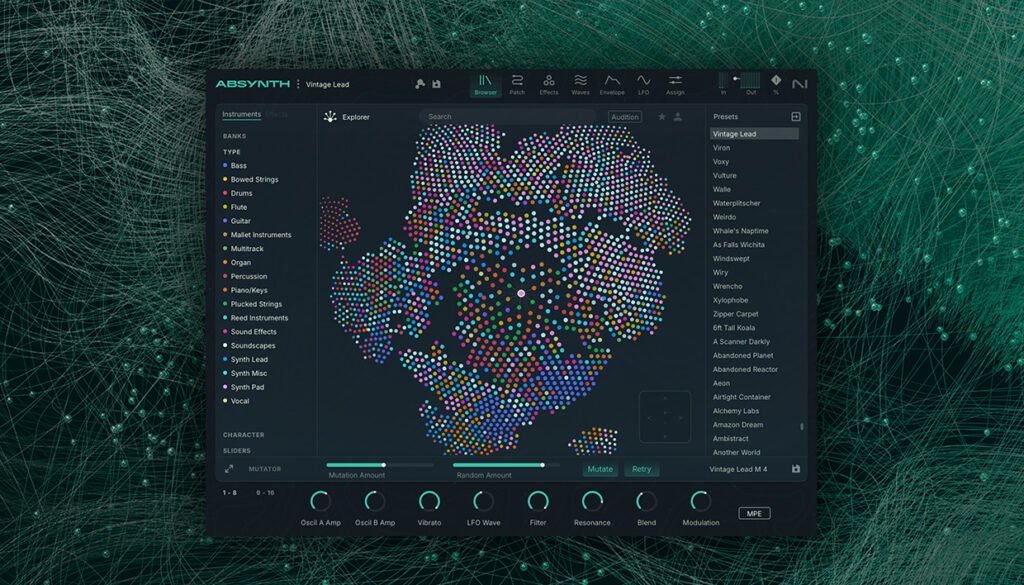
2. A navigable sound space
The Preset Explorer introduces a spatial approach to browsing. Instead of presenting presets as a static list, it organizes them according to how they actually sound. Using AI analysis, each patch is positioned based on its “timbral DNA,” capturing perceptual qualities such as brightness, sustain, noisiness, alongside subtler traits.
Brian and I shared the same conviction: when musical interaction is reduced to prompts and descriptions, something essential is lost—the embodied feedback loop between gesture, sound, and intuition. The Preset Explorer was designed to keep that loop intact.
“The map effectively removes language from the search process. I feel like music and language are usually different parts of the mind, and as soon as language gets too involved it tends to dominate. It feels irritating and intrusive to reduce the subtle feelings and sensations of sound down to a string of words. I think that’s why I never liked text/tag-based browsers.” — Brian Clevinger, creator of Absynth
What emerges is a navigable sound space in which related textures naturally sit near one another. Similar sounds cluster; contrasts become visible; transitions feel fluid rather than categorical. In this environment, browsing is no longer about locating a file by name. It becomes an act of exploration: moving through timbral relationships, discovering connections, and letting sound itself guide the journey.