


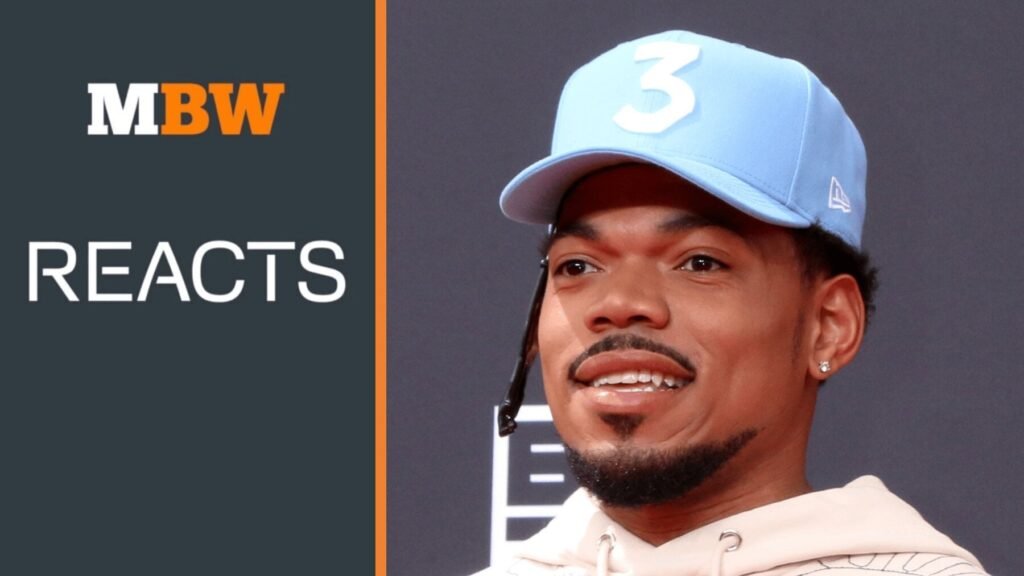
The civil trial between Chancelor Bennett (Chance the Rapper) and his former manager Patrick Corcoran is now well underway in the Circuit Court of Cook County, Illinois — a case MBW has been covering since 2020.


At the heart of the dispute is an oral agreement that Corcoran says he struck with Bennett in 2013, entitling him to 15% of net profits across all income streams and including a three-year post-termination sunset clause.
Corcoran is seeking $3.8 million in unpaid commissions. Bennett does not dispute the 15% arrangement but denies ever agreeing to a sunset clause, and has countersued, alleging that Corcoran breached his fiduciary duties and leveraged the Chance brand for personal enrichment.
Proceedings kicked off last week with Corcoran taking the stand first. His testimony ran across several days. Bennett then testified on Tuesday (March 10) under cross-examination by Corcoran’s attorney, Robert Sweeney. Bennett’s own counsel, Precious Jacobs-Perry, began questioning him briefly at the end of the day. The trial is scheduled to last approximately two weeks.
MBW has obtained transcripts of the testimony. Here are seven key moments from the first week.
1) CORCORAN (pictured) TESTIFIED THAT CHANCE REFUSED TO SIGN WRITTEN AGREEMENTS WITH VIRTUALLY EVERY PROFESSIONAL AROUND HIM
The absence of a written management contract is the single most contested issue in this case. Bennett’s side says the lack of documentation proves no sunset clause existed; Corcoran’s team used his testimony to reframe that gap as a pattern of behavior.
Under direct examination, Corcoran walked through a catalog of alleged unsigned agreements — claiming Chance never signed with his music attorney Peter Lewit, his business manager Bruce Kolbrenner, booking agency CAA, agent Cara Lewis after she left CAA, or assistant Colleen Mares.
The most vivid example: at Lollapalooza in 2017, C3 Presents booker Houston Powell allegedly “cornered” Corcoran and said if Chance “doesn’t sign this agreement, I’m not letting him get on the stage.” Even then, Corcoran testified, Chance directed someone else to sign on his behalf.
Asked why Chance was averse to signing, Corcoran replied: “Given this experience that I’m going through right now, perhaps it could be a way to obfuscate some of his commitments to his partners and to people.”
2) CORCORAN CLAIMS HE LOST OVER $350,000 RUNNING CHANCE’S MERCHANDISE OPERATION — AND SUBSIDIZED THE LOSSES HIMSELF
Corcoran testified that he built Chance’s merchandise business from scratch — beginning with personally packing orders in his apartment — and financed the entire infrastructure through his company Haight Brand, investing $1.1 million and losing more than $350,000 over the lifecycle of the partnership.
He told the court he chose not to update Chance’s legacy pricing even as costs rose, preferring to absorb losses and offset them through commissions from other clients including Daniel Caesar, Kygo, and Zedd. “I’m Chance’s partner. I just wanted him to have the best of everything,” he testified.
Corcoran also addressed the vendor commission issue central to Bennett’s countersuit, testifying that overpayments from Rowboat Creative ($4,000) and Culture Studio ($22,000) were either applied to other clients or returned. Bennett’s side characterizes these not as errors but as evidence Corcoran was “trading on Mr. Bennett’s good name for his own benefit.”
3) CORCORAN CLAIMS HE’S OWED COMMISSIONS ON DEALS HE SET UP BEFORE BEING FIRED — INCLUDING NETFLIX, BEN & JERRY’S AND A LIVE NATION TOUR
Beyond the sunset dispute, Corcoran told the jury — according to Law360‘s reporting from the Friday session — that he personally arranged three opportunities before being terminated in April 2020 — a role on Netflix’s Rhythm + Flow, a Ben & Jerry’s partnership, and a Live Nation tour — which Bennett then executed without paying his former manager.
“I sacrificed everything” to be a part of Bennett’s “amazing” career, Corcoran testified. “I just want… the money I’m fairly owed and what we agreed to.”
Despite his criticisms of The Big Day’s rollout, Corcoran said he never lost faith in Bennett: “I’ve never wavered, and I still don’t waver to this day on Chance’s talent.” Asked by Bennett’s counsel how he could claim to love someone he was suing, Corcoran — as reported by Law360 — replied: “Love can take many forms… I daydream about this all being behind us one day and maybe being friends again.”
The Ben & Jerry’s deal was not mentioned in Corcoran’s original 2020 complaint, representing a notable expansion of the financial claim at trial.
4) BENNETT TESTIFIED THAT CORCORAN TRIED TO CUT HIMSELF INTO A UNITEDMASTERS DEAL
The most emotionally charged portion of Bennett’s testimony concerned a proposed investment in UnitedMasters, the music distribution company founded by record executive Steve Stoute that was geared toward independent artists. Bennett testified that Stoute, a personal contact he had introduced to the Chicago Public Schools fundraising effort, invited him to take an equity stake in the company and serve as its public face — a deal he said was valued at $10 million.
Bennett said he confronted Corcoran in either late 2017 or early 2018 after learning from an “outside person” that his manager had gone behind his back to request his own equity stake in the deal. According to Bennett, Corcoran broke down in tears and admitted it, offering two justifications: he knew he wouldn’t get paid from the UnitedMasters deal, and the company would compete directly with businesses he owned separately.
Bennett testified that he challenged Corcoran on why he couldn’t own something independently — “I don’t have any part of your company” — and that Corcoran responded by offering to “give” the rapper a percentage of his own companies. But when the written agreement arrived, Bennett said it included a $2 million investment requirement, provisions addressing his name, image and likeness, and language around final decision-making power.
“It felt [like when] you catch somebody doing something, and they swear they’re never going to do it again, and they offer you something to rehabilitate the relationship, and then you look at what they offer you and it’s like, ‘This doesn’t rehabilitate the relationship. This feels sneaky, too,’” Bennett testified.
Asked whether he should have fired Corcoran at that point, Bennett said: “I probably should have fired him.” But he added: “I can’t guarantee that he wouldn’t have lied and said that he had a sunset in that situation, too.”
5) BENNETT TESTIFIED THAT THE SUNSET CLAUSE WAS NEVER RAISED UNTIL CORCORAN FILED HIS LAWSUIT — AND THAT THE TWO WERE “ESTRANGED” FOR MONTHS BEFORE THE FORMAL TERMINATION
Bennett was direct in his testimony about when the sunset clause first entered the dispute: not during the 2013 conversation in Corcoran’s apartment, not in 2015 when Corcoran says he considered investing more in his own business, and not in 2019 when the relationship began to deteriorate — but only after Corcoran filed suit in 2020.
“There was no mention of a sunset at all until he filed the court case,” Bennett testified.
He described the oral agreement itself as a brief, informal exchange — “we both know that the only thing we discussed was how I was going to pay him” — and said it addressed no provisions around termination, post-term payments, or the handling of investments. Bennett pointed to Corcoran’s own memorialization email to lawyers, in which the manager wrote that compensation on investments would be “ad hoc” — meaning, Bennett testified, “they can get decided as they go.”
Bennett also testified that while the formal termination letter was sent on April 27, 2020, the working relationship had effectively ended months earlier. The two had exchanged what Bennett described as “kind of mean letters” in late 2019 and were “basically estranged” through early 2020, during which time Corcoran continued texting Bennett about opportunities as though he still worked for him.
Bennett said the termination letter was a defensive measure: “I literally believe that I have to do this because I think this dude is going to try and file a lawsuit against me and I need to have an end date.”
6) BENNETT ACKNOWLEDGED CANCELLING MULTIPLE TOURS — INCLUDING A EUROPEAN RUN TWO WEEKS AFTER WINNING THREE GRAMMYS — ON WHICH CORCORAN STOOD TO EARN SIGNIFICANT COMMISSIONS
Sweeney walked Bennett through a pattern of tour cancellations — each costing Corcoran potential commission income, none prompting him to demand payment.
The most striking: a full European tour for August 2017, cancelled two weeks after Bennett won three Grammys. A text exchange showed Bennett telling Corcoran: “Hey, I want to cancel the Europe tour in August.” The reason: “Nah. I just got a strong feeling about it.” Corcoran’s reply: “I feel you. I will make sure it’s all canceled and figure it out properly… Here for you and love you.”
Bennett testified he didn’t remember the cancellation until Sweeney raised it in court. Sweeney also covered the 2019 no-show at Australia’s Splendour in the Grass — where Bennett was replaced as closing-night headliner by local act Hilltop Hoods — and the pulling of The Big Day tour, which carried guarantees Sweeney suggested were around $30 million.
In each case, Corcoran stood to lose substantial income yet never pushed back. “He could have said, hey, Chance, we’re going to make a ton of money. Here, just do the tour,” Sweeney noted. Bennett agreed. The implication for the jury: this was not a manager acting in his own financial self-interest, but one who repeatedly put his client’s wishes first.
7) BENNETT WAS CONFRONTED WITH EVIDENCE THAT HE OPERATES “HIS OWN LABEL” — AND TAKES A 50% CUT FROM HIS COLLABORATORS
Sweeney confronted Bennett with a November 2020 email from his own lawyer, Nicole Della Maggiore, to producer Nosaj Thing’s attorney. In it, Della Maggiore was clearing a side artist agreement for Chance’s Acid Rap mixtape and explained the royalty structure as follows: “Chance operates his own label and, like any other label deal, one half of the net profits go to the label side for expenses, operations, staff, et cetera. This is the way net receipts are handled for every deal on this project and Chance’s other projects.”
Bennett initially denied charging collaborators a label fee — “No. I don’t know where you even got that from” — and resisted the framing through multiple rounds of questioning, objecting to Sweeney’s use of the word “charge” before eventually accepting “deduct.” After sustained pressure, he conceded the statement in the email was true: he takes a 50% label share off the top before splitting the remaining artist share with his collaborators.
The exchange carried added weight because Sweeney had already walked Bennett through the satirical label parodies displayed on the LED screen during his Be Encouraged tour — where Chance renamed Aftermath Entertainment as “Can’t Do Math Entertainment,” Atlantic as “Titanic,” Warner Music Group as “Wiener Music Group,” and Sony as “Sony de Phony,” among others. Bennett confirmed he had to personally apologize to Dr. Dre over the Aftermath parody.
“The very thing you say is predatory, you’re doing it to your friends?” Sweeney asked.
Bennett pushed back, arguing that his 50/50 split was more generous than the industry-standard 85/15 and that, unlike a traditional label, he had never signed an artist or taken ownership of anyone else’s catalog. “I have never signed anybody. I have never taken anybody’s rights,” he testified. But the concession that he effectively operates as a label — while having built his entire public brand on independence from the label system — gave Corcoran’s side one of the most vivid exchanges of the trial so far.
Music Business Worldwide