


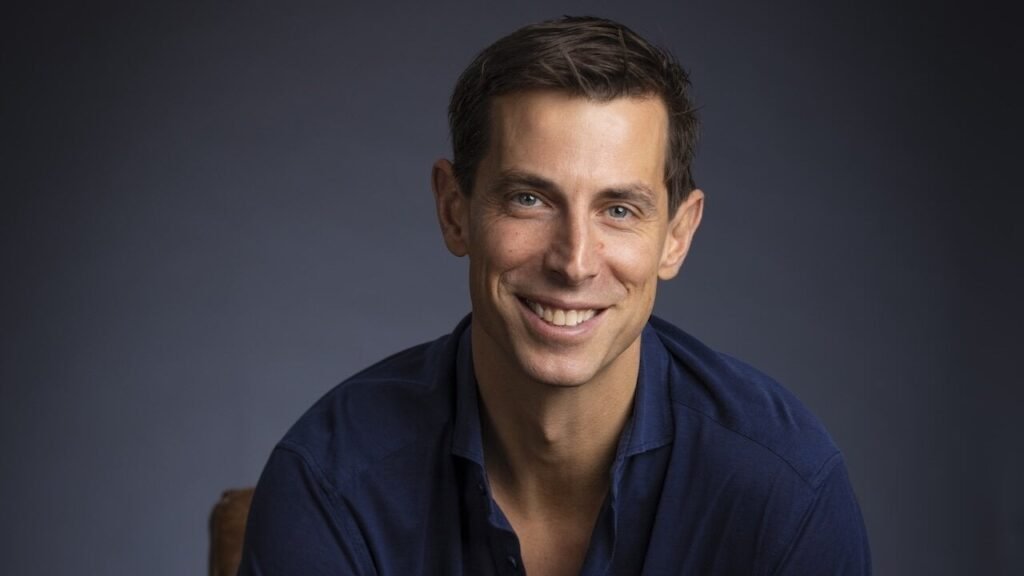
In 2005, Matt Spetzler landed in Europe as a young Francisco Partners deal-maker, just as Germany coined a memorable piece of political shorthand. Private equity firms, declared the country’s Social Democrats, were Heuschrecken. Locusts. They swarmed, they stripped, they moved on.
Twenty years later, Spetzler still occasionally receives affectionate Christmas cards addressed to “my favorite locust”.
He doesn’t mind the ribbing – it reflects a stereotype he’s had to carry into the music business, and an independent sector that tends to regard the phrase ‘private equity’ with the same level of affection reserved for the taxman. Except Spetzler is making a direct play to be a different kind of financier.
Earlier this year, Spetzler and his partners at their investment and advisory vehicle, Jamen Capital, launched Pipeline – a $200 million-backed financing platform designed specifically for independent music companies, artists, and rights-holders. Its pitch? To offer indies working capital, acquisition firepower, and catalog-buying muscle, without forcing them to sell equity, or fold into a global strategic.
Spetzler has already seen the music industry from multiple angles. As a former senior partner at Francisco Partners, he made approximately USD $5 billion of music and audio investments – including majority-stake deals for Kobalt, Native Instruments, and Muse Group. (Kobalt, of course, has been undergoing another generational change in ownership lately – a $1.5 billion takeover by New York-based Primary Wave.)
Alongside running London-headquartered Jamen, Spetzler chairs the Senior Advisory Group of Recognition Music Group – the catalog business formerly known as Hipgnosis. (Sony Music Publishing has agreed to acquire the Recognition catalog from Blackstone since this interview was first published in Music Business Worldwide magazine).
Jamen’s broader portfolio also includes Soundtrack.io, plus smaller stakes in the music-marketing platform un:hurd, Nat Zilkha and Nathan Hubbard‘s Firebird Music, and TVG’s new venue in Los Angeles, Pacific Electric.
Spetzler is, in short, the rare MBA-grade number-cruncher who has carried music catalogs on his balance sheet for the best part of a decade — and who knows where trap doors sit in your typical indie music contract. With PE-trained sharpness, he understands how money is made amid the modern music industry’s morass.
Spetzler makes for an unusual figure: a kid from the Appalachian Mountains of southwestern Virginia who once wanted to build and design vehicles for a living. (We’ll get into that shortly.)
Pipeline has moved quickly since its public launch. Days after coming out of stealth in January, the platform struck a strategic partnership with independent licensing agency Merlin, which represents roughly 15% of the global recorded music market. The deal gives Merlin members the option to easily access advances against their digital royalties, but doesn’t preclude them from taking financing elsewhere.
In March, Pipeline announced a key acquisition: the core assets and IP of music valuation firm Clarty Partners, founded by former BMG senior executives Stéphane Hubert and Pierre Suignard. Pipeline is folding Clarty’s valuation technology, royalty ingestion systems, and founding team into its own underwriting engine. (MBW hears an IP-focused play might be next at Pipeline – giving indie labels and publishers a one-stop shop to value, finance, and administer catalog acquisitions.)
Here, we speak to Spetzler about Pipeline, Kobalt, the hidden mechanics of indie-label capital, and the ‘dirty secret’ of modern music-industry finance…
Let’s start with geography — how does a kid from the Appalachian Mountains end up running a music investment platform in London, via Francisco Partners?
I grew up in southwestern Virginia. You didn’t lock the front door; the first day of hunting season was a school holiday. My original plan was to be an automotive engineer – I went to school to study mechanical engineering. Along the way I started and ran an organization building off-road vehicles, then made them amphibious, then raced them. Amazingly, that [org] is still going strong 26 years later. I also started a wine rack and furniture business. It paid for approximately nothing.
I got into consulting; my claim to fame at one point was designing a program to sell food on planes, which led to some very fun airline-food conferences in Canada. The Grammys, these ain’t! Ultimately, I wanted to be an investor, not an adviser. I had 19 interviews at Francisco Partners before they gave me a job. I had to learn to build a financial model; it was an aggressive education.
Music had always been around: my dad was a German immigrant into the US, and I grew up on a strict half-an-hour-per-day piano practice schedule, then rebelled, playing guitar in a band in high school. Somewhere around ten years ago, I started exploring media as a business, starting on the software side, then moving into music as an asset class. I led our debt fund’s minority investment into the Kobalt catalog [which now forms the bedrock of Chord Music Partners‘ portfolio]. I fell in love with the industry from there.
You were one of the minds behind Francisco’s equity investment in Kobalt. What drew you in, and how are you reflecting on where it’s ended up post-Primary Wave announcement?
The Kobalt pitch, at the highest level, was to disrupt the industry through technology and transparency, via a point of view that said: if you do the right thing for the rights-holder, you’ll get the right outcome for the business. In a lot of places in this industry, it feels like value is being taken away from the artist; Kobalt was enabling more to flow through.
What Francisco brought to the table was private equity’s ‘day job’: helping a business being pulled in multiple directions by different shareholders — some wanting wild profitability, others wanting growth at all costs — find clarity on its direction of travel. We helped revamp the tech platform, set up the capital structure so they could keep buying IP without losing their top customer, and backed new product lines.
I’ll be honest: As a PE guy, I’m not fully supposed to do what I did with Kobalt… which is fall in love with the company and the investment. I care about the team, the business, the mission. We’re delighted with where Kobalt has ended up [with Primary Wave]. It wasn’t sold through a big auction tour — in fact, some of the most obvious strategic acquirers were explicitly not invited, because swallowing Kobalt into another structure would have undermined its mission.
You’ve built Jamen Capital to sit outside the conventional PE lifecycle. What does that mean in practice?
Private equity teaches you an extraordinary amount – probably the best school of business you can attend. But it comes with shackles: you have to sell your investments on a timetable, and have a singular mission to make money.
“Private equity teaches you an extraordinary amount. But it comes with shackles.”
At Jamen, my partners and I wanted to keep the benefits of PE – the discipline, the resources, the governance – without the timeline. We don’t need to sell a business tomorrow to print a return. We can back something for the long haul, or start a company from scratch. And we get to mix passion for this industry with business. We are also, hopefully, doing this for the right reasons: we’ve pledged 10% of all profits to charity and have the north star of bringing more back to artists and IP owners.
We spend a lot of our time thinking: Where are songs being under-monetized? Where is money being lost in the system? Soundtrack.io, one of our portfolio companies, is a good illustration: the commercial music space – restaurants, retailers, and gyms – is sitting on billions of dollars in uncollected royalties. Our data shows that over 80% of these venues are illicitly using consumer streaming services without even realizing it. Fixing that kind of inefficiency can create a real win-win.
We know what we don’t know: I’m not going to be an A&R person, or decide what’s cool. But we know how to run businesses, we know how money is made in music — and, importantly, where it isn’t — and we know tech and finance.
Your launch release for Pipeline said the platform is designed to help indie companies avoid ‘the need to turn to third-party acquisitions or onerous deal terms’. I suspect that phrase raised an eyebrow or two at some global businesses.
People don’t always understand the consequences of the terms they’re signing up for. Many of the biggest indie-to-major acquisitions of the past decade didn’t start out as acquisitions at all – they started as advances. Indies take a long-term ‘advance’ from a partner, structured as capital, that actually ends up functioning as equity. When the cash can’t be recouped under the agreed terms, the economics of the relationship suddenly shift.
The institutional capital markets have become really sophisticated about pricing music IP — variable cost of capital, deep understanding of royalty behavior, proper forecasting. But that knowledge has never been brought to bear for the benefit of the independent sector. The indies are the ones losing out because of the cost, and the availability, of capital.
We hope Pipeline can help level this playing field. Independents often have fantastic IP and they work harder than almost anyone. They shouldn’t have to hand over equity — or, worse, the whole company — just to access working capital.
How do you underwrite advances to indies without ending up in the same spot as some of the companies you’re trying to offer an alternative to?
First, we can offer companies more than a bank normally would, because we’re looking at their royalty flow as our collateral. Banks want to see profit and full security of a business – personal guarantees, your house – before they’ll even talk. For most indies, that rules them out. The alternative is an equity deal, and many independents don’t want to sell a piece of their business or invite investors into their boardroom.
Pipeline sits in the middle. We don’t take ownership – we provide capital against royalty income, and ideally bring some technology and know-how alongside it. And we start conservatively, deliberately, so we don’t put people in a position where they get over their skis.
‘Private equity’ is a phrase that, in music circles, tends to be deployed with not a huge amount of affection…
I’ve carried that baggage around since the ‘locust’ days in Germany in 2005! The honest answer is: look at the incentives. Private equity’s incentive is to return capital. That singular focus means you create more valuable businesses… usually by growing them.
But not all private equity is created equal. At its best, it’s the greatest school of business you can attend – the discipline, the governance, the resources you can bring to help a management team scale. At its worst, the monikers – including the locust one – are warranted. What I’m trying to do at Jamen is take the additive parts of my PE education and apply them as an entrepreneur, without restrictions or ulterior motives.
The public market valuations of Universal and Warner are far lower than many of us think they should be. What are you seeing — and how much of it is down to AI?
Music is getting a hangover from what’s happening in tech. The hit the software and SaaS sectors have taken in the last few months has been even more exaggerated than what we’re seeing in music; the market is pricing in a belief that AI will recreate these businesses more quickly, and cheaper, than their existing margins assume. [Tech company valuation] multiples have come down from 10x to 6x revenues in places, and that cascades into both public and private markets.
Music benefits from being seen as a relatively uncorrelated asset class by investors; it’s the only media type you consume over and over again. But the question hanging over everything is: what does AI mean for the royalty pool?
Where I land is this: the majors today are really an IP play. I’ll bet you they lose money on the frontline new-artist business, and that almost all the profits come from the catalog. Universal has argued publicly that you can’t build a premium catalog without that initial loss-making investment, and their data shows they recoup more of that spend than ever before. That’s a fair argument. But the unit economics of a major-label deal today are not the 70/30 of fifteen years ago. Power has shifted to the artist. Platforms like Kobalt have forced the majors to do deals that would have been unthinkable a decade ago.
On AI music platforms and [copyright infringement] specifically, it’s going to be a dogfight, and it’ll be litigated in the courts for years. What I’m more confident about today than I was six months ago is that AI will be incremental to the earnings pool of music for the next three to five years. The licensing deals getting done are creating real incremental revenue for rights-holders in that window.
“The real risk isn’t more songs on DSPs; it’s ‘fair use’. Platforms could divert royalties away from humans.”
The longer-term question is what happens when derivative works are out in the wild and consumer behavior takes over. The real risk there isn’t more songs on DSPs; it’s ‘fair use’. If copyright protection is diluted in key territories, platforms can divert royalties away from human-created music. Small changes in how royalty pools get divided have big repercussions. That’s exactly why large collective bodies, Merlin included, matter right now.
Where’s your confidence on premium music IP holding up vs. AI music in the years ahead?
I’ve taken the conscious decision to bet my family’s future on music… so I have to believe it! But I don’t think every piece of music is equally protected. The high-end, hit-driven, premium repertoire, especially catalog, is the most secure. Ask yourself: what songs do my kids know? For me, it’s Nirvana, Red Hot Chili Peppers – stuff my son is now learning on the drums at school. That persists because of emotional recognition and human connectivity. That bond isn’t going anywhere.
Music itself is here to stay, full stop – it’s ingrained in us on a species level. I recently spent time in Africa on a conservation project, with members of a tribe who still live as hunter-gatherers, don’t have electricity, and live as they have for thousands of years. Guess what they did at night to communicate with us and celebrate? They sang songs to us. We sang back – badly! An AI track cannot replicate that, just as it cannot replicate a stadium of people singing back a lyric they’ve carried with them for twenty years. I firmly believe in the power of live experiences and also the enduring power that music plays in our culture and lives.
This article originally appeared in the latest issue of MBW’s premium print publication, Music Business Worldwide Magazine, which is out now.
Music Business Worldwide Magazine is available as part of a MBW+ subscription – details through here.
All MBW+ subscribers get digital access to our Music Business Worldwide magazine, with six issues released each year. Music Business Worldwide