


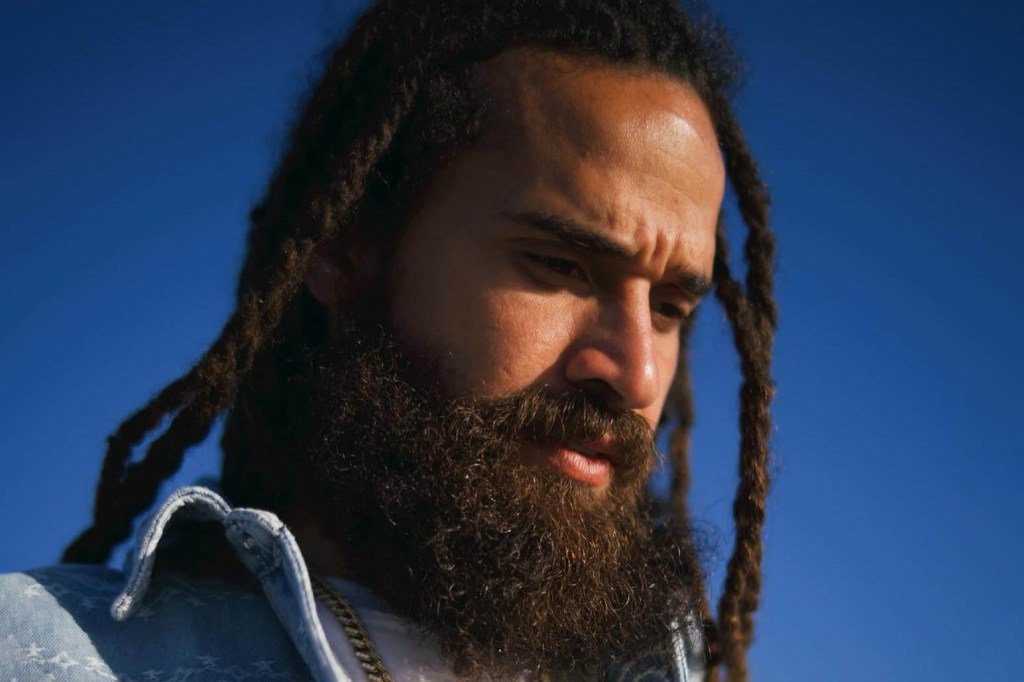
Long before Keznamdi collected his Grammy award as the 2026 winner for Best Reggae Album, the musically gifted Jamaican youth was a fiend for hip-hop. “I started out rapping,” says Kez, who was raised by Rastafarian parents who performed on the Kingston reggae scene as Chakula and Goldilocks.
At the age of 13, Kez took his first plane ride, moved with his family to Tanzania, where he lived for three years, followed by a four-year stay in Ethiopia. “In my high school, I was in a little crew called DZone,” he recalls. “I was the young one in the group, but they were all seniors. They were freestyling a lot, and it was amazing to me.” While his older sister Kelissa followed more in the family tradition of revolutionary roots reggae, his approach to music was different. “It was more like a sport,” he tells Boomshots’ Reshma B. “It was who can get the baddest verse.”
(Speaking of bad verses, yesterday the legendary hip-hop trio The Lox celebrated 420 by dropping bars over a remix of Keznamdi’s “Bun Di Ganja,” a blazing collab with Mavado.)

Eventually, Keznamdi’s father put a guitar in his hand, taught him some chords, and told him, “If you really want to take this music thing serious, you have to learn an instrument.” It was a moment that changed his life. On his Grammy-winning 2025 album BLXXD & FYAH—which he cooked up for almost five years—he placed more emphasis on music and message, writing songs that could change his listeners’ lives.
Next month, Masicka will be performing those songs live for the first time in Los Angeles and New York City—and of course in his beloved island, Jamaica. “It’s a huge honor to represent Jamaica and reggae music on the global stage with this Grammy recognition,” he said of the upcoming shows. “New York and L.A. were the first cities where I ever sold out shows, so it felt right to start there with two intimate nights before rolling out the full tour. Jamaica is home, though, so we’re putting together a special homecoming concert down a Yard to celebrate with the people who raised, supported, and carried me into the world.”
In his exclusive Boomshots interview, Kezmandi speaks on the testimonies he’s received from listeners who say that his songs have helped them reconnect with their children or even helped them deal with suicidal thoughts. He also dives into how big collaborations with dancehall legends Masicka, Mavado, and his elder sister Kelissa came together. Throughout the new album, Kez talks about his unique life journey, prioritizing message over melody and rhyme schemes on songs like “Serious Times” and “Colonial Bondage,” which highlight the fact that most of Jamaica’s beautiful beaches are “all for the tourists.”

Just before releasing BLXXD & FYAH, Keznamdi felt the sudden urge to return to his hip-hop roots and drop a freestyle. “There was just something in me,” he recalls. “I don’t know why the fire was burnin’.” His team wondered what made him so persistent. “Conquer the evil, me ah de voice of the people,” the tall skinny dreadlocks youth spit over a classic Busta Rhymes riddim. “Music ah de choice of the vehicle.” He voiced it on a Monday, shot some visuals on Tuesday, and stayed up all night editing the clip himself.
Shouting out Kwame Nkrumah, Bounty Killer, and Dr. Sebi, Keznamdi’s “HOLLYWXXD Freestyle” had the internet goin’ nuts. “That was the first time I went ‘viral’ if you wan’ use that word,” he says. His spur-of-the-moment video got love from Swizz Beatz, Alicia Keys, The Game, Queen Latifah, and, as he puts it, “the whole of Jamaica.” It was the perfect buzz-builder for the strongest album of his career, paving the way for the official lead single “Forever Grateful,” which features another rising star, Masicka, whom Kez considers “one of the most prolific and most important artists of our generation.”
Although his freestyle stated that “it’s not about the Grammy and who is cooler,” when the Best Reggae Album nominations were announced last November, Keznamdi was surprised to find himself in the running alongside veteran artists like Vybz Kartel. He was even more shocked when his album won at the February 1 awards ceremony. “It was very far-fetched for me,” he says, pointing out that his album was released on his own independent label. He hadn’t even prepared a speech, but the words came to him as he walked to the podium: “Reggae music has always been a music weh defend truths and rights and African liberation,” he said, holding the golden trophy. “Rastafari!”
