

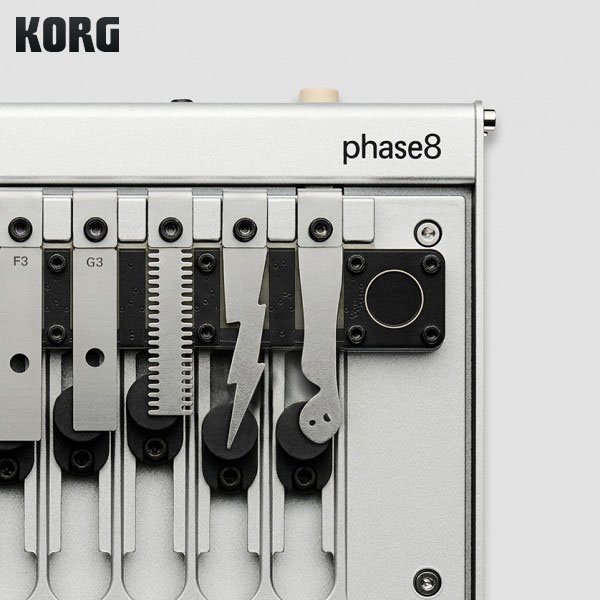
The reaction from the synth community has been a provocative study in “luxury vs. utility.” With a street price of US$1,150, the phase8 has sparked a lively Internet debate. On one side, purists and ambient composers have hailed it as a “game changer,” praising its tactile, haptic nature and the “bonkers” sounds that digital emulations simply cannot replicate. Korg seeded popular YouTubers like Loopop and Bobeats who highlighted it as one of the most unique instruments released in a decade, but these pay-for-play “reviews” never actually showcase actual musicians and workflows, so the real public response hasn’t been determined.
However, the biggest complaint is the phase8’s high price-to-feature ratio. Some users on forums like Reddit have argued that it is essentially an “overpriced thumb piano,” noting that for the same money, one could buy a high-end polyphonic analog synth with hundreds of voices and effects. Others cited the synth’s eight notes and a specific tonal palette limitations. That said, the phase8 wasn’t designed to be a do-it-all workstation; it was built to be a specific, living entity that bridges the gap between the physical and the electronic.