


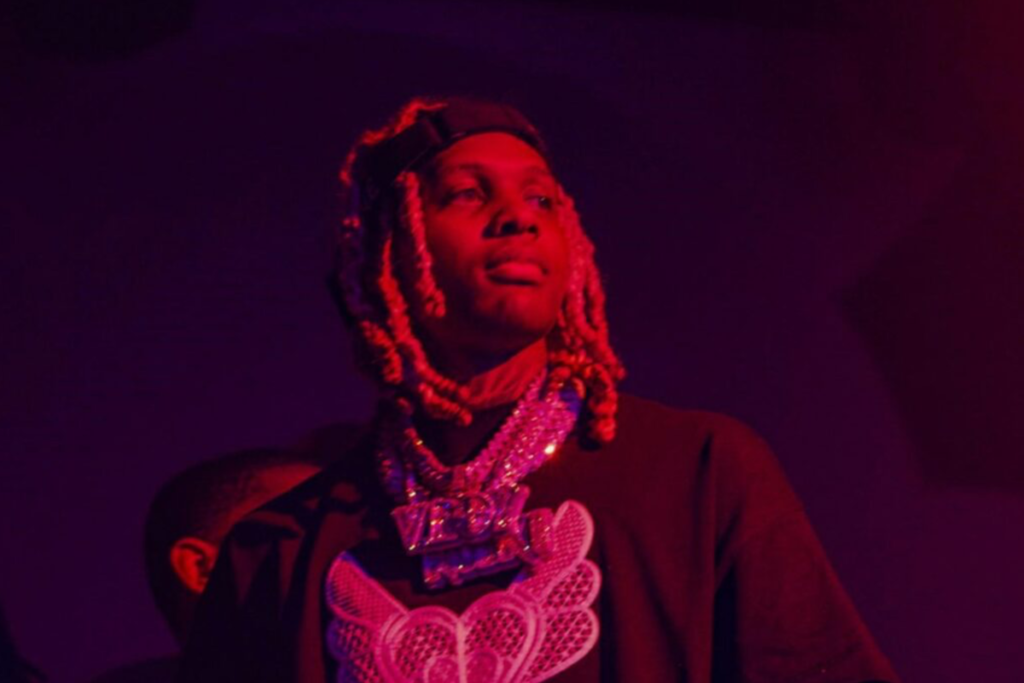


The judge split travel costs from a murder reward, giving Lil Durk’s lawyers a clear point for Tuesday’s closing statements.
A judge gave Lil Durk’s defense a sharp point for Tuesday’s closing statements. Plane tickets, hotel rooms and phone bills cannot prove a murder bounty by themselves.
U.S. District Judge Michael Fitzgerald drew that line Friday as lawyers were finishing the jury rules for Lil Durk’s federal trial.
The government has spent much of the case following the money. Its records cover flights, phones, cars, ski masks and hotel rooms.
Prosecutors say those purchases helped a crew reach Los Angeles. Some men flew to San Diego first. They then drove north and tracked Tyquian “Quando Rondo” Bowman around the city.
Join Us
AllHipHop’s Daily News Service
Delivering news to inboxes since 1999. We break it. They take it. Get it first, straight from AllHipHop.
The chase ended near the Beverly Center on August 19, 2022. Gunmen missed Quando Rondo but killed his cousin, Saviay’a “Lul Pab” Robinson.
Fitzgerald said jurors cannot treat those travel costs as proof of a reward.
“The jury is already told that, specifically, in unambiguous English language, that paying for those sorts of instrumentalities are not enough,” Fitzgerald said. “It has to be a bounty beyond the actual fact of those things.”
That difference is at the heart of the murder-for-hire charge.
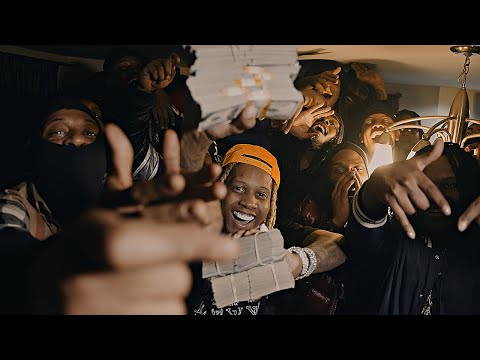
The federal law calls for proof of a deal. A murder must be sought in return for money or some other gain. A promise can meet that test. The money does not have to change hands.
Still, the defense now has a plain message for jurors. Paying for a trip is not the same as paying for a murder.
Christy O’Connor, one of Lil Durk’s lawyers, raised that fear in court. She said jurors could find that he paid for travel without backing a hit.
The final jury rule uses the law’s meaning of “something of cash value.” Fitzgerald said the change gave the defense much of what it sought. The government had asked for different words.
That change does not wipe out the government’s bounty claims.
Kacey Hester, known as OTF Jam, said Lil Durk would “make anybody straight” for killing Quando Rondo. Keith Jones, known as Flacka, told jurors about a $1 million offer.
Flacka said Deondre “DeDe” Wilson made that offer and named Lil Durk as the source. He also said he later asked Lil Durk about his pay.
Flacka claimed Lil Durk sent him to Boonie Moe. He said Boonie Moe spoke of paying $10,000. Flacka said he never got that money.
Kavon Grant, known as OTF Vonni, also said Lil Durk ordered the plot. He claimed the rapper approved the costs tied to it.
The defense says OTF Vonni ran the plan himself. It says he blamed his former boss in hopes of getting less prison time. OTF Vonni admitted he held Lil Durk’s wallet and cards. He also knew the PINs, bank logins and Social Security number.
As AllHipHop reported, OTF Vonni kept fake ID records on his phone. He admitted taking part in fraud that was not tied to the shooting.
Those facts give the defense another way to attack the money trail.
A bank record can show which card was used to pay a bill. It may not show who used the card or gave the order.
Prosecutors can say the costs back up their witnesses. They can link each bill to a time and place in the plot.
Fitzgerald’s words add one more step. The government must prove Lil Durk backed a real reward for Quando Rondo’s death.
Lil Durk, DeDe and David “Browneyez” Lindsey have pleaded not guilty.
The five counts include a stalking conspiracy, stalking with a dangerous weapon, stalking that led to Lul Pab’s death, a murder-for-hire conspiracy and a murder-for-hire count tied to her death.
The Justice Department’s case summary says the plot sought revenge for King Von’s death. King Von died in a 2020 clash with Quando Rondo’s group.
Lil Durk denies ordering or paying for the attack.
Both sides rested Thursday. Jurors return Tuesday, September 8, for final jury rules and closing statements.
They must then decide what the payments prove. The bills may show normal work, help for a crime or a promised bounty.