


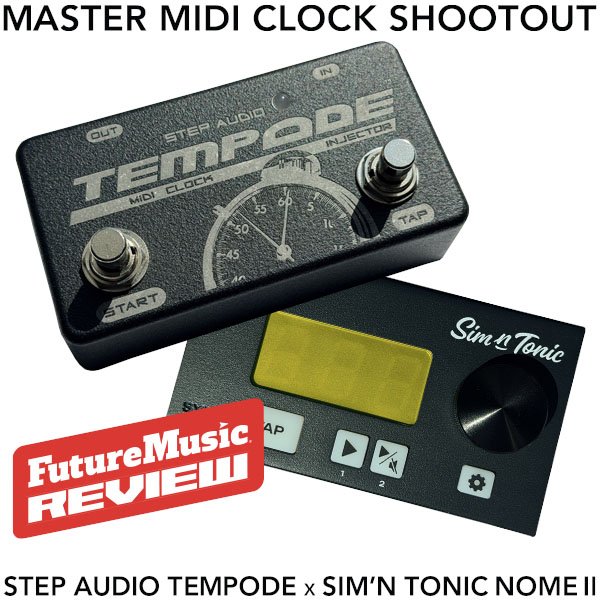
The 128-program storage is more than adequate for any realistic live performance scenario. The ability to store a different tempo for each program means that a guitarist can move through an entire setlist, recalling preset tempos automatically as the MIDI controller steps through its own presets, with no manual tempo entry required. MIDI Clock Auto-Start ensures that upon receipt of a Program Change message, the clock will begin sending automatically if it was not already doing so. For a working musician who wants to walk onstage and have everything simply work, this behavior is invaluable.
The Control Change implementation adds a layer of remote programmability that more advanced users will appreciate. Control Change 11 allows Tempo at full range, mapping 0 through 127 to tempos from 24 to 278 BPM in even increments, while CC 80 simulates a tap button press, CC 85 provides discrete Start/Stop control, and CC 86 toggles the start/stop state. This means an external controller can drive virtually every function of the Tempode remotely, making it fully automatable within a complex MIDI rig. A guitarist could, theoretically, have their entire setlist programmed into a master MIDI controller that recalls tempos and starts clocks without any manual interaction whatsoever.
The MIDI filtering behavior is clean and predictable. MIDI Song Select, Program Change, Control Change, Pitch Bend, and Note On and Note Off data received at the MIDI IN jack is repeated at the MIDI OUT jack. All other MIDI data is filtered out. This selective pass-through behavior prevents the kind of MIDI message congestion that can develop in a chain with multiple devices and multiple message types, while ensuring that the messages that actually matter to downstream effects continue to flow unimpeded. The filtering is not configurable by the user, which is appropriate given the Tempode’s design philosophy of simplicity, though it does have implications that will be addressed later.
Tempode uses the same rock-solid proprietary MIDI Clock algorithm that drove Molten Voltage’s Master Control. The Tempode takes that proven clock engine and packages it in a simpler, more focused, and more affordable device. Users of the Tempode have employed it successfully to start and stop devices like Roland’s TR-8 drum machine and to provide MIDI clock to other pedals, drum machines, and synthesizers. The cross-domain applicability of the device, its usefulness in modular synthesis contexts, DJ rigs, and lighting control systems that respond to MIDI Clock, extends its value proposition well beyond the core guitarist audience, even if that core audience remains its primary market.