


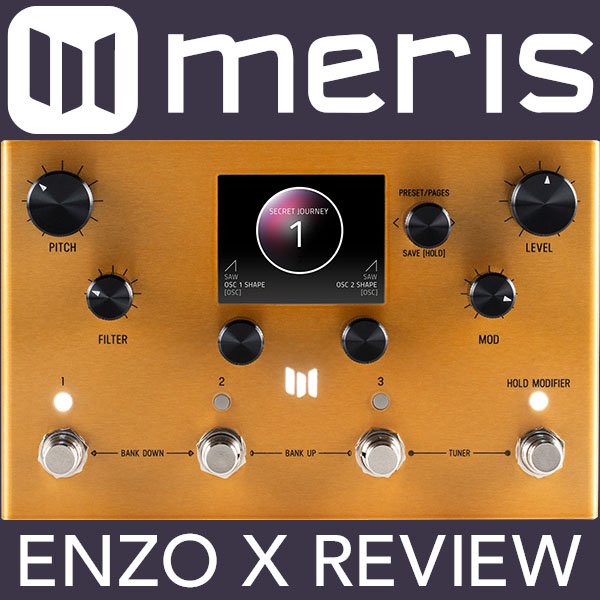
What sets the Enzo X apart from many other synth pedals is its modular instrument architecture, which gives you extensive routing options and sound design flexibility. The user interface centers around the same Bubble Operating system developed by Jinna Kim from the LVX and Mercury X platforms, allowing visual access to parameters and preset management without resorting to cryptic knob combinations. That said, a Text View is also available, which does reduce some menu-diving. A modifier section lets you route control signals (such as envelopes, LFOs, and expression inputs) to a wide range of synthesizer and effect parameters, enabling dynamic and expressive patches. An expressive hold modifier switch provides real-time performance control, making it easy to latch notes or trigger sustained textures on the fly.
The Enzo X also includes a suite of effects that integrate with its synthesis engine. You get three reverb types drawn from the Mercury X’s Prism algorithm, a full stereo delay with up to 2.5 seconds of time, and five distinct drive options including tube, op-amp, transistor, bitcrush, and a volume pedal style drive, all of which are familiar if you own the other X pedals. Additionally, there are five modulation types, such as chorus, flanger, phaser, and vibrato, which you can blend into your patches or use as standalone effects in dry modes. These elements turn the Enzo X into much more than a synth pedal, giving it the additional flexibility for sound design applications.