

The wait is over. Fourteen months after Universal first announced it was acquiring Downtown Music Holdings for USD $775 million, the deal has been cleared by EU regulators, save for a small disposal of royalties firm Curve.
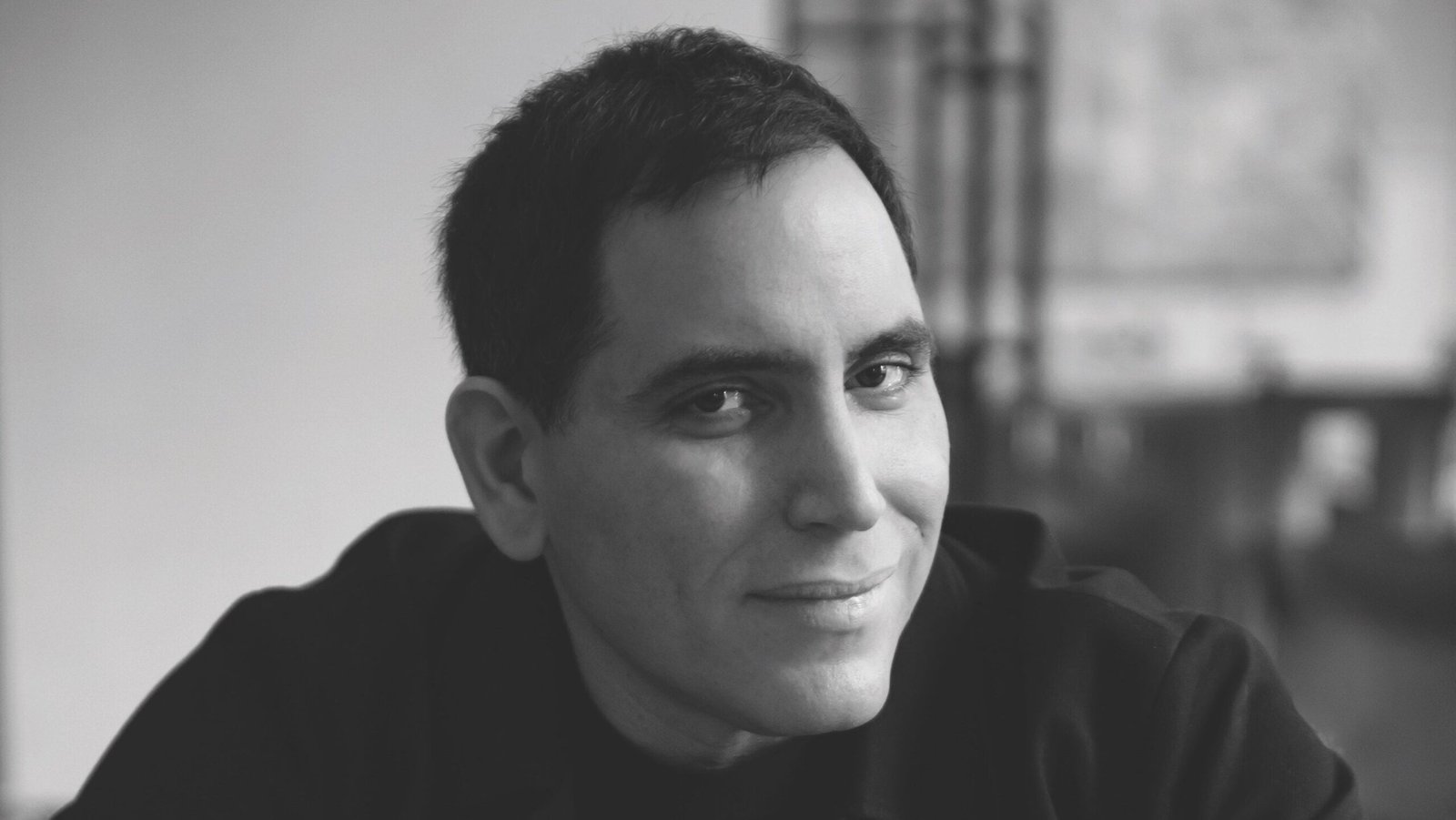
What’s largely been missed in the transaction’s coverage is the scale of what Justin Kalifowitz has pulled off. Downtown evolved from a music publishing company he founded in 2007.
That pubco ultimately sold its entire portfolio of owned copyrights to Concord for $400 million in 2021 – a counterintuitive move at a time when the industry was gold-rushing to buy catalogs, rather than offload them.
Kalifowitz’s subsequent bet? That Downtown could build one of the world’s most valuable music services companies – owning no rights, but, via the likes of Songtrust, FUGA, CD Baby, and Downtown’s publishing and recorded music divisions, driving income for independents of all sizes. From a DIY musician creating tracks for their yoga class, to giant indie labels turning over nine figures a year.
Kalifowitz has now officially sold that services business, Downtown Music Holdings, to Universal/Virgin for $775 million (perhaps slightly more, due to interest accrued during the EC’s regulatory probe). Downtown’s combined exit across the Concord and UMG deals? Approximately $1.2B. A genuine music industry unicorn.
Following stints in A&R/marketing for Virgin, RCA, and Spirit Music, Kalifowitz started Downtown a year before Spotify launched in Sweden – while the global record business was shrinking. As Kalifowitz recently noted of Downtown’s origins in a staff memo: “We believed more music would be created, not less. More entrepreneurs would enter the business, not fewer. More global participation. More direct relationships. The question wasn’t how to protect what had been – it was how to build for what was coming.”
Mission accomplished. And it’s here, at this post-Downtown crossroads, MBW catches up with the New York-based exec. Our overriding question is obvious: You’re great at seeing around corners – so what’s next?
Kalifowitz’s recent moves offer clues.
In 2024 he quietly founded Klaf Companies, an investment and advisory platform that has since backed multiple growing firms – most of which he’s keeping close to his chest. The one he’s gone public with is Burwoodland, the New York-born live club night company behind Emo Night Brooklyn and Gimme Gimme Disco.
Hosting 1,200+ shows a year, Burwoodland has sold more than 1.5 million tickets to date, and recently attracted backing from billionaire Mark Cuban.

Cuban’s take on that investment: “It’s time we all got off our asses, left the house and had fun… In an AI world, what you do is far more important than what you prompt.”
That line captures where Kalifowitz’s head is at.
Not just live events, but the collision point between community, creativity, and commerce – businesses built around participation and IRL connection in an increasingly virtual world.
You had early stints at RCA and Virgin and were chasing what a lot of young people in music chase – the major-label dream. When did you realize there might be a different way to build a career in the business?
Around 14, I became convinced I could map out a precise plan to eventually run a major record label. Most of my decisions in high school were filtered through that goal – which my guidance counselor politely described as “a bit specific.”
“I saw what was possible with zero hype, and no marble in the lobby.”
But at 19, after seeing majors from the inside, my outlook shifted when I started working at Spirit, a then-little-known music publishing company in New York. In the early days, our loft had more mice than gold and platinum albums on the wall.
Working with that team, I developed a deep appreciation for the art of songwriting and saw what was possible without much budget, zero hype, and certainly no marble in the lobby.
All successful entrepreneurs learn to embrace and calculate risk. How did you develop that instinct?
Before I was enamored by music, I grew up working in my family’s New York City food business. My dad was an entrepreneur to the core, but the real lesson he taught me had nothing to do with food and everything to do with people.
To my dad, it didn’t matter where you came from – lawyers, cooks, dishwashers, customers – everyone was treated the same. Respect was non-negotiable. If you were new, he’d give you a shot. If you ran into a wall, he wouldn’t knock it down for you – he’d remind you what was on the other side and say, “Que Será, Será.” The message was simple: opportunity comes with both risk and responsibility.
That idea carried straight into how we built Downtown. We hired enthusiastic, curious people and gave them room to operate. We encouraged the team to build things, buy things, break things. If something didn’t work, that was part of the process – as long as people owned it.
That culture wasn’t for everyone, but it helped us find and keep the right people, some from the industry, many from the outside. Their collective curiosity and judgment shaped how the company grew over time. That foundation now carries forward into Downtown’s next chapter with Virgin.
Five years ago, after selling Downtown’s catalog of rights, you wrote for MBW: “The convergence of technology, global scale, and a greater demand for a service mentality is blurring the increasingly faint lines between label and artist, between executive and creator, and between major and independent.” Looks like you got that right. How will this dynamic continue to change over the next decade?
I wasn’t trying to predict anything, I was just describing what I was already seeing. The old categories were starting to feel less relevant because they no longer reflected how people actually worked.
“The companies that succeed will enable connection, not try to control it.”
What’s continued is that same pull toward direct connection. Whether it’s recorded music, live experiences, or communities forming around shared interests, people want fewer layers between themselves and the thing they care about. The companies that succeed will be the ones that understand their role is to enable that connection, not try to control it.
Do you think elements of the music and/or tech business are still trying to ‘control’ connection in this age of artist empowerment?
I don’t think it’s intentional, but the industry was designed around control – we own it, we decide, forever. A lot has changed, no doubt, but systems tend to behave the way they were built, and that mindset still shows up in small, telling ways.
On the tech side, it’s different. This isn’t really about control so much as scale and priority. These are massive companies juggling countless inputs, and music is just one of them. Sometimes it benefits, sometimes it doesn’t. Their actions will always require vigilance; that extends to pretty much all creative industries.
Why do you say that “focusing on infrastructure rather than chasing trends” proved to be a key advantage at Downtown?
At first, picking winners was a big part of the job. We were buying amazing catalogs and backing incredible songwriters we believed in, and that translated quickly into real commercial success. But it soon became obvious that this would only be part of the story.
Creators and entrepreneurs were releasing music at an explosive rate, and yet much of the industry was pretending this wasn’t happening. To us, this wasn’t a problem to wish away – it was an opportunity to address. What tied it together wasn’t prediction, but attention. The team kept spotting mismatches between how music was being made and how the industry was structured to support it. So we built the pipes, bought some plumbing, and fit it all together to close the gaps.
Which sociological or consumer patterns inform your ideology or strategy in your new run of investments with Klaf Companies?
The ecosystem of businesses that get you out of the house and off the phone is where I’m spending a lot of time these days. The reason is simple: if you ask most people what their five best memories from last year were, they’re not going to mention being on their phone. They’ll talk about being out in the real world, experiencing something they love – probably with friends.
Music and sports have dominated the conversation because that’s where scale showed up first. But they’re really just proxies. The same infrastructure questions are now emerging across food, hospitality, social sports, culture, and physical space – areas where we’ve already made a number of investments and are developing new businesses internally. What we’re watching isn’t the expansion of one category – it’s the rapid convergence of many.
That’s the common thread for me: businesses that understand participation is the product, and community isn’t a feature – it’s the whole point.
What particularly interests you about the intersection of creativity, commerce, and community?
Creativity alone is just a hobby or a patronage model – neither scales. Commerce without community is transactional and flat. Community without creativity sounds like no place I want to be.
But when those three things align, you can build businesses people actually want to support over the long run – not because they’re chasing attention or short-term profit, but because they actually impact people’s lives.
What do you make of all of this talk about “superfandom” in the music industry? As streaming slows in mature markets, the word gets more and more popular.
Overrated. I’d instead suggest focusing on businesses that serve the massive middle – people who love music but aren’t organizing their entire identity around a single artist. Build better for them and I’m pretty sure the dollars will follow.
The event ticketing space is dominated by one party, especially in the US. What’s driving renewed pressure on Ticketmaster/Live Nation 15+ years after they merged, and what opportunities might lie ahead?
It’s not just one issue – it’s ticketing broadly. The pressure isn’t ideological; it’s practical. Fans are frustrated with uncapped secondary, artists are vocal, promoters and venues are openly unhappy on several levels, and governments are responding to the noise. When dissatisfaction is that broad, it creates space for alternatives – especially as smaller, more diverse events grow in places where ticket platform choice still exists. It’s a very small percentage today, but I remember when people said the long tail of creators didn’t matter either.
What set of tools do event organizers need in the years ahead, and do you see that infrastructure expanding?
What I hear consistently isn’t actually about specific tools – it’s about trust. A lot of early-stage entrepreneurs need partners who do more than write a check from a glass tower. They need partners who’ve been in the trenches and can help them find the real leverage points to build businesses that stand the test of time.
That said, the infrastructure gaps are real: more flexible growth capital, right-sized insurance, better platforms to actually leverage attendee data, more advanced logistics solutions for small and mid-sized events, more effective government relations, better marketing tools. But those are means to an end. What matters is whether you’re building with people who see the big picture.
What does “independence in music” mean to you in 2026, in a world where multiple factions claim or suggest they speak for the sector?
What excites me is that independence today isn’t about drawing hard lines or picking teams. It’s about choice – deciding how you work, who you partner with, and what makes sense for where you’re trying to go. That flexibility is powerful, and it’s opening up more paths than ever before.
I’ve never loved the labels we use in music – “major,” “indie.” I’m not sure who those distinctions really serve in 2026. Certainly not most artists.
Even the term “recording artist” feels outdated. Most artists today spend the majority of their time – and generate the majority of their income – in ways that extend well beyond recording.
And if we’re being precise, the genesis isn’t the recording anyway. It’s the song.
Language shapes incentives. If we want a more modern ecosystem that truly enables choice, we should start by describing it more accurately.
If you were advising a major music company today, where would you focus? You’ve talked about the power of community and in-person gatherings. Should the majors be looking more in that direction?
They’re all exploring IRL in some form. The question I’d focus on is this: can real-world experiences become the next meaningful distribution layer for labels?
If time and attention are shifting toward shared, physical experiences, how do labels participate in that beyond touring? Where else can IP travel? The infrastructure isn’t fully there yet. But demand rarely waits for infrastructure to catch up.
If you could change one thing about the music industry right now, what would it be?
If I could change one thing, it would be perspective. The music business is a rounding error economically. But culturally, it has no equal. If we held both of those truths more often, everyone could relax, enjoy it, and remember how lucky we are.

This article originally appeared in the first issue of MBW’s new premium print publication, Music Business Worldwide Magazine, which is out now.
Music Business Worldwide Magazine is available as part of a MBW+ subscription – details through here.
All MBW+ subscribers get digital access to our new Music Business Worldwide magazine, with six issues released each year. Music Business Worldwide