


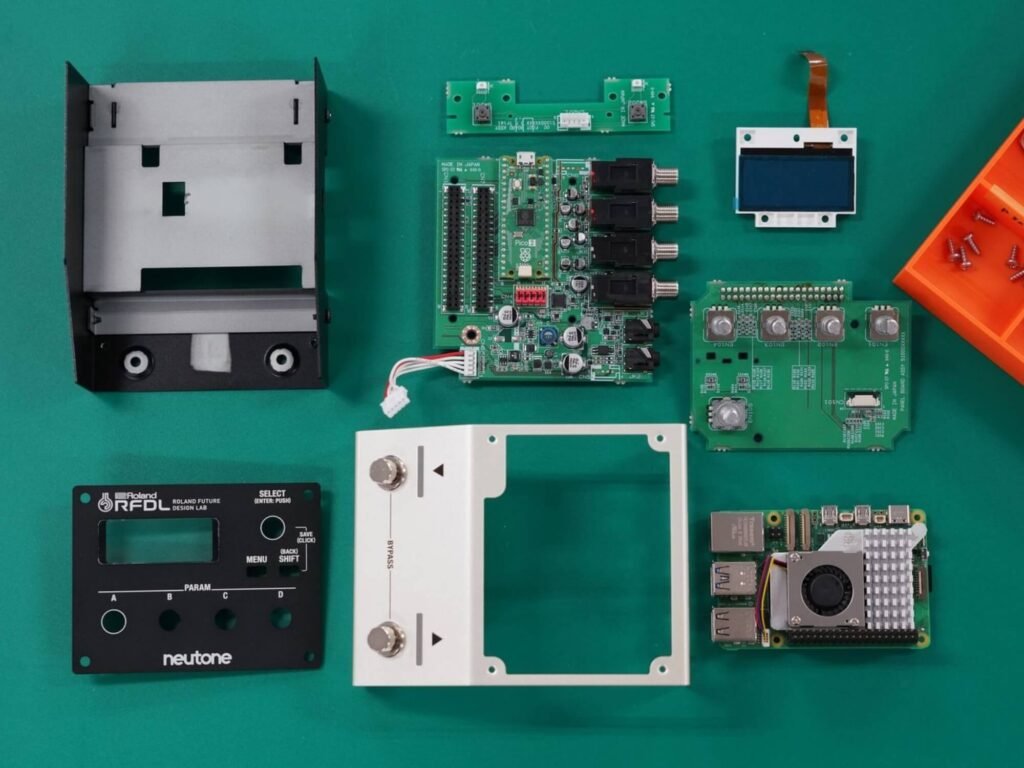
Roland Future Design Lab and Tokyo-based AI music technology company Neutone have announced Project LYDIA Phase 2, the latest evolution of their experimental AI-powered neural sampling pedal concept.
First introduced in late 2025, Project LYDIA was designed as a pedal-baed neural sampling processor exploring how AI processing could exist in a tactile, musician-centered hardware format.
According to Roland and Neutone, Phase 2 pushes the project much closer to becoming a performance-ready commercial device. The updated version arrives after months of “direct feedback from musicians, developers and live performers” who tested earlier prototypes.
That feedback has resulted in several major upgrades, including integrated audio inputs and outputs – eliminating the need for an external USB audio interface entirely – alongside User Preset memories for saving control settings, MIDI connectivity and an LCD display for real-time parameter feedback and navigation.
The hardware itself has also been refined to better support Raspberry Pi 5 installation and standalone USB MIDI controller operation.


Crucially, the project still seems focused on keeping AI in a supporting role rather than turning it into a replacement for musicianship. Project LYDIA emphasises “augmentation and control”, allowing performers to interact with neural models in immediate, physical, and musically expressive ways.
According to Roland, the familiar pedal format also places AI processing into a workflow many musicians already trust, bringing transparency and tactility to technology often associated with screens and abstraction.
“From the very first demos with professional audio developers through the overwhelming response from musicians worldwide, it was clear that Project LYDIA was resonating,” says PaulMcCabe, leader of Roland Future Design Lab. “That dialogue directly shaped Phase 2. This version reflects what creators told us they want from AI hardware in real musical contexts, while also bringing forward new ideas from our team.”
More broadly, the project also aligns with Roland’s commitment to responsible AI innovation, as outlined by AI For Music, the initiative co-founded by the company and Universal MusicGroup to establish ethical principles for AI use in music creation.
Project LYDIA Phase 2 is making its public debut at Superbooth 2026.

Learn more at Roland.
Get the MusicTech newsletter
Get the latest news, reviews and tutorials to your inbox.