


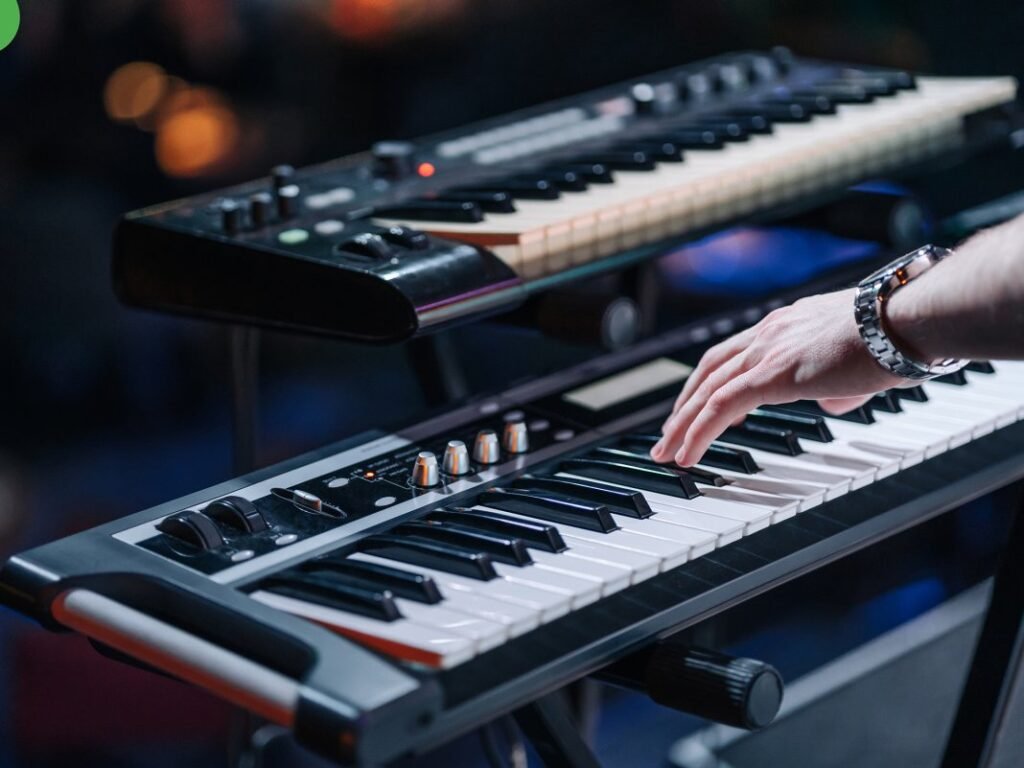
Unless you only need a synth for basses and leads, polyphonic synths are a must-have.
You could go down the software route, of course, but then you miss out on the deep hands-on control and — once you’re familiar with a synth — the intuitive interaction and sound design that results.
Software instruments aren’t so convenient for performing musicians either, as few laptops or computers are designed to survive the trials and tribulations of gigging. All too easily, what promises to be The Greatest Gig In The History Of Music can descend into an embarrassing farce thanks to a clumsy roadie, an over-exuberant audience member, or Windows demanding it be updated midway through a set.
Such practical considerations aside, there’s nothing quite like the sheer presence of a hardware synth — the styling, the panels of tastefully arranged knobs and buttons and lights, the instant results and happy accidents that result from waggling a few knobs. It’s enough to send even the most level-headed keyboardist into a GAS-fuelled frenzy!
If you’re now sold on the idea that you need a real synth in your life, and are now asking yourself “but which one?”, read on for our take on the best options in 2026.
Overall best polyphonic synthesizer: Moog Muse


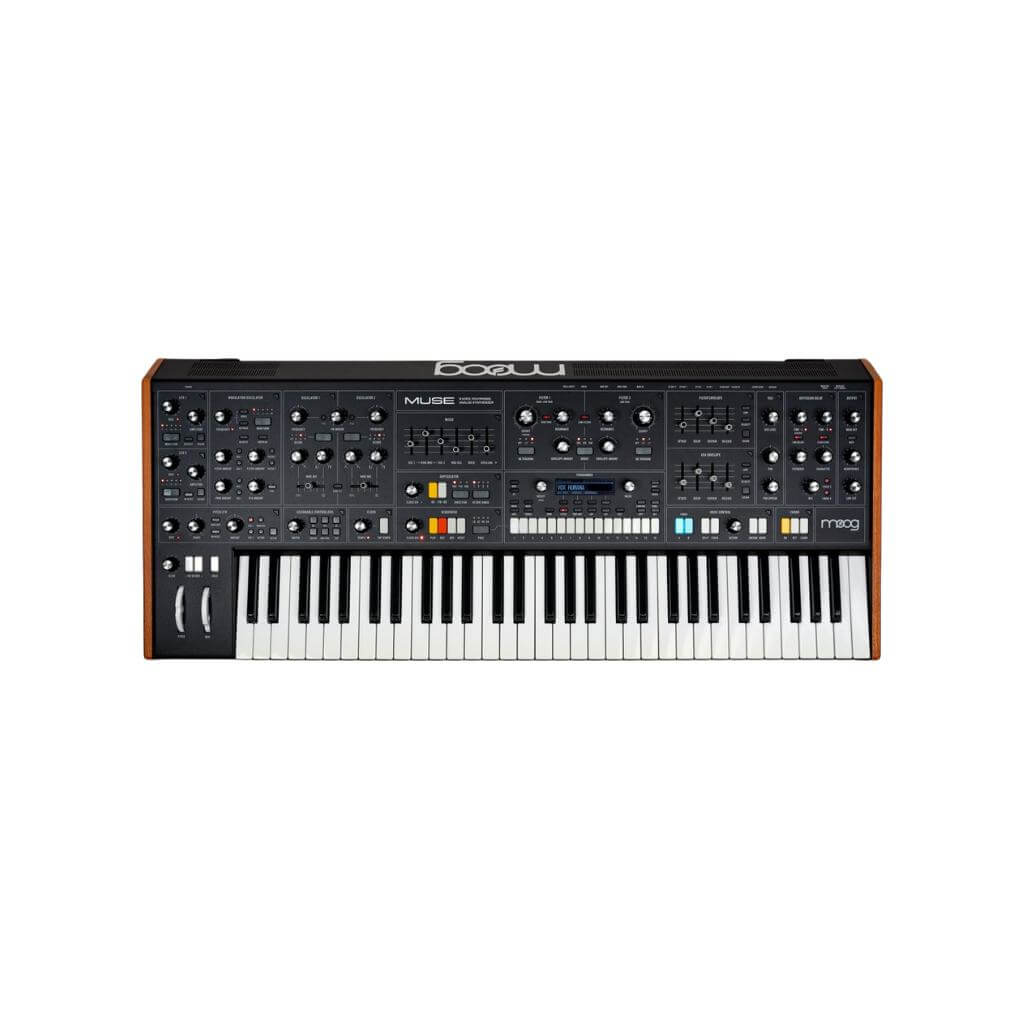
In building Muse, one of the most versatile polysynths of the decade, Moog brings together various threads from its storied history. The two analogue oscillators are inspired by the Minimoog Voyager, and allow bi-directional FM inspired by the Moogerfooger MF-102. There’s an additional modulation oscillator, able to act as LFO or at audio-rate, which is straight from the Minimoog playbook. Meanwhile, the outstanding dual filters are inspired by the classic 904-A module.
Additionally, Muse boasts excellent arpeggiator and chord memory functions, with Clovis McEvoy’s review praising the 64-step 8-voice polyphonic sequencer for its probabilistic features that “open up a huge range of possibilities for producers and composers who want to add some generative music to their studio workflow, or even live performers who want to add the element of unpredictability to a jam”.
In conclusion, Clovis says: “With its considered feature set, tactile control surfaces, and an oh-so-premium analogue sound, Muse has an addictive quality that keeps you coming back for more, and more, and more.”
This is 2026’s ultimate polysynth, especially if you’re after a blend of analogue prowess and intuitive playability.
Moog Muse
www.moogmusic.com
£2998/$3499
Overall best polyphonic synthesizer
Best value polysynth: Sequential Fourm

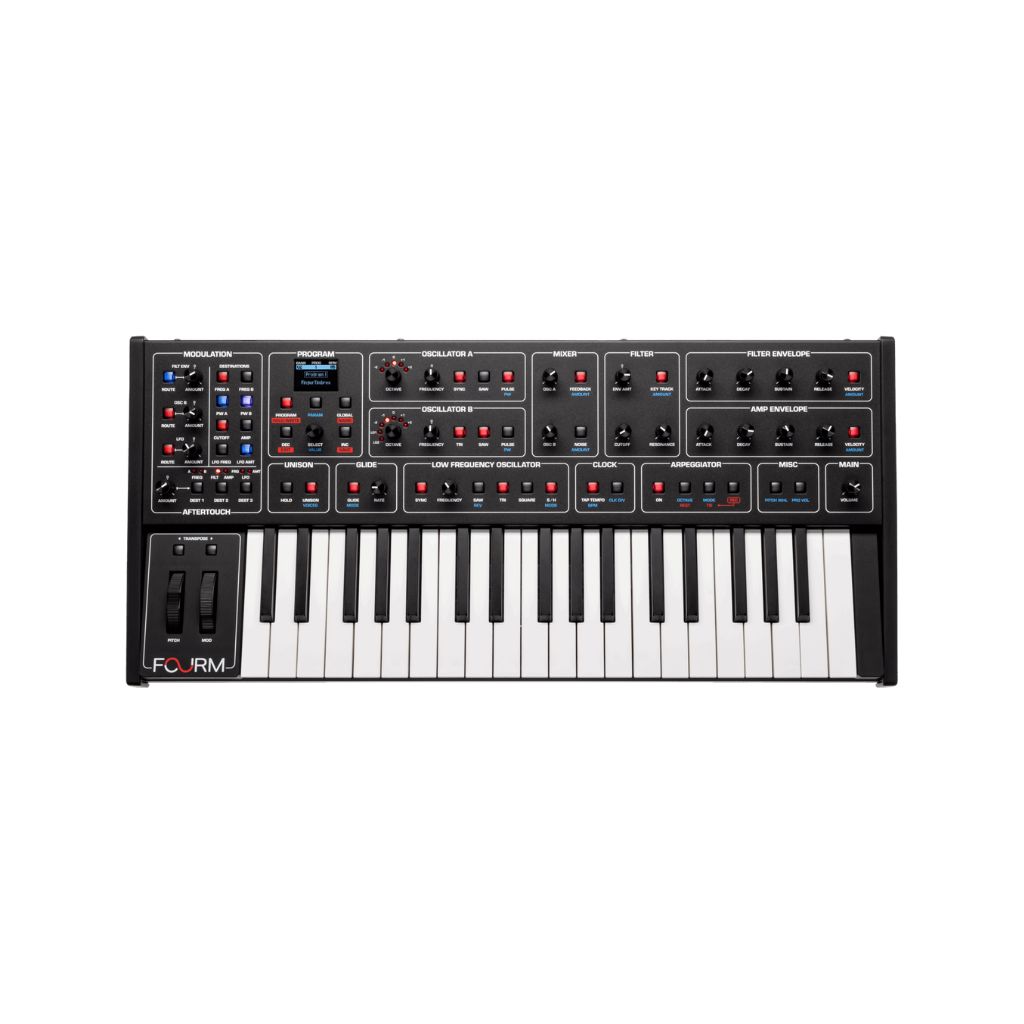
With four-voice polyphony, Fourm has one less voice than the all-time-classic Prophet-5 on which it’s (more or less) based, and there’s further cost-saving in the fact that not all parameters have their own dedicated control, and so can only be accessed via a spot of menu-diving. However, Fourm’s synthesis circuitry is 100% analogue, and closely follows the Prophet architecture, whilst the menu-bound parameters are actually very easy to get at thanks to a system that is, in the words of my review, “a graceful solution that doesn’t break your flow”.
These trade-offs come with a big price saving, Fourm being around a quarter the price of a new Prophet-5.
As I concluded in my review: “For an affordable and attainable price, [Fourm] boasts the classic Sequential looks whilst still appearing modern. It delivers an authentic Prophet-like sound without the headaches of working with a true vintage analogue synth. And it oozes genuine Sequential pedigree from every pore.”
Sequential Fourm
www.sequential.com
$999.99
Best value polysynth
Best On Stage polysynth: Arturia Astrolab

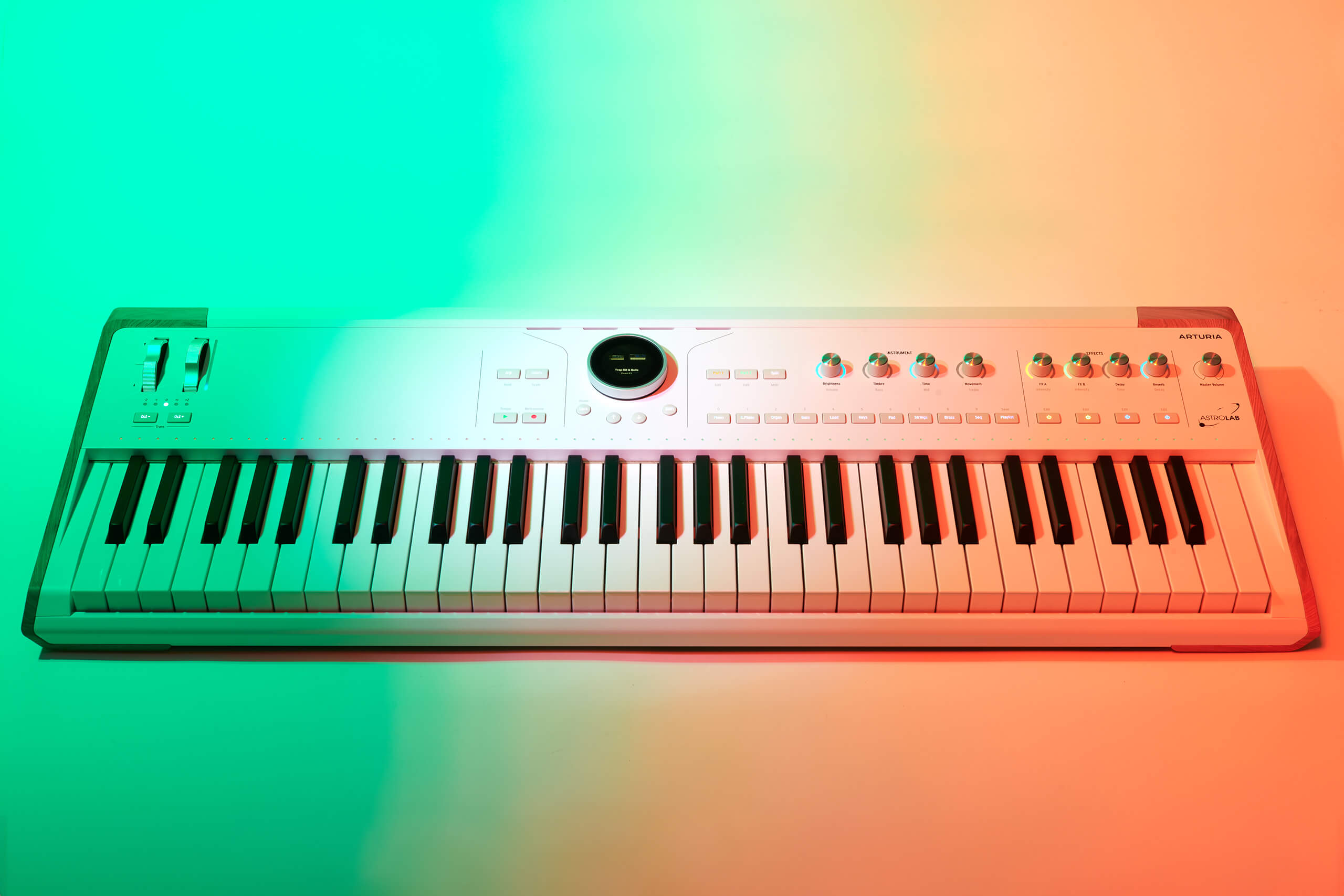
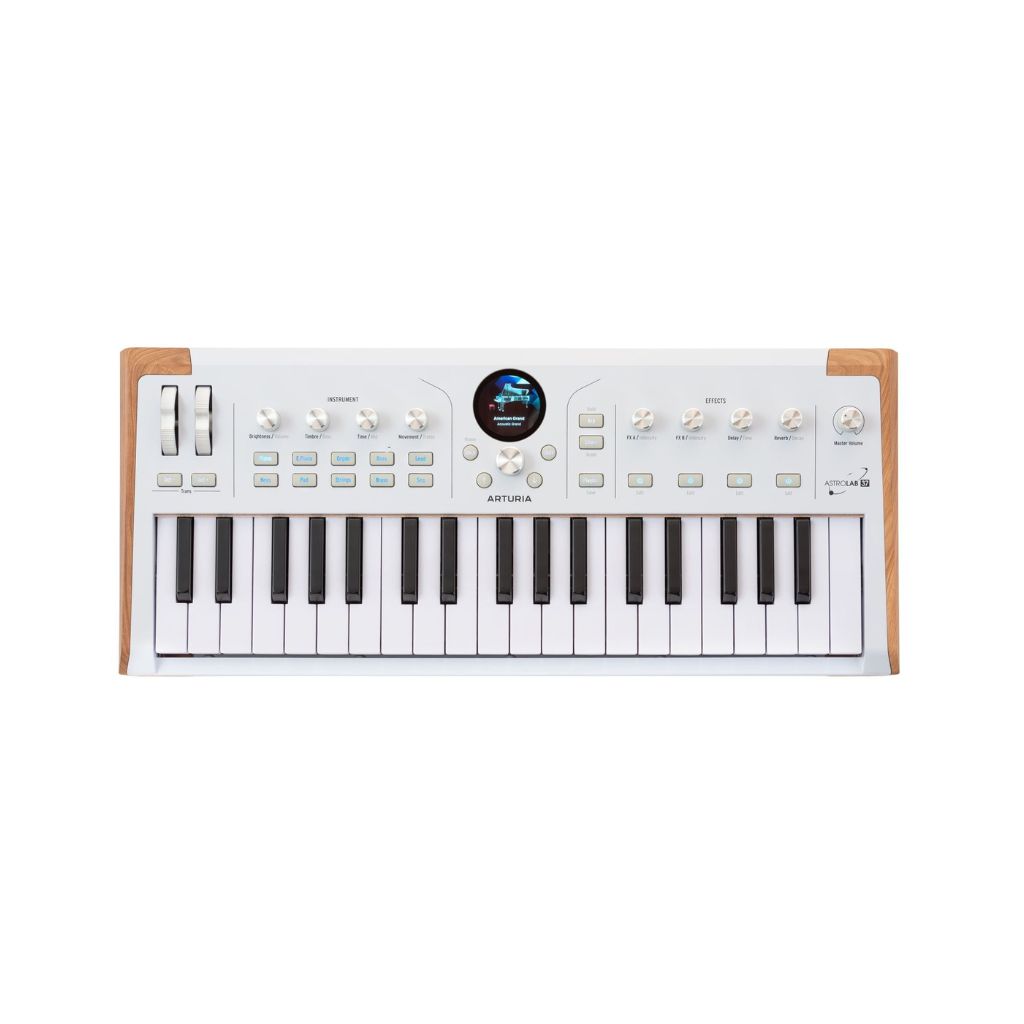
AstroLab is, in essence, a computer dedicated to running Arturia’s Analog Lab software, built into a stylish and high-quality keyboard enclosure. This equips it with over 1,800 presets taken directly from Arturia’s highly regarded V Collection soft-synth library, allowing the instrument to accurately emulate practically every synth you’ve ever dreamed of owning.
The most important parameters of every preset are mapped to the hardware’s eight rotary controls, ready for use during performances, and mean you can modify (and store) presets to better suit your specific needs.
The instrument truly comes into its own for performing musicians. You could lug a ton of temperamental analogue machines along to your gigs, and leave your audience bored as you re-tune and re-patch between songs. Or you can turn up with all the synths, sounds and performance controls you’re ever likely to need, all packed into one sleek and stylish instrument.
Arturia AstroLab
www.arturia.com
AstroLab 37 €699 / AstroLab 61 €1599 / AstroLab 88 €2499
Best On Stage polysynth
Best vintage-style polysynth: Oberheim OB-X8
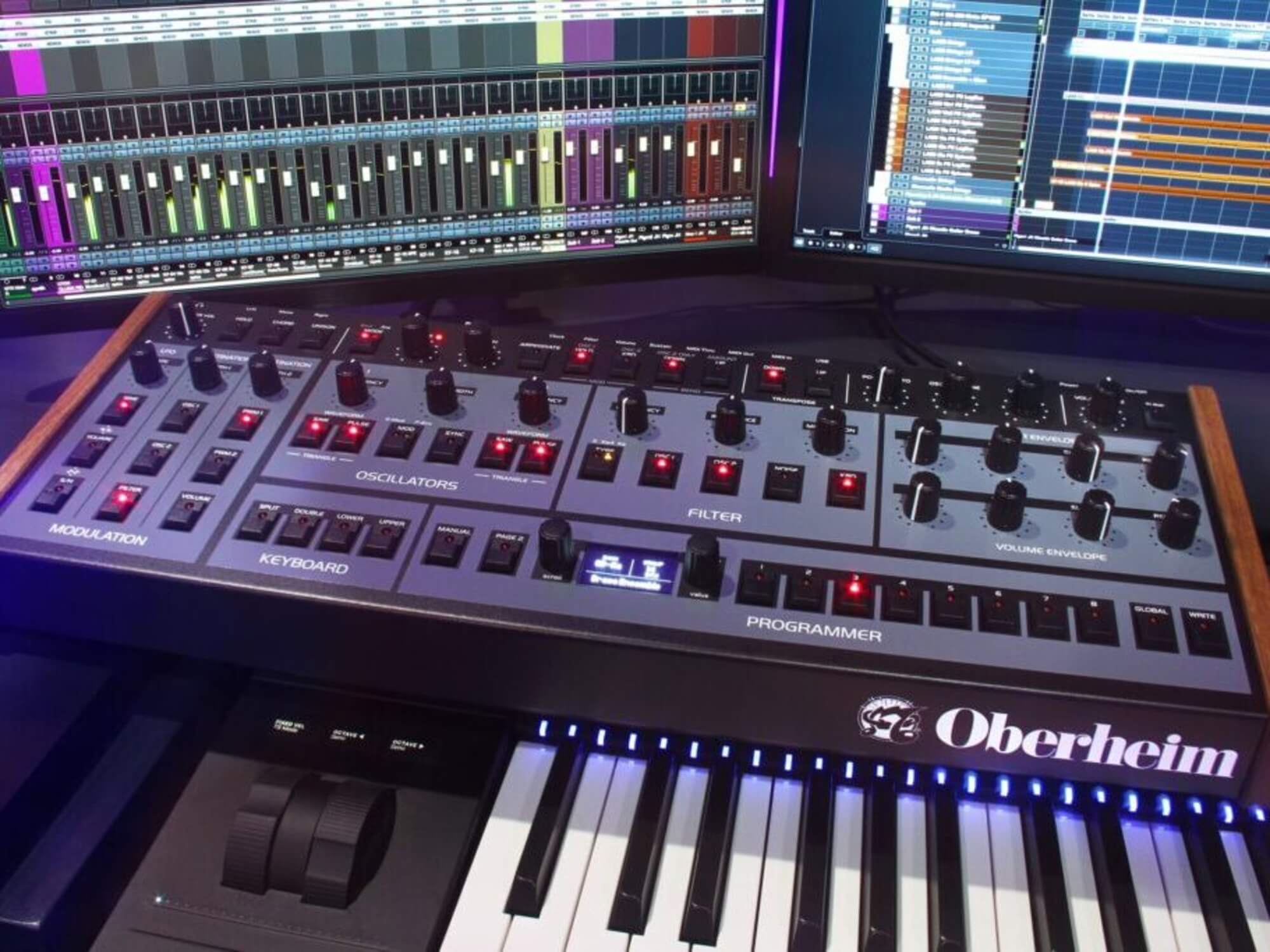
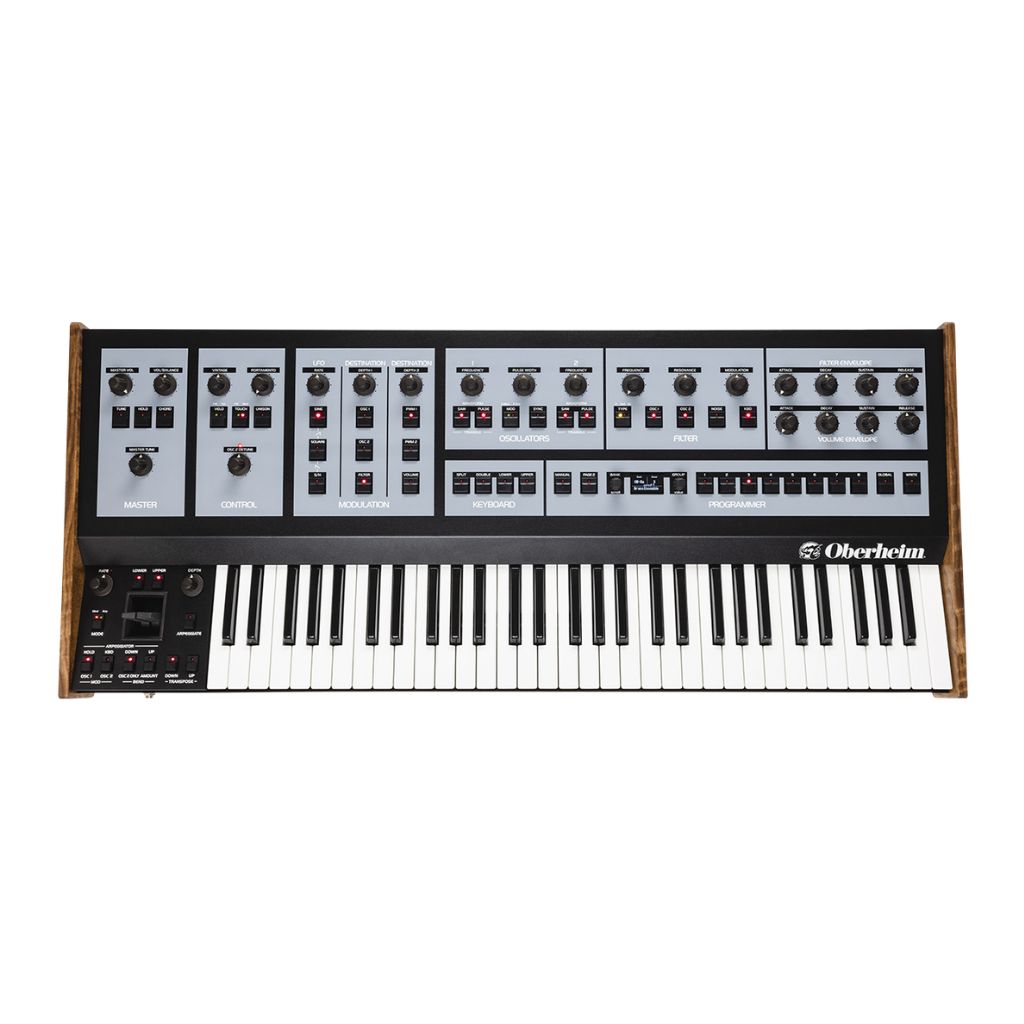
Visually, Oberheim’s OB-X8 follows the lead of the original OB-X, with styling that favours the muted shades of grey of that classic over the hallmark blue-stripes-on-black of the OB-8 and later Obies. When designing the internals, though, the Oberheim team analysed the “complex interactions between the various components of each OB-series synth” in order to create “the most faithful, authoritative renewal of an analogue classic possible”.
Whilst 100% analogue, the synth has nevertheless been furnished with mod-cons such as a modern FATAR velocity and aftertouch sensitive keybed, storage for over 600 presets (the OG OB-X could store just 32!), USB-based MIDI, and a Vintage knob that, in the words of William Stokes’ review, “adds an element of old-school unpredictability and parameter slop to the OB-X8’s otherwise squeaky-clean behaviour”.
William concludes: “far from a reboot that still leaves one wondering what an original would be like to play, it really feels like the genuine article – every bit a classic Oberheim.”
Oberheim OB-X8
www.oberheim.com
$4,999.99
Best vintage-style polysynth
Best Modern Analogue Synth: Arturia PolyBrute 12


PolyBrute 12 is an advancement of the original PolyBrute, itself a completely new analogue polysynth designed from the ground up by Arturia, and encompassing all of the knowledge gained in the development of the company’s V Collection soft-synths.
In his review, Terrance O’Brien describes this 12-voice beast as “possibly the most powerful analogue synthesiser of the modern age”, thanks to features such as two oscillators per voice, dual filters, a comprehensive modulation matrix that “leaves almost no corner of the synth untouchable”. The synth also boasts a generously proportioned control panel, full polyphonic aftertouch, ribbon controllers, and the innovative Morpée pad (a sort of 3D touchpad in place of traditional pitch and mod wheels).
Terrance concludes: “The combination of a world-class sound engine and tons of options for expressive playing is an obvious winner. PolyBrute 12 proves that [Arturia] can out-innovate even the most established names in the game”.
Arturia PolyBrute 12
www.arturia.com
$4,999
Best Modern Analogue Synth
Best Virtual Analogue Synth: Roland Juno-X

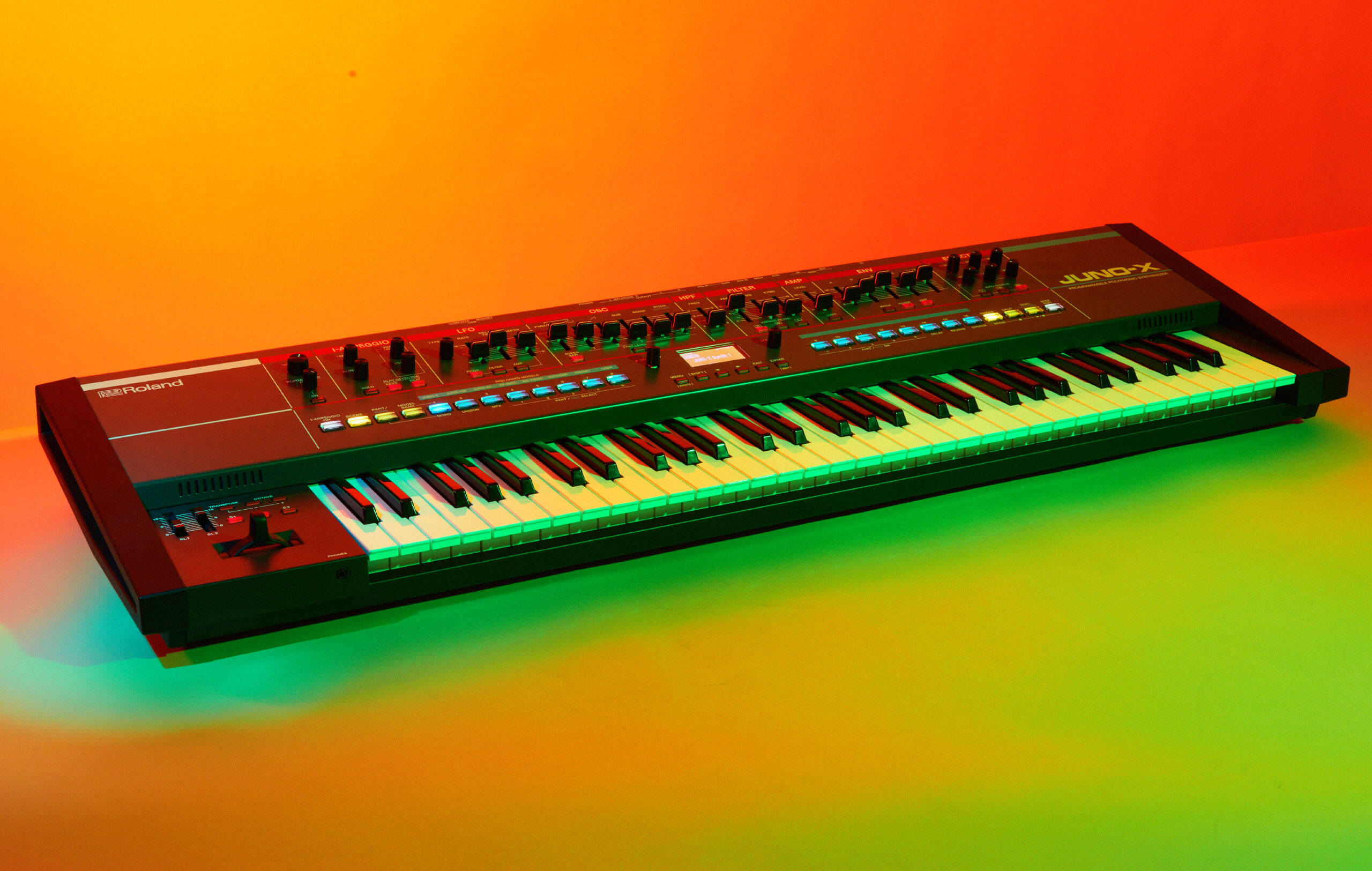
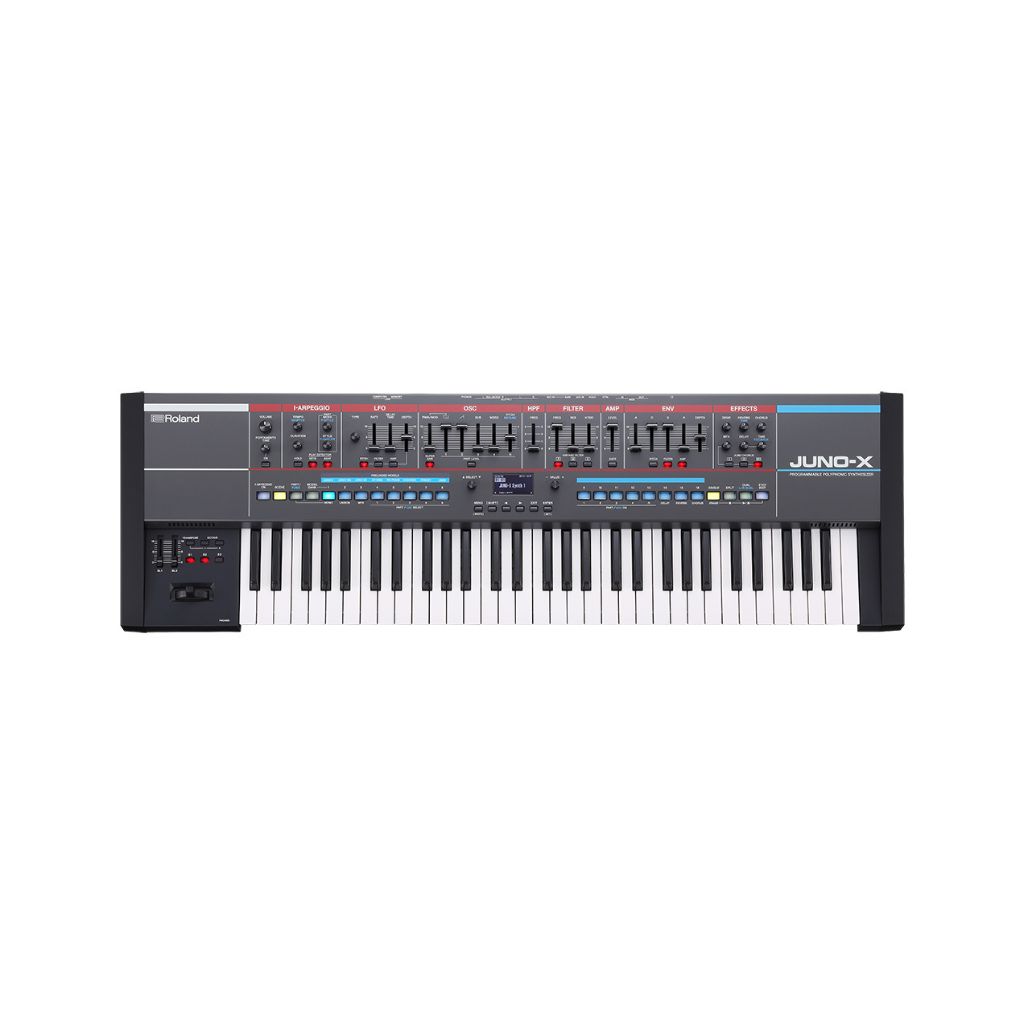
Juno-X is Roland’s modern-day Zen-Core powered model of the classic Juno-6, Juno-60 and Juno-106 (the “true” Junos, you could say). Being built on modelling technology means this isn’t a true analogue synth, but Zen-Core is an exceptional modelling system that, as Sam Willings explains in this review, “emulates the physical characteristics of analogue synths […] right down to an internal temperature gauge that lets you dictate the tuning and drift of the synth engine”.
The synth comes with an exclusive Juno-X model, not available as a Model Expansion for other Zen-Core instruments and software, that adds a few new features to the classic Juno recipe, most notably a super-saw oscillator and a choice of three filter models. These give Juno-X a much more varied sound palette than the original Juno. It also includes Juno-60 and Juno-106 models, plus a collection of JV-5080 and RD piano sounds. You can also import other Zen-Core sounds into the Juno-X, letting you expand your sound palette.
As Sam concluded: “[Juno-X is] a satisfying solution for producers wanting the sound and touch of a Juno. Plus, it’s a seriously powerful standalone synth for DAWless jams and live performances.”
Roland Juno-X
www.roland.com
$2,199.99
Best Virtual Analogue Synth
Best For Non-Keyboard Players: Polyend Synth

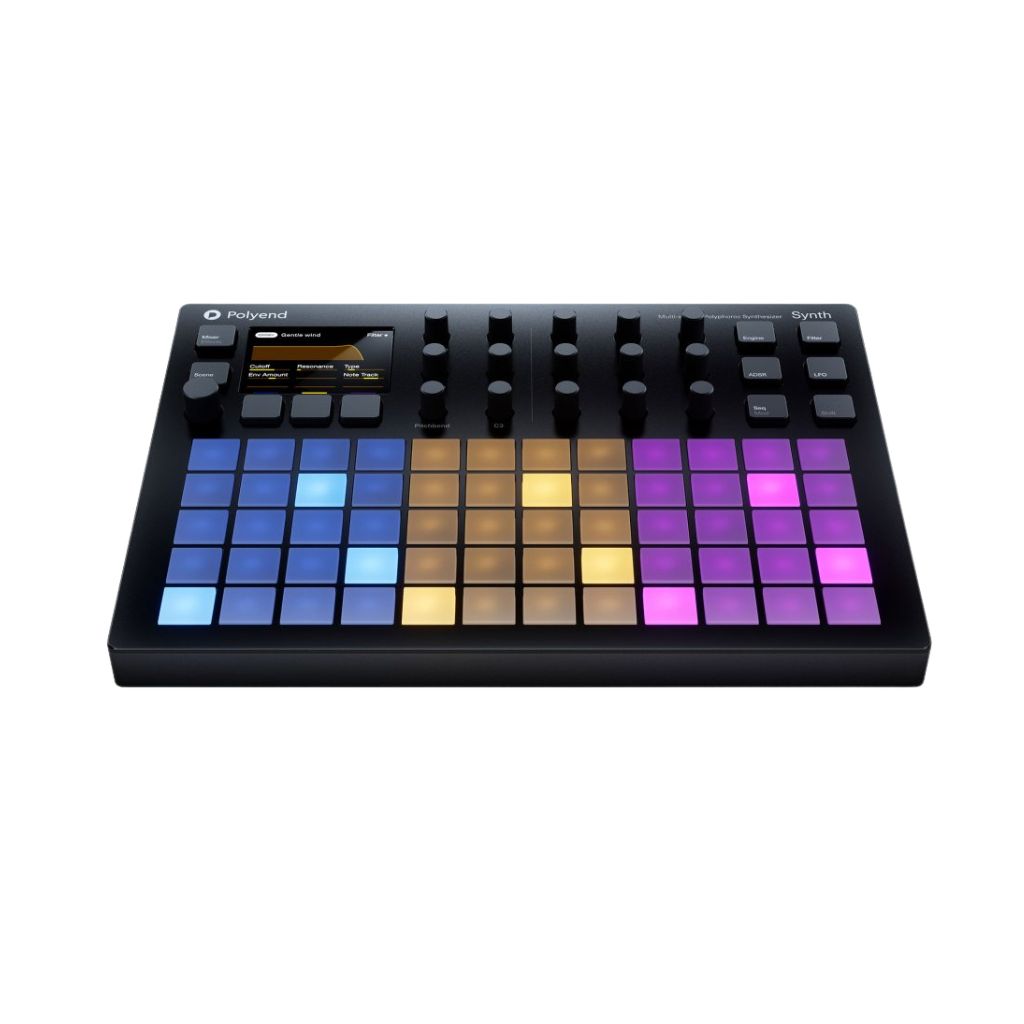
Polyend Synth contains three separate… umm… synths, each able to load one of eight engines, giving the instrument an incredibly broad palette of sounds. This multi-engine approach isn’t unique to Synth, but what is unique is its 12×5 grid of velocity-sensitive pads that make it possible to play all three synths simultaneously. The pads can be grouped in various ways, each group triggering one of the engines to play simple notes, notes within a scale, chords, or even arpeggios.
The key to making all of this playable is the chord follower. As Terrence O’Brien explains: “Each synth can have its own arpeggiator or sequencer settings, but as long as one synth is in a chord mode (either standard chord, chord scale or using a chord pack), the other two synths will follow the root notes to keep in tune.”
Terrance concludes: “The focus [when designing Synth] was on making something fun that was more than just a musical toy”.
Polyend Synth
www.polyend.com
$799
Best For Non-Keyboard Players