


Apple is well known for buying startups and smaller tech companies that have developed something it feels it can usefully incorporate into its own products. Why do it all from scratch when you can just buy a company that already has? Siri and Shazam are prime examples of this.
Apple even bought Logic Pro wholesale from eMagic in 2002, with an eye on locking music professionals into the Mac platform. Final Cut Pro, too, started life elsewhere.
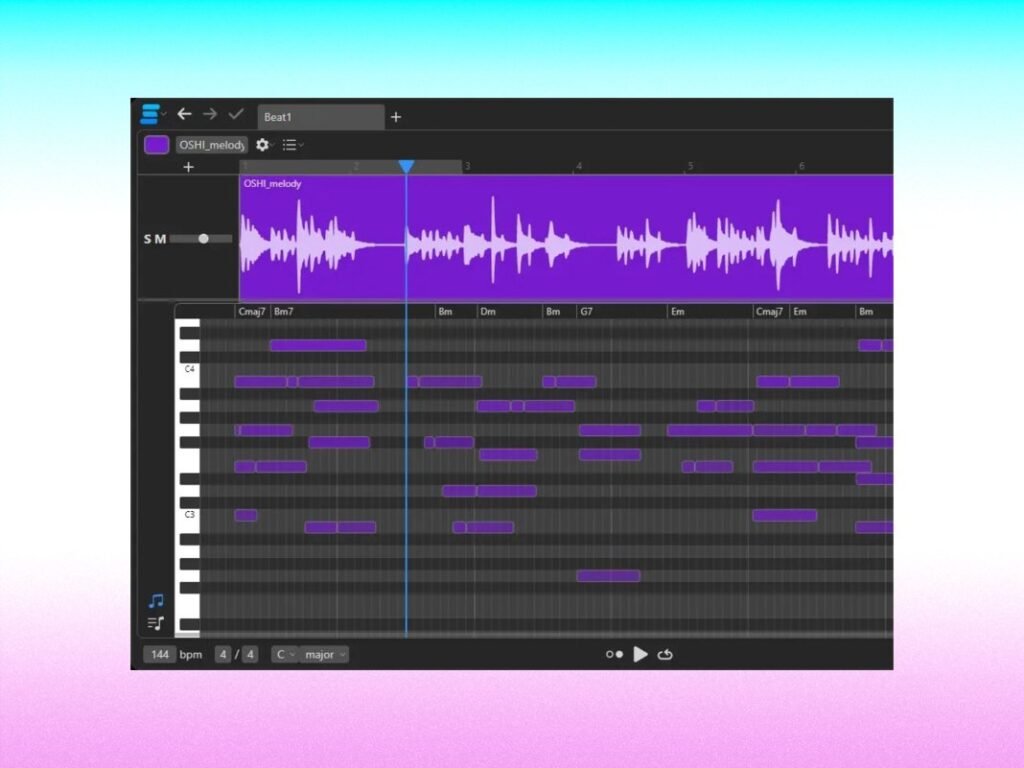
Now the company has acquired Samplab, a Swiss developer that makes an audio editor that provides MIDI-style editing of digital audio. According to the company’s website, its talents include detection and editing of chords in audio with export as MIDI, tempo and key matching of samples and granular stem separation with free editability of individual notes.
Samplab offered a free basic tier (limited to 10-second mono samples) and a Premium subscription for £9.99/ month which unlocked stereo output and unlimited sample lengths. According to its developers, the plugin “uses AI to transcribe polyphonic audio into editable MIDI notes while preserving the original timbre, streamlining remixing workflows and unlocks creative potential from audio samples without tedious manual editing.”
Logic Pro already does some of this to some level with Flex Pitch, but clearly Apple wants to keep up with – or overtake – the competition and make Logic even more appealing. While Cubase Pro arguably leads the DAWs at present when it comes to note-level audio editing thanks to VariAudio, it’s still not polyphonic. For that, in any DAW, you need a copy of Melodyne or something even more specialised like RipX. Any solution is, at present, plug-in based, and we have to imagine Apple is looking to streamline that by building Samplab’s capabilities directly into Logic Pro.
Stem separation has come to most leading DAWs now but is generally limited to four or so extracted types (vocals, drums, guitars, ‘other’, for example). With rapid advances in AI made so frequently these days, this seems like another area where Apple would be keen to enhance Logic’s tools. Being the first DAW that could unmix a whole production (like RipX does, in a different way), would be quite the coup.
Apple does get some flak from Logic users for the slow pace of its development, which is mostly because it’s a tiny part of what this vast company produces. But it’s in Apple’s interests to keep up with the competition and keep people buying Macs and iPads to run the software on. It’s also likely that Apple will trickle some of these new features – or variations of them – into its other apps like Logic for iPad, GarageBand or other members of the Creator Suite like Final Cut Pro, in some form.
Apple hasn’t gone all in on AI across its creative apps – at least not yet. Logic has the AI-powered pattern assistants for some of its instruments, AI-assisted mastering and stem separation, but overall the company has taken a less aggressive approach than some others, and this is reflected in its pro apps as well. Instead, expect to see more apps like Samplab’s acquired and quietly – almost invisibly – incorporated into software workflows in future updates.
Given that Logic Pro is still available as a one-off purchase and lifetime updates are free (though if you opt for the Creator bundle, it’s a subscription model), moves like the Samplab acquisition are great news for Logic users, adding important new tools and showing that Apple still values its pro audio customers.


Playing in bands in the 90s led Hollin into the world of production, joining MusicTech on issue 2 in 2003. With several internationally published books on composition and software he is an expert in Apple and consumer tech, having written for most leading Mac publications for many years. He is also a commercial photographer with work appearing in the national press.
Get the MusicTech newsletter
Get the latest news, reviews and tutorials to your inbox.