


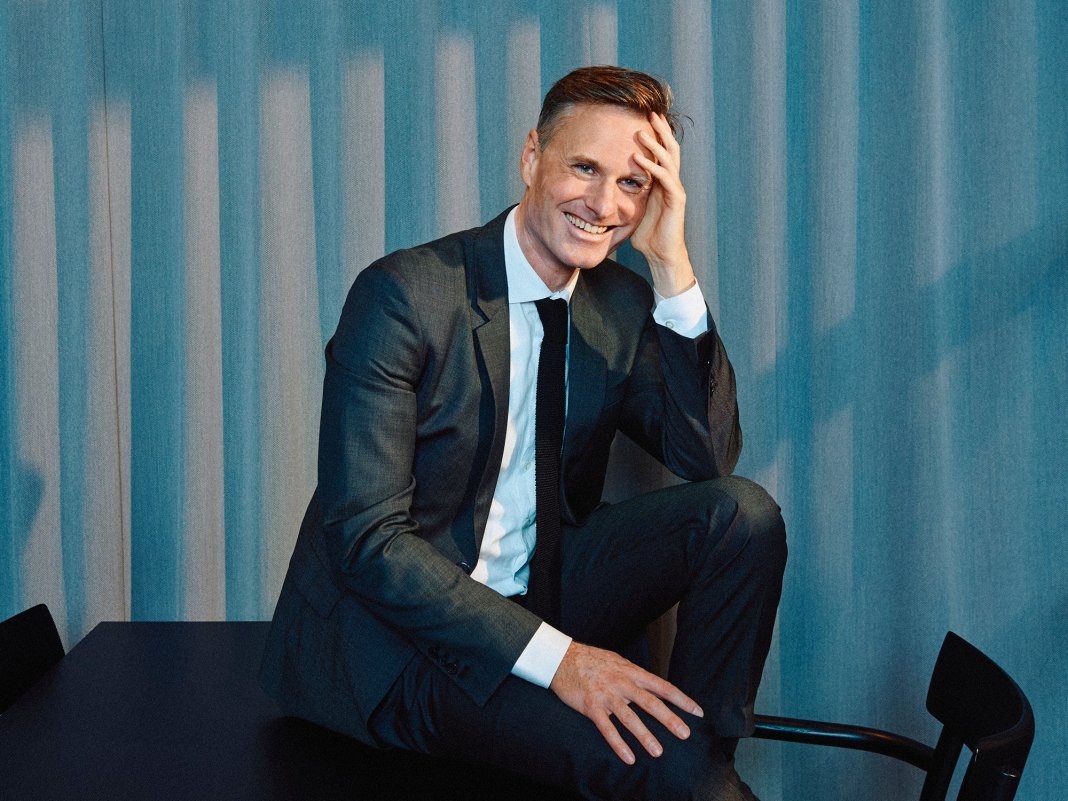
Gerhard Behles isn’t interested in the idea that music is a “problem” for humans to solve. Instead, the Ableton CEO and co-founder views music and the act of creating it as a continuous experiment that contributes to the “blossoming of a personality”. If you can get on board with that ethos, you might be Ableton’s ideal customer.
“We want to be especially important for people who are approaching music in this way,” Behles says from the brand’s Berlin office. “We are very much dedicated to people who think of the act of [making music] as the actual end in itself.”
It’s natural then, that Ableton and its now-ubiquitous DAW, Live, emerged as a result of experimentation, too. In 1999 Berlin, Behles and his co-musician Robert Henke were creating musical software — using the programming language Max — for their electronica project, Monolake. As “habitual programmers”, Behles says that the duo never intended to turn their quirky experiments into a product, let alone one of the most beloved companies in music technology. But the brand arose in 2001, with other co-founder Bernd Roggendorf, out of a series of “happy accidents”.
“You’d always like to reconstruct the history as if it made sense from the beginning, like you had a plan. But truth be told, that’s not the case,” Behles acknowledges. “It emerged more than anything.”
With Live now approaching 25 years old and the company officially producing hardware with Push and Move, Behles is confronting existential questions surrounding Ableton. In the past five years, he’s been vocal about his desire for Ableton to “own itself”, making headlines in 2021 when he turned down investment opportunities from the likes of Diplo, Scooter Braun, and venture capitalist Joshua Kushner in 2021. Diplo called it a “very anarchic and punk” move, but Behles’ reasons are realistic.
“We all die, right?” he asks rhetorically. “So if you put something in the world and it builds a life of its own, what are you going to do with it? The classic two options at your disposal are: you solve it in your lifetime by selling, or it gets inherited after your lifetime. We looked at these options a number of years ago, and neither seemed meaningful in any way at all.”
Selling Ableton could have landed Behles and his leadership team a handsome payday. Although Behles says he has no ideological opposition to financial firms investing in music technology, the idea of a private equity company owning Ableton didn’t seem beneficial to its vast community.
“Our contribution to [Ableton], and what it’s become, should not be over-exaggerated,” he explains. “The thing that [Ableton] is now is because of the contributions of countless people, and that’s not limited to the people who work here; it extends into a wide ecosystem of people who are close to this brand for one reason or another — perhaps makers of a Max for Live device, or a certified trainer, or a user who’s invested a serious bunch of their life energy into getting fluent with these instruments.
“I should not be taking too much of the credit here,” Behles continues. “I should act as a steward and make sure that it can evolve into its best possible version, including when I’m not there anymore to oversee that myself.”
“All businesses probably screw up behind the curtain. What’s special here is that it’s a relationship… It’s delicate”
Anything’s Possible
How can Behles be so confident that Ableton will survive as a music brand for years to come, anyway? He notes that, regrettably, the “titan” companies in the electronic music space — synth brands such as Buchla, ARP and Oberheim — lacked the business acumen that was necessary to build a sustainable business. To build lasting value in music, you have to be in it for the long haul, he adds. But that doesn’t mean that everything always goes to plan.
Ableton has avoided damaging controversies during its lifetime and has built a committed customer base. But Behles concedes that Ableton has “screwed up many times… And also, sometimes in the face of the user, which is very painful.” Looking in from the outside, Ableton’s perceived screw-ups have been relatively minor: Producers weren’t impressed at first with the 2024 launch of Move, and Live 9 users were briefly unable to activate their purchased software in 2013. The brand’s goal, of course, is to be ready for any setback, regardless of its significance.
“Screwing up is the rule, not the exception,” says Behles. “I think all businesses probably screw up behind the curtain. What’s special here is that it’s a relationship-based thing, where the people who use an instrument are emotionally tied to it, so you can get a lot of heat from a decision because it becomes a matter of breaking somebody’s flow. It’s very delicate.”
“Ableton is what it is now because of the contributions of countless people”
When trying to solve such problems, Behles and the Ableton team take inspiration from Apple and other software companies in the music tech space. It’s not lost on Behles that each iteration of Ableton Live carries a number — we’re currently on Ableton Live 12 — and therefore an expectation to build on a functional product. He calls it a “fascinating challenge” to “battle the wealth of possibility” while recognising “the need to preserve a clean and efficient workhorse”.
As for the next 25 years of Ableton’s future, Behles has a simple desire:
“I would hope that it still, or even better than today, serves people who take music making seriously, without being serious about it all the time. [Music is] a worthwhile thing to spend your time and life energy on. We just want to be there for these people to our best ability. I don’t think that should change.”

Sam is the Commissioning Editor at MusicTech, where he’s helped shape the publication’s editorial voice since 2019. With nearly two decades of music-making and a degree in music technology behind him, his focus is on the stories behind studio gear and the artists who use it. He’s spent way too much time sampling disco records.