


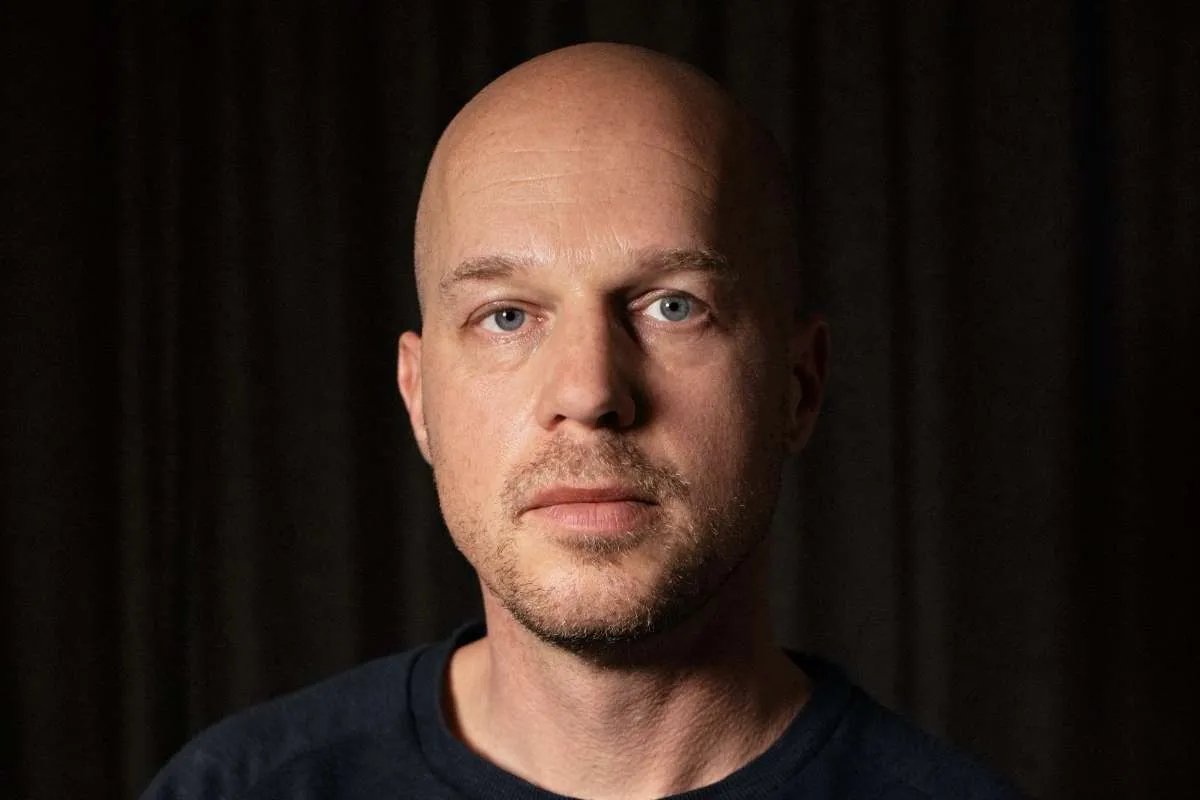

AIxchange chairman Ralph Boege.
BUMA/Stemra has become AIxchange’s marquee CMO partner as the creator-friendly attribution framework takes center stage at IMS Ibiza and Africa Rising Music Conference Johannesburg. Other early believers are also rallying around the recently formed AI music initiative.
In the wake of multiple major label tie-ups with generative AI music giants, an influential wing of the music industry is advancing a very different attribution architecture. That includes a completely reworked framework emanating from Europe, which has already attracted an initial group of powerful allies.
The biggest criticism of major label AI deals is that they’re largely opaque, with a specific subset of creators reaping the benefits. But what if a broad-based attribution and payment system were applied to all content owners?
That dissatisfaction is fueling a newcomer coalition led by AIxchange and AI Think Tank Berlin, a group first profiled by Digital Music News earlier this year. AIxchange’s founders recently recruited DMN to further expand their attribution concept, which revolves around ‘Creative Weight Attribution (CWA)’.
According to Ralph Boege, chairman of AIxchange and CEO of Paradise Worldwide, recent AI mega-deals mirror the mistakes of the early streaming era. That includes problems like opaque terms and pro rata distributions that favor top-tier catalogs and labels with large market shares. But the biggest sticking point for Boege is the lack of explicit consent from the artist.
“We as an industry can do better, and we shouldn’t repeat old habits by solely relying on market share or DSP results to formulate our AI attribution models,” Boege told Digital Music News. “We question the deals that are in place between the majors and AI platforms, and I can hardly imagine that they properly remunerate all creators and stakeholders.”
That simmering protest is now attracting adherents as AIxchange’s gospel gains momentum.
AIxchange has now disclosed a wave of landmark partnerships with BUMA/Stemra (the first CMO to actively collaborate on attribution), AFEM (Association for Electronic Music), and South African CMOs CAPASSO and SAMPRA. These early adopters are on board with AIxchange’s ‘consent-first’ licensing approach and are now actively helping to build a framework that directly challenges arrangements crafted by mega-labels and dominant generative AI music platforms.
With an early core of dedicated partners, AIxchange is focused on reaching an industry tipping point with its broad-based, global, industry-standard approach to AI music attribution.
“If we don’t build an AI framework right now, we’ll lose the opportunity forever,” Boege said. “If the industry skips the attribution piece, we simply fall into the next trap.”
That’s not a fringe opinion by any stretch, though billionaire AI giants are pushing aggressively to win unfettered fair use judgments in numerous court battles worldwide. If courts rule that the use of copyrighted music falls outside of fair use, then direct deals with content owners will simply become mandatory. Despite this uncertainty, however, AI giants are typically ingesting vast amounts of musical content, copyrighted or otherwise, with plans to seek forgiveness rather than permission.
Against that backdrop, AIxchange aims to eliminate the “use first, ask later” status quo favored by AI giants like Suno. According to Boege, critical formative steps include anchoring operations at CIC (Cambridge Innovation Center) in Berlin, a central European music hub, and partnering with the Fraunhofer Institute (the inventors of the MP3) to dramatically improve detection and attribution capabilities.
But that raises a critical question: how good is AI detection in 2026, anyway?
When it comes to AI detection tech, lofty claims are routinely thrown about. While classifiers can identify 100% of AI-generated tracks with 99% accuracy in controlled environments, real-world conditions tell a different story. Steps like mastering, EQing, and stem mixing can plunge detection accuracy below 60%, according to some estimates.
Even worse, excessive codec switching and remixing can completely destroy digital watermarks.
Against those disappointing numbers, AIxchange is aiming to move beyond simple fingerprinting. Leveraging Fraunhofer’s music analysis methodologies and collaborating with detection specialists like Cyanite, AIxchange aims to make its more sophisticated and robust Creative Weight Attribution a new industry standard.
Unlike traditional models that pay based on direct plays, CWA measures the influence of a work within the AI model itself. It also quantifies how much a specific recording or composition shaped the model’s internal representation, while accounting for direct song and genre prompts. Comparisons between outputted songs and training sources are also a major pillar of the weighting mechanism.
There are also other interesting shifts that AIxchange and CWA are aiming to introduce, such as a 50/50 split between recording and publishing. There’s also an effort to offer fairer distribution to deeper legacy catalogs and niche genres, both of which tend to get ignored in current AI detection solutions.
“The legacy attribution methodologies are based upon major industry-dominated market share in established markets like the US, which is unfair towards artists from all over the world that are already underrepresented and underpaid,” AIxchange Operations head Peer-Uli May told DMN.
On the policy front, AIxchange and AFEM first disclosed their AI framework at Music Frontiers, an event organized by Berlin Think Tank member Music Tech Germany, last year. The aim throughout has been to shift away from data-mining loopholes and more towards solid licensing and revenue attribution frameworks, something EU regulators have also been pushing towards.
This model will now take center stage at IMS Ibiza 2026, which starts today (April 22nd).
Boege is using the IMS stage to launch the AFEM and AIxchange initiative, while reiterating the alliance’s vision. The roadshow then moves to the Africa Rising Music Conference (ARMC) in May, with the aforementioned CAPASSO and SAMPRA focusing on a pan-African AI framework in Johannesburg. The goal is to equip local creators with the tools to audit AI training datasets, ensuring that cultural value stays within the ecosystems that birthed it.
“AIxchange is a platform which allows us to reach our original objective: to protect the interests of rights holders in order to allow us to embrace AI as a new technology and the prospect of opportunities presented by it,” AFEM founder Kurosh Nasseri relayed.
Chatting with Boege, a missionary zeal quickly becomes apparent. In short, AIxchange aims to provide the scientific and legal foundation needed to reclaim control over human creativity. But far from being a Luddite, Boege stressed that machines and humans need to coexist in a healthy ecosystem, otherwise AI music will simply run out of material to steal and regurgitate.
Accordingly, consent is simply non-negotiable for Boege and AIxchange, and innovation shouldn’t require a complete sacrifice of ownership. For many real-life human musicians and creators, it’s still a goal worth fighting for.