

California’s Doc Martin has cemented himself as a house music veteran, with almost 40 years of experience in the studio and behind the decks, and running his own label, Sublevel, for 25 years. The producer and DJ has performed around the world, alongside iconic acts such as Larry Heard, Frankie Knuckles, Jeff Mills, Carl Cox, and even Daft Punk in their early days; but Doc Martin hasn’t slowed down after decades of success, and has continued creating and performing for the love of the game. This year, he’s releasing a slew of new original music, remixes, and collaborations with the likes of Harry Romero and D’Julz.
With such an extensive career, we’ve taken the chance to access Doc’s workspace in this issue of Studio Files, to learn how he balances vintage and modern gear, why he’s streamlining his setup, and what advice he’d give to producers looking to release music on their own terms.
Hey Doc! Your DJ career has taken you across the globe and onstage with some musical icons. How much does this impact your creative decisions when you sit down and make music in the studio?
I try not to get caught up in what’s hot at the moment. I’m pretty genre illiterate when it comes to that. I might hear elements that excite me in different styles of music, and bring them into a song or groove I’m working on.
Before social media, different cities and countries had their own musical vibe. England, Germany, Japan, New York, Chicago, and Detroit all had their own thing going on, for example. That was one of the things that was exciting to me: experiencing different sounds and vibes from city to city.
You’ve seen and been part of some massive changes in the dance world. What can the new wave of producers and DJs learn from earlier eras of electronic music?
There are a ton of new producers who are coming up with fresh ideas, but there are people who’ve been at this for a while who you can learn from. The most important thing is to have your music be a reflection of you. Sometimes songs come together in a day, sometimes it’s weeks or months. I wouldn’t use AI just because the notes fit; you should try to experiment. You might come up with something that is completely your own.

Your latest release is a remix of Jeremiah’s Move — what’s your general approach to an edit or remix?
The original was a record that I played through at least three copies of. This was a staple at the Sublevel parties. I wanted to keep the integrity of the original while giving it that West Coast vibe. I added congas, drums, stuttered hi-hats, fattened the bass up a bit, and played a dub-style keyboard part in the background, with a few acid edits and ran it through my Soundcraft board. It was more of a re-edit with post-production added to it. I wanted to keep the integrity of the original.
Tell us about your studio.
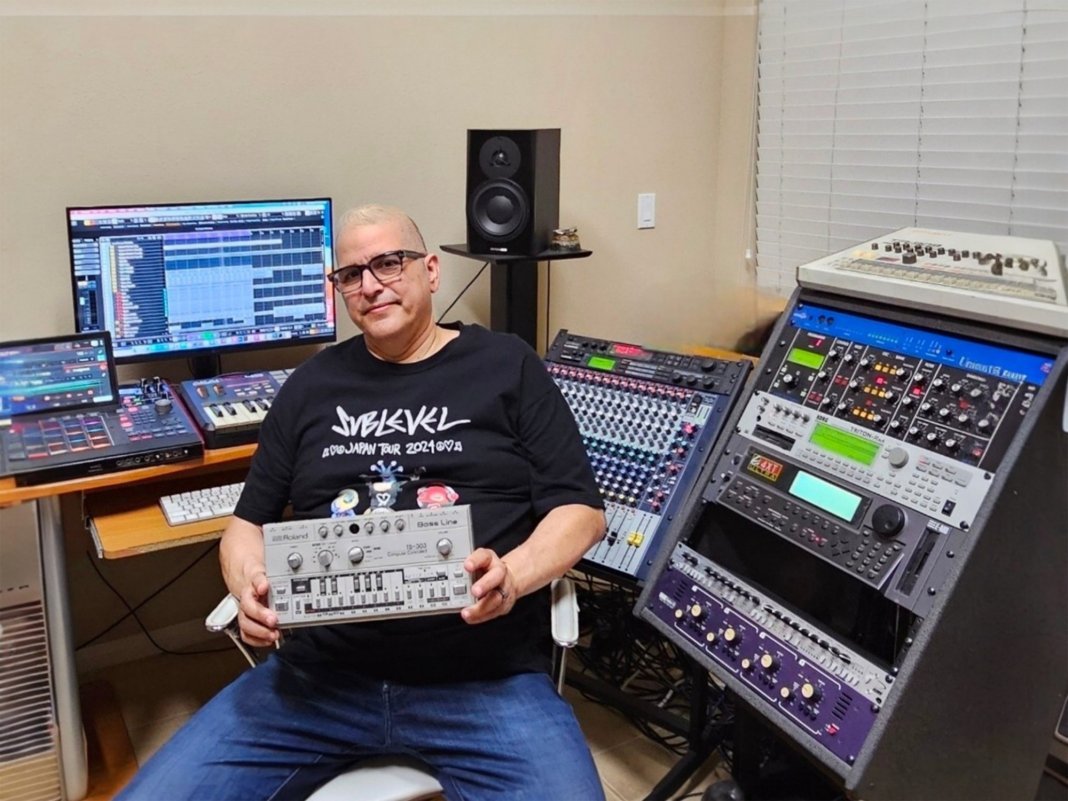
My studio is located in a storefront by the beach in Oceanside, California, between Los Angeles and San Diego. It started as a place where I could do pre-production, and it transformed into a lot more than that — I can really take my time and experiment with sounds and effects. It’s a mixture of analogue and digital equipment, and after all this time, I’m still learning how to get different things out of my gear. I’m pretty much self-taught, so I have my own way of doing things. I’ve always said that I’m just a DJ who makes records.
Your gear collection is practically a museum — particularly in the drum machines. How often are you reaching for the vintage Roland drum machines, and what do they bring to your music?
I use my vintage gear a lot and will run them through effects. I love my Studio Electronics SE-1X, and use it a whole lot. The bass is so warm, and hits in all the right places. I’ve found that my Roland machines all have their own personality. Whereas modern gear often all sounds the same, so then it’s up to you to make it sound different. I will also still use my TC Electronic Fireworx effects if needed. As most people know, there is no right or wrong; it’s just what works for you!

Tell us about how you use the DJM V10 — this isn’t a DJ mixer for the lighthearted, right?
I absolutely love this mixer. I did product testing for this with Pioneer DJ. I love the compressors on each channel, which help make a tighter blend when mixing newer tracks with older ones, which I do a lot. The crossover on the mixer is also a plus. The way you can blend records together on this mixer is super smooth as well. In the beginning, most people would see it and get intimidated — so many knobs and features — but I think now it’s become an industry standard. I love the AlphaTheta Euphonia 4 Channel Rotary mixer as well. I have an affection for rotary mixers, as I helped with the development of the Rane MP2015 mixer.
What’s been the biggest investment in your studio?
I’ve been very fortunate when it comes to acquiring equipment. Finding unheard of deals on gear. Getting a 909 for $300 back in the day from an ambient producer. I guess you could say I’ve got good gear karma. I would say the Akai MPC X is the most expensive piece of gear that I’ve bought in the last few years. The jury is still out on this one for me. I got it fully loaded. I’m still comparing it to my MPC 2000; I definitely need to spend more time with it.
How do you see your sound and studio evolving in the next few years?
I’m going to streamline even more. I’ve got a ton of great analogue gear sitting here that someone could be using on their own journey. I’m always learning new things, and have been fortunate to work with people who live in their studios.
Have you felt yourself actively changing your productions to align with what streaming platforms seem to desire right now? Is that something you have to consider?
To be honest, not really. There are very few labels that can keep up a crazy release schedule and deliver quality, interesting music. It becomes more cookie-cutter, just to fill a release schedule. I look for stuff that I can pull out five years from now and will still sound good. To me, it’s not who has the most new records that wins. Believe me, I’ve been sucked into that mind frame before. I really love having a relationship with the music I play.

You’ve released music on some of dance music’s most iconic labels and have 20 years of experience running Sublevel. Is there any advice you’d give to new producers looking to sign their music to labels?
I’ve been so fortunate to have been released on so many great labels. Not all of them were big records at all, but it was 100% us. Sublevel was an outlet for me and Lillia to release our own music, as I didn’t have a big budget to release a ton of other people’s music. We were vinyl-only when we started. 25 years in now, and we are working harder than ever to cut through the noise. I would recommend that every up-and-coming producer release music on their own to see how it’s done. It will give them a better understanding of what’s involved in releasing music.
Don’t get discouraged if you send stuff out and don’t hear back from the labels. Keep grinding and working to get your music out there.
What’s a music production myth you think needs debunking?
That whoever has the most gear wins. I’ve been to studios where there are tons of keyboards just sitting there collecting dust. I’ve been guilty of this as well. I remember doing a record in the early 90s in Hackney, London. We turned the finished project in on a metal cassette mixed on four channels. The label was like, ‘How did you get it to sound this good on a cassette?’ We used maybe four pieces of gear.
Who gave you the biggest lesson in your career? Can you tell us about how it impacted you?
In the early days, I would say Blakkat (Mark Bell). I spent endless hours in Blackpool, England, learning about techniques, effects, and live mixing. Now I would say Joeski (his way of putting together music is crazy), Harry Romero (how can everything sound so fat and big and still have vibe?), Homero Espinosa (so good on those deep vibes), and Andreas Henneberg has really impressed me as well. All of these I’ve got to sit in the studio with, and can feel their love for what they do.

Sam is the Commissioning Editor at MusicTech, where he’s helped shape the publication’s editorial voice since 2019. With nearly two decades of music-making and a degree in music technology behind him, his focus is on the stories behind studio gear and the artists who use it. He’s spent way too much time sampling disco records.