


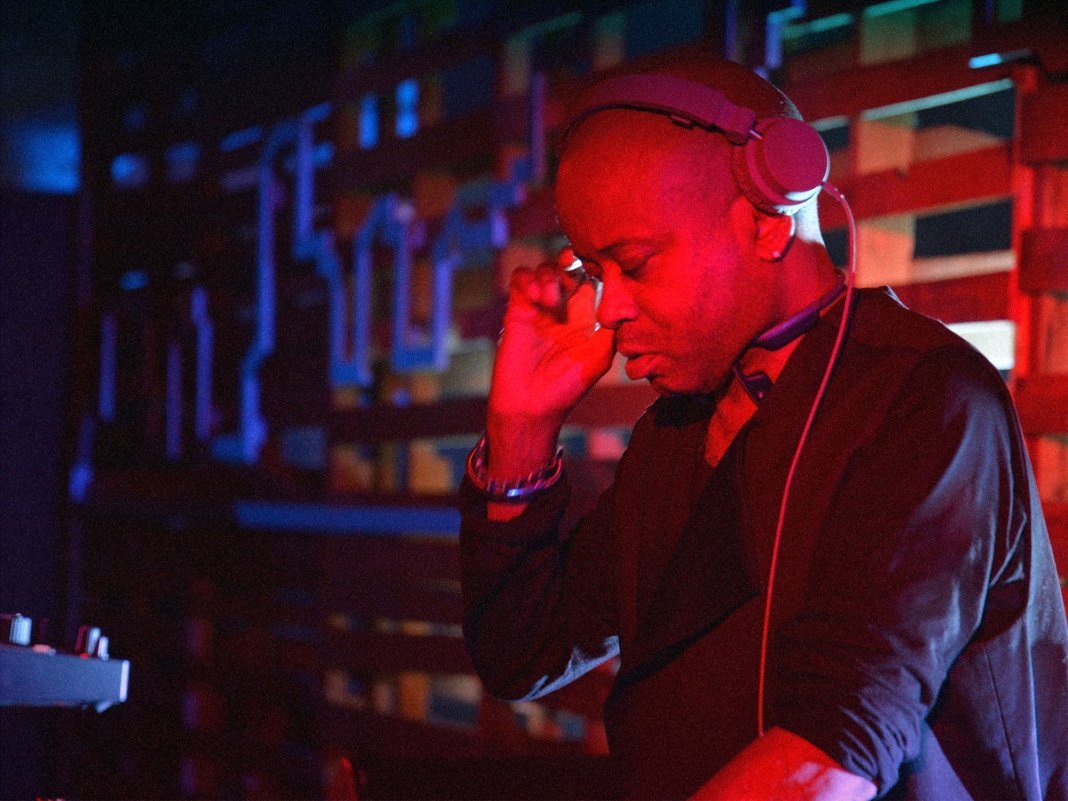
“Juan was the originator of techno, a true visionary who opened the door for so many of us, myself included,” shared Detroit legend and fellow member of ‘The Belleville Three’ Kevin Saunderson after the news of Juan Atkins’ passing broke at the weekend.
“I’ll never forget how he showed me how to finish my first record, Triangle of Love. That meant a lot to me then, and it still does today.”
The outpouring of grief within the global electronic music community has been vast since the news surrounding the 64-year-old Atkins emerged on Saturday 31 October. He was found unresponsive in his Mexico City hotel room prior to a show and was pronounced dead at the hospital.

What makes the online activity unprecedented is just how many electronic legends have joined in the mourning and shared how much his music, energy and aesthetic meant to them.
From Sven Vath and Tiga to peers such as Derrick May, Atkins is among the few artists to have invented the blueprint for a musical genre. Without him and his early experiments with synths, electronic music, particularly the sound of techno, would likely not exist in the way it does today.
“He never complained, he never mentioned how sick he was for years, he just went out and did his job the best way he could,” said a visibly upset Derrick May in a Facebook post.
“Respect his legacy, respect the effort, respect the work, respect the accomplishments.”
Atkins was born in 1962 and, alongside Derrick May and Kevin Saunderson, was a member of the influential trio of Detroit-based producers known as The Belleville Three who have been credited with founding the techno genre.
While Saunderson’s first track, Triangle of Love, emerged in 1986 under the alias of Kreem and Derrick May’s Let’s Go came out the same year (as X-Ray), this was via the conduit of Atkins’ Metroplex label. His talents as a producer, collaborator and instigator were already evident and bound the trio together.
Atkins’ initial experiments in music production began during the late seventies. Living in the Detroit suburb of Belleville, Atkins first utilised a cassette deck, then a Korg MS-10 and DR-55 to begin playing and recording sounds. “At the time I didn’t have any musicians that I could collaborate with or play with, and I had to make different sounds, all the drum sounds, on my own,” he said.
It was at the start of the eighties when Atkins formed Cybotron, a duo with Richard ‘3070’ Davis. Drawing on a love for Kraftwerk and Parliament–Funkadelic, their 1981 debut Alleys Of Your Mind is a slice of mechanical future funk that still sounds fresh some 45 years later.
According to Atkins, “When I first heard synthesizers dropped on records it was great… like UFOs landing on records, so I got one…”
It was the Roland TR-808 that Atkins purchased while in high school that informed the pair’s sound and helped him develop the hi-tech rhythms that acted as the backbone for their early techno records. A Korg MS-10 and Minimoog were other important early pieces of gear too. A debut album as Cybotron, Enter, followed in 1983, and featured other choice moments including Cosmic Cars. They enjoyed success in Detroit with their music supported and played by local DJ legend, the Electrifying Mojo, who helped spread the word about the sound they were making.
The sonic foundations of techno may have been rooted in the early machines Atkins acquired, but it was in literature where the concepts were first drawn. Author Alvin Toffler and his book, The Third Wave, inspired this vision of techno as the soundtrack to a dystopian, machine-driven world. At the time, the backdrop of Detroit also fuelled this, with the city’s motor industry, once one of the world’s leading sectors, collapsing and creating mass unemployment and abandoned factories.
Cybotron’s Techno City track was unveiled in 1984 as a lament to the recession running through Detroit – and was also instrumental in the term ‘techno’ entering the language surrounding the electronic music emerging from the metropolis. As critic Jon Savage said: “Techno City is the one [track] where it all comes together. It could easily soundtrack Blade Runner or Metropolis, the classic Fritz Lang silent film”.
Cybotron would go their separate ways in 1985, with Davis reportedly wanting to pursue more guitar-based sounds. However, Atkins remained dedicated to his machines and continued his futuristic explorations of electronic music as Model 500, including ‘No UFO’s’ from 1985. The track was a hit, while his Metroplex label became a pivotal platform for a wave of artists including May, Saunderson, Eddie “Flashin” Fowlkes and many more.
It was the 1988 Techno! The New Dance Sound of Detroit, a compilation that cemented the importance of the sound Atkins had nurtured and provided a space for in his home city. The compilation was put together by Kool Kat Records boss and A&R scout, the UK-based Neil Rushton (working with Detroit producer Derrick May). Despite May’s involvement, it was the inclusion of Atkins’ Techno City that gave the name of the compilation. Atkins was quoted as saying: “Basically, we’re tired of hearing about being in love or falling out, tired of the R&B system, so a new progressive sound has emerged. We call it techno.”
The ongoing impact of Atkins and his creative mindset on the landscape of dance music can not be doubted. Saunderson went on to helm his Inner City project alongside vocalist Paris Grey, who enjoyed crossover success with their tracks, Good Life (1988) and Big Fun (1989). Although their origins were in the techno of Detroit, the sound was less metallic and moved to the mainstream with numerous Top 10 hits in the UK.
Derrick May released music under the guise of Rhythim Is Rhythim, including 1987’s Strings of Life, an anthemic slice of techno house that underlined his importance as a producer (although he has faced multiple allegations of sexual misconduct in more recent years).
Despite the success of many of the producers who emerged from Detroit during the eighties, it’s Atkins who has acted as the root of techno that has allowed the sound to branch out into different sonic shapes and forms. Techno! The New Dance Sound of Detroit helped inspire a second generation of European producers, including Basic Channel founder and dub techno pioneer Moritz von Oswald, who Atkins worked with in more recent years. They officially formed the collaborative duo Borderland, blending Detroit’s Afro-futurist melodies with Berlin’s ambient dub-techno sounds.
Despite health problems in recent years, Atkins continued to tour as a DJ and live performer, with a celebrated live set at Glastonbury in 2025 and a set at this year’s Dekmantel.
As sad and untimely as his passing is, it’s clear from the music, its impact and the response to his death, the legacy of Cybotron, Model 500 and The Belleville Three will live on.
As Atkins said in a past interview, “Technology has made it possible for a lot more people to make music, who maybe shouldn’t be making music. But by the same token, there are new, fresh ideas that come along with — I guess what you would call ‘good mistakes.’ So, I think the genre is still alive. I mean, techno is technology. We’re going forward. There is no way back.”