


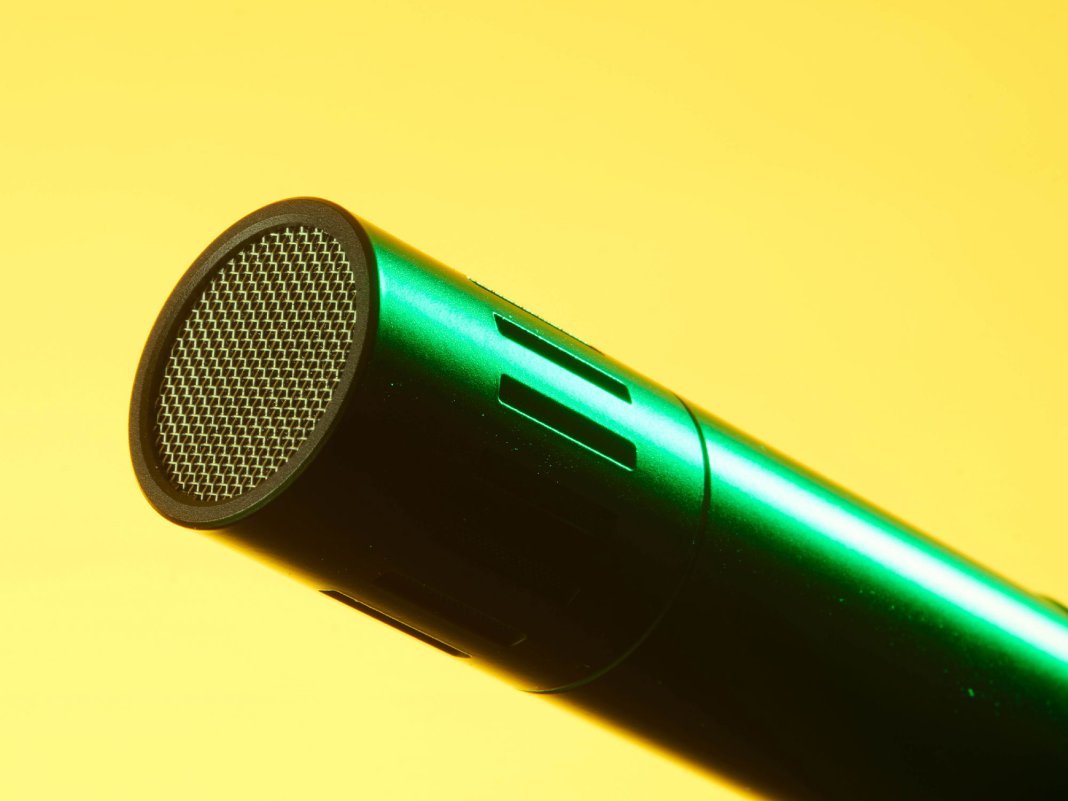
Microphone polar response patterns are simpler than they seem. The polar pattern of a microphone dictates where around the microphone it will pick up and capture sound, affecting the way you should and shouldn’t point the microphone at sources to get the best out of it, allowing you to control bleed from other sources and focus in on what you’re trying to record. You can use polar patterns to great effect to both capture sound when a source is within the polar pattern or reject sound when it’s not.
Thanks to the joys of physics and the phase polarity of a sound wave, different microphones offer distinct polar patterns, meaning different areas of rejection, which in turn assign them to different roles on the stage and in the studio.
There are three main microphone polar patterns: cardioid, figure-of-eight and omnidirectional. An omnidirectional pattern captures sound in a spherical shape around the whole microphone capsule front to back, left to right, up and down, and does so with equal pressure on all sides. A figure-of-eight microphone, however, captures sound from both front and back, but at opposite polarities to each other. Combining these two patterns leads to areas of the original omnidirectional pattern being cancelled where the opposite polarity in the figure-of-eight pattern overlaps, and results in the cardioid pattern.
Cardioid

Best for: Capturing sources in detail and reducing bleed.
Cardioid patterns are widely available on dynamic and condenser microphones, and selected for sources that need isolation from the world around them. For this reason, cardioid mics are widely used in live settings as they’ll pick up a singer’s voice but reject the screaming crowd in front of them, or for a snare drum to pick up the snare’s crack but not the washy hi-hat above it. The (in)famous Shure SM57 and SM58 microphones are dynamic cardioid mics and are widely used live.
Hypercardioid is another common polar pattern, offering more capture behind the mic, but superior rejection to the sides.

Varying the level of each pattern causes both more and less cancellation in areas of overlap, creating both supercardioid and hypercardioid patterns. These are as helpful for rejecting sound as they are for capturing it.
Many condenser microphones offer variable polar patterns in this way, allowing you to switch between cardioid, omni and figure-of-eight, some even offering patterns between the patterns for fine tuning. A famous example of this is the AKG C414, trusted for its clear, detailed, dynamic and rich sound. On the other hand, some condensers offer everything you need in a simple, cardioid package, like the Neumann TLM 103.
Despite the original discovery of the cardioid pattern via an omni and figure-of-eight design, many variable microphones use dual cardioid patterns to switch between the polar patterns for a more consistent, reliable and accurate result.
Ultra-directional

Best for: Detailed sources where mic placement is paramount, such as speaker cabinet cones, rooms, live vocals.
While technically supercardioid and hypercardioid polar patterns fall under this category, they deserve their own recognition. Much like a subcardioid removes a little of the figure-of-eight’s influence and allows a little more rear information, hypercardioid and super cardioid polar patterns feature a little less information at the expense of a little more rear information; mostly ambience and room sound, adding to the natural quality of the resulting sound! Some nicer condensers feature continuously adjustable polar patterns, like those from Lewitt, that’ll slip into and out of super and hyper cardioid as you shift from cardioid to figure-of-eight shapes.
Workhorse live mics like the Sennheiser e906 are supercardioid, not quite as extreme as hypercardioid, but are used for their directionality and rejection to the sides. This is especially helpful on a stage where guitar amps are facing forward, and the rest of the band lies to the left and right.
Figure-of-eight

Best for: Ambience, roominess, natural-sounding recordings where a little bleed isn’t an issue.
The original figure-of-eight microphone captures sound at the front and back of its capsule, but offers superior rejection to the sides than a cardioid, and of course, an omni. This makes it an ideal option for capturing a source and a bit of room sound — a vocal in an isolated space, for example. Another use is for a singer-songwriter style performance, where you can nestle a mic around chest height, with the capsules pointed at the singer’s voice and the other at the guitar, with superior rejection outside of those sources.
Ribbon mics, like the Royer 121 and sE VR1, are almost exclusively figure-of-eight because of their ribbon design. The capsule requires less pressure from both sides so the delicate ribbon can capture detailed sound.
Figure-of-eight can also be combined powerfully with other microphones with different polar patterns, which we’ll discuss later.
Omnidirectional

Best for: Capturing space as well as a source, or capturing multiple sources from the centre of a room.
Omnidirectional microphones are one of the best ways to capture the general ambience of a room, and as a dedicated room microphone for drums, orchestras and more. They’re also routinely reliable for speaking and broadcasting, as long as the environment isn’t too noisy.
Because of their ability to capture sound at all angles, omni microphones offer a natural result that helps to put the listener in an acoustic space. There’s always a little noise beneath the main source when using an omni microphone, either the ambience of the room or, depending on how tightly mic’d your sources are, bleed from other instruments.
Omni mics are best used when bleed isn’t an issue, and they’re especially useful for connecting spot mics together on drums or larger bands. Tread carefully when using omnidirectional in a live setting; you’ll get a whole lot of everything. But hey, no risk, no reward.
Subcardioid
Best for: Natural sounds in isolated environments; subcardioid can allow more spill and bleed into the mic.
Subcardioid is just what its name suggests. It’s less, uh… cardioid than cardioid. The influence of the pressure of the figure-of-eight shape is refined to reduce how much cancellation is happening to the initial omni shape. This makes the subcardioid like an off-kilter omni, picking up plenty of sound from the front and side, without as much rejection at the back of the mic. This offers more natural ambience, without capturing as much as an omni mic, offering more direction than an omni mic but less than a cardioid.
You’ll find subcardioid mics commonly in the broadcast world, sometimes attached to the end of goosenecks to easily manoeuvre them towards their source. They’ll capture the full frequency of a voice and the ambience that surrounds it. This makes them effective for acoustic instruments in a nice space, as long as there’s not too much bleed from other instruments to contend with! Subcardioid mics, like the Shure KSM9HS or mics with switchable polar patterns, like the Josephson Engineering C725, are perfect for capturing that blend of focus and ambience. For more focus, though, you’ll want a shotgun mic…
Shotgun

Best for: Film, TV and broadcast. Shotgun mics are also great for pinpointing sources like percussion, hi-hats, ride cymbals and so on.
Shotgun mics combine tight, directional polar patterns, like hypercardioid, and add more directionality with an interference tube. An interference tube acts like the aforementioned vents to shape the polar pattern, instead being a mostly acoustically transparent tube that filters sound more heavily on the sides than the front, allowing the polar pattern to be more directional. The open end of the tube allows in more sound, whereas the tube’s walls filter enough sound for directionality, but not so much that sound is blocked or bounced around entirely.
Shotgun mics work so well that they’re used most often in film, radio and broadcast as they can be positioned above a source at a distance and still have very little bleed and interference with sounds around it — when capturing an actor’s voice, for example.
The small amount that these mics capture from the rear and sides of the mic gives it a little natural ambience and prevents the sound from being too clinical.
While not used as often in music, shotgun mics can absolutely find a place in the studio and on the stage. The Aston Starlight is a small diaphragm condenser with incredibly focused sound, so much so that it features a laser for pinpointing your source. Additionally, RØDE produce some industry-standard shotgun mics for those dipping their toes in.
Combining polar patterns
Combo
Some more complex stereo mic arrangements can yield polished-sounding results with some know-how. As discussed earlier with the polarity relationships between microphones, you can expand on this with both polar pattern and polarity relationship in mind.
Mid-side micing is one of the more intriguing patterns, combining a figure-of-eight microphone and a cardioid mic for one supremely wide yet focused recording. Using a cardioid mic pointed directly at your source, add a figure-of-eight mic positioned sideways with the source at a null point.
In your DAW or on your console, multiply the figure-of-eight mic (console) or duplicate the track (DAW) and flip the phase of one of them. Flipping the polarity cancels out the shared sound, leaving only the difference that creates an extra-wide sound. This leaves you with a Mid track via the cardioid mic, and a Side track to blend to taste.

Blumlein Pair
Continuing with our figure-of-eight friends, the Blumlein mic technique uses two mics off-axis with each other. As opposed to omnidirectional, which captures sound at every angle, the Blumlein technique is two figure-of-eight mics used to fill in the main null points of each mic. The advantage here is that there are still four null points, providing a more focused, but still natural-sounding result. These mics can be aimed at your source or placed off-axis for more diffuse results.
AB, XY and ORTF
AB, XY and ORTF are commonplace stereo micing techniques that expand on the humble cardioid pattern.
AB
AB micing uses two cardioid mics spaced apart but pointed straight ahead, usually placed on either side of an object and delivers a wide stereo spread because of how directional the mics are. For example, AB micing with drum overheads usually has your mics placed somewhere over the top of the hi-hat, with the other mic placed near the ride. AB micing a choir would have mics on either side of the choir but pointed straight ahead.
XY
XY uses left and right mics again, but the mics are placed closer together and crossed over each other. The resulting sound is an equally strong stereo image, but less focus on the centre, making way for a spot mic or two to fill the gap/s.

ORTF
ORTF uses mics that face away from one another, as opposed to crossing over. The result has more width and retains a more consistent centre and stereo image overall.
Further experimenting
The best way to understand micing techniques is to experiment and see what you like. The classic polar patterns being cardioid, omni and figure-of-eight can get you very far, but a handful of specialist mics, whether intended for use in your field or not, can not only help elevate productions but also make for an easier mix with less bleed, or alternatively, enough life and ambience left in the recordings to leave them be!
There’s no right or wrong in recording, but there’s definitely right-er and wrong-er, so a little know-how goes a long way.