

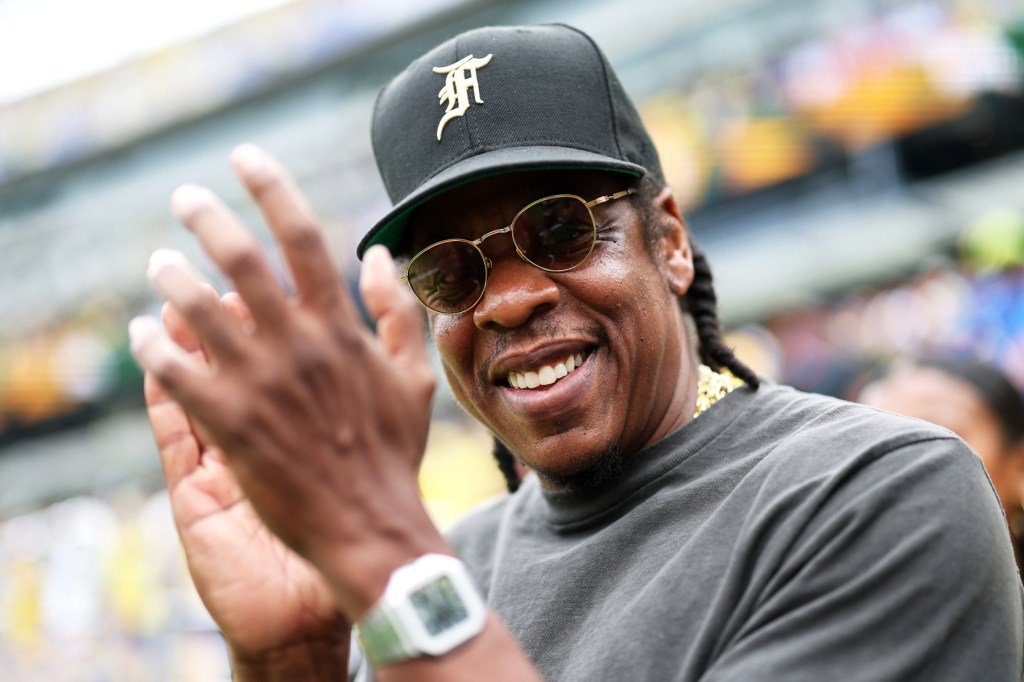
For three decades, Shawn “Jay-Z” Carter has been more than a rap star; he’s been one of Hip-Hop’s defining constants. A towering presence whose career has repeatedly produced culture-reshaping moments, the 56-year-old Brooklyn native’s superlatives would be a challenge for even the most knowledgeable Hov expert to list with complete accuracy. The 30th anniversary of his debut album, Reasonable Doubt, is a fitting opportunity to reflect on that legacy, while serving as a full-circle moment for his fans.
Although Jay-Z would go on to achieve even greater commercial success with subsequent releases, Reasonable Doubt remains the crown jewel of his catalog. Released on June 25, 1996, the album laid the foundation for a career that has influenced generations of artists and expanded Hip-Hop’s place in the global cultural conversation.
Long before his 1996 debut, the signs of greatness were already impossible to ignore. From sharpening his skills alongside Jaz-O and earning early co-signs from Big Daddy Kane to his legendary pool hall battle with DMX and unforgettable freestyle session with Big L on The Stretch Armstrong and Bobbito Show, Jay-Z’s ascent as one of the greatest lyricists the genre has ever known was fueled by moments that have since become part of rap folklore.
Yet the bulk of his most monumental accomplishments have unfolded over the past 30 years, as he evolved from fledgling emcee and alleged narcotics merchant to a chart-topping artist, business mogul, and influential sociopolitical figure.
As New York City celebrates with JAŸ-Z30 activations — including pop-up exhibits in DUMBO and lower Manhattan with exclusive merchandise inspired by Reasonable Doubt and his The Blueprint album, which turns 25 in September — and anticipation builds for a run of anniversary performances at Yankee Stadium, Los Angeles’ SoFi Stadium, London, and Paris, there’s no better time to examine the career, legacy, and lasting impact of an artist whose influence continues to push Hip-Hop’s borders while redefining what’s possible for those who follow.
To commemorate thirty years of Jay-Z’s career, we’re highlighting thirty of Hov’s greatest and most pivotal moments since the release of Reasonable Doubt.
Jay Teams Up with The Notorious B.I.G. on “Brooklyn’s Finest” (1996)


Image Credit: Nitro/Getty Images Jay-Z scored the ultimate cosign when The Notorious B.I.G. appeared alongside him on the Reasonable Doubt track “Brooklyn’s Finest,” a track pairing two of the borough’s favorite sons for the first time. Released at the height of Biggie’s fame, amid his reign as the King of New York, “Brooklyn’s Finest” saw Hov trading bars with his former classmate, proving he could go bar for bar with arguably the hottest lyricist in the game at that time. Representing Bed-Stuy and other sections of Brooklyn, the former classmates and future icons delivered a classic anthem that positioned Jay-Z as a prime successor to Biggie after his tragic death in the following year.
The Release of ‘Streets Is Watching’ Film and Soundtrack (1998)

Image Credit: Lester Cohen/Getty Images Jay-Z and Roc-A-Fella Records merged music and drama with the release of the 1998 film Streets is Watching. Starring Jay-Z with appearances from Damon Dash and his label’s supporting artists, Streets is Watching brought Hov’s greatest hits to life through visuals, with music videos for “Friend or Foe II” and the independently released “In My Lifetime” and “I Can’t Get Wit That” included in the film.
Jay’s Hard Knock Life Tour (1999)

Image Credit: Mitchell Gerber/Corbis/VCG/Getty Images In February 1999, Jay-Z and Roc-A-Fella Records embarked on The Hard Knock Life Tour in support of the rapper’s chart-topping, multi-platinum third studio album of the same name. Headlining the tour alongside fellow rap star DMX, Hov would also be joined by Roc-A-Fella artists Memphis Bleek, Beanie Sigel, and Amil, as well as supporting acts Method Man, Redman, and Ja Rule. The explosive lineup and competitive vibes between Jay-Z and X made for one of the definitive tours Hip-Hop has ever produced. It was documented in the classic 2000 film Backstage.
The Grammy Awards Boycott (1999)

Image Credit: Gregory Bojorquez/Getty Images Firmly establishing himself as a star with his third studio album, ‘Vol. 2… Hard Knock Life,’ Jay-Z achieved the coveted combination of critical acclaim and commercial success. Released in 1998 and certified multi-platinum by the year’s end, ‘Vol. 2’ drew rave reviews for its Annie-inspired title track and overall mastery, yielding Hov three nominations at the 41st Grammy Awards in 1999. He would win the first Grammy Award for Best Rap Album. However, despite his achievement, the real story was Jay-Z’s decision to boycott the Grammy Awards and not attend after the Recording Academy infamously snubbed Def Jam labelmate and collaborator DMX, who received no nominations despite his debut album It’s Dark and Hell is Hot dominating the charts. Hov’s show of solidarity with his oftentimes rival foreshadowed future instances of him directly challenging figures, platforms, and institutions that didn’t appear to be in tune with Hip-Hop culture.
Jay-Z Launches Rocawear (1999)

Image Credit: Scott Harrison/Liaison/Getty Images Jay-Z’s decision to co-found Rocawear with Dash marked a defining shift in Hip-Hop’s relationship with fashion and entrepreneurship. More than a clothing label, Rocawear became a visible expression of creative ownership, proving that artists could transform cultural influence into lasting business success. Rocawear’s widespread popularity helped redefine streetwear’s place in the mainstream before the brand was sold to Iconix Brand Group for $204 million in 2007. The company’s success helped inspire a generation of creatives to view their names, style, and audience as valuable assets to be leveraged.
Jay Premieres His “Big Pimpin” Music Video (2000)

Image Credit: Anthony Barboza/Getty Images At the turn of the new millennium, Jay-Z was as hot as any rapper on the planet. After releasing his fourth studio album Vol. 3… Life and Times of S. Carter in late December 1999, Hov rang in the new year with a second consecutive No. 1 album and a wave of controversy stemming from an altercation at a New York City nightclub. Instead of letting those bad vibes set in, Jay-Z took a flight to Trinidad to film the music video for his album single, “Big Pimpin,” featuring UGK in one of the greatest pairings of all time.
Directed by Hype Williams, filming took place during Trinidad’s annual Carnival celebration and featured unprecedented levels of stunting, resulting in a $1M production tab, among the highest for a music video at the time. While UGK member Pimp C declined to fly to the Caribbean for the shoot and opted to film his parts in Miami, the images of him rocking a fur coat in the dead of the heat are as visually cold as it gets.
Add Jay-Z and Damon Dash’s shameless show of debauchery and excess, and Bun B’s lyrical precision and commanding presence, and what you’re left with is the definitive snapshot of Roc-A-Fella Records in pop culture zeitgeist.
Roc-A-Fella Takes Over Hot 97 (2001)

Image Credit: Arnaldo Magnani/Liaison/Getty Images In January 2001, Jay-Z gathered a handful of Roc-A-Fella artists to showcase on Funk Flex’s Hot 97 radio show, resulting in one of the most memorable freestyle sessions that Hip-Hop has ever heard or witnessed. In between verses by Freeway, Memphis Bleek, Oschino and Sparks, H. Money Bags, and Young Gunz, Hov could be heard hyping his crew up, boasting of their impending dominance over the rap game and giving the public a preview of what the second wave of The Roc had in store.
Hov Headlines Hot 97 Summer Jam (2001)

Image Credit: Kevin Mazur/WireImage Having cemented himself as one of the most viable rap stars in the game, Jay-Z used his headline Hot 97 Summer Jam performance in 2001 as a coronation and victory lap. Donning a Latrell Sprewell New York Knicks jersey, the hometown hero put forth one of the most historic sets of his career, running through his catalog of hits while targeting multiple rappers, particularly Nas and Prodigy of Mobb Deep.
After unveiling a childhood photo of Prodigy dressed in dance regalia on the Nassau Veterans Memorial Coliseum jumbotron, and challenging Nas while previewing his scathing The Blueprint diss track “Takeover,” Hov revolutionized the concept of the “Summer Jam Screen” as fair ground for artists to wage war against their contemporaries.
The self-proclaimed King of Rap also pulled the ultimate stunt by bringing out The King of Pop, Michael Jackson, onstage for his lone Summer Jam appearance, a flex that doubled as a testament to the sheer magnitude of his star power.
Jigga’s MTV Unplugged Performance (2001)

Image Credit: Theo Wargo/WireImage Jay-Z’s cocksure lyrics and dominating persona built a preceding image for the rapper that has felt larger than life for much of his career. One instance in which all pretenses appeared to be removed was his MTV Unplugged performance of his The Blueprint album in November 2001. Backed by legendary Hip-Hop band The Roots, Hov, clad in a Che Guevara shirt and a beanie cap, gave an intimate set that not only drew fans closer into the music, but also the man behind it.
Jay-Z’s Angie Martinez Show Takeover (2002)

Image Credit: J. Shearer/WireImage As a man of minimal words outside of music, Jay-Z was as candid as he’s ever been during a massive August 2002 interview with Hot 97 radio personality Angie Martinez. Fresh from an overseas vacation, the lyricist addressed the pressing topics everyone wanted to know about, including his beef with Nas, the premature announcement of Cam’s Vice Presidency at Roc-A-Fella, and rumors of internal turmoil between himself and Roc co-founder Damon Dash. From famously challenging Nas to a Pay-Per-View rap battle, to dropping an impromptu freestyle over Foxy Brown’s “Stylin” instrumental, Jay-Z’s sitdown was the calm before the storm of The Blueprint 2, released later that November.
Hov Drops His S. Carter Sneaker and Mixtape (2003)

Image Credit: Andy Butterton/PA Images/Getty Images During the peak of Hip-Hop’s mixtape era, Jay-Z blessed the streets with The S.Carter Collection, a one-off project comprised of freestyles, b-side singles, and unreleased material. Released in April 2003, the mixtape was packaged and sold with Reebok’s “S. Carter I” sneakers as part of a limited, but wildly successful, run. Dropping freestyles on various instrumentals, including Joe Budden’s “Pump It Up,” Craig Mack’s “Flava in Ya Ear,” and 50 Cent’s “Can’t Be Done,” and premiering the future hit, “La-La-La (Excuse Me Miss Again),” Jay-Z added another classic body of work to his discography while simultaneously changing Hip-Hop fashion forever.
The Madison Square Garden Farewell Concert (2003)

Image Credit: Kevin Mazur/WireImage/New York Post Legend has it that Jay-Z’s initial goal wasn’t musical longevity, but to bow out after releasing one album and transition into ownership. Reality didn’t follow that game plan: Hov released several more albums after his debut, yet recurring questions about why and when he would hang up the mic loomed over his career throughout the years. The answer, it seemed, came in 2003, when Jay-Z announced he would retire from rap following the release of The Black Album that November.
Roughly a week after the album hit shelves and debuted at No.1 on the Billboard 200, Hov held a special farewell concert at Madison Square Garden, delivering a career-spanning performance, with appearances from Beyoncé, Mary J. Blige, Missy Elliott, Beanie Sigel, Memphis Bleek, Ghostface Killah, and Foxy Brown. The concert would be documented and included as part of the 2004 film Fade to Black chronicling the making of The Black Album and the lead-up to the farewell show.
Jay-Z Gets Appointed to Def Jam President (2004)

Image Credit: Johnny Nunez/WireImage In late 2004, Jay-Z elevated his profile as an executive by being appointed president of Def Jam Records. The position, which he officially began in January 2005, marked a full-circle moment for the rapper, whose Roc-A-Fella Records label signed a distribution deal with Def Jam in 1997. During his tenure at Def Jam, Jay signed off on the acquisition and album releases of several successful artists, including Young Jeezy, Rick Ross, Rihanna, Ne-Yo, and more. He stepped down from his role as Def Jam’s President after his contract expired in December 2007.
Hov Releases “Dear Summer” (2005)

Image Credit: Stephen Lovekin/WireImage Hints that Jay-Z’s retirement would be short-lived began in May 2005 with the official release of “Dear Summer,” an ode to the season he’d helped soundtrack for several years. Displaying his lyrical wizardry over production by Just Blaze, Hov gave a timely reminder of his dominance while sneering in the face of subliminal attacks on his name and character. Released as part of Memphis Bleek’s fourth studio album, 534, “Dear Summer” was received as an instant classic, leaving fans pining for Jay’s return.
Jay Ends Beef With Nas at Power 105.1 Powerhouse Concert (2005)

Image Credit: Scott Gries/Getty Images After a nearly decade-long rivalry and an epic rap battle with Nas, Jay-Z stood alongside his former foe onstage during Power 105.1’s annual Powerhouse concert in October 2005. The show’s headliner, Hov brought out Nas during his closing set at the Continental Airlines Arena in New Jersey, a public show of solidarity that marked the end of their beef. Performing “Dead Presidents,” which famously samples Nas’ own 1994 Illmatic single, “The World Is Yours,” together for the first time, Jay-Z and Esco provided closure to one of the most historic feuds in Hip-Hop history. The pair would later collaborate on Nas’ Hip-Hop Is Dead track “Black Republican,” Jay-Z’s American Gangster cut “Success,” and The Blueprint 3 track “BBC.”
Hov Returns From Retirement with ‘Kingdom Come’ Album (2006)

Image Credit: Bob Riha Jr/WireImage Three years after the release of his supposed swan song, Jay-Z lived up to his proclamation as the Mike Jordan of rap by coming out of retirement with Kingdom Come, the album that marked his return to the game he once dominated. Released in November 2006, the album received mixed reviews, with some deeming Hov’s performance more akin to Jordan in a #45 jersey than his Bulls’ first three-peat era. However, Kingdom Come continued Hov’s streak of chart-topping albums and proved that he couldn’t leave rap alone and that the game needed him, as he had previously declared half a decade earlier on The Blueprint single, “Izzo (H.O.V.A.).”
Jay-Z Launches Roc Nation (2008)

Image Credit: Kevin Mazur/WireImage In April 2008, Jay-Z stepped into the next phase of his career as an artist and executive with the launch of Roc Nation. Partnering with Live Nation, the rapper inked a 10-year, $150 million agreement with the entertainment company, a deal deemed groundbreaking at the time. With Hov at its helm, Roc Nation not only became a dominant force in music, but also in ancillary realms including artist management, music publishing, and touring & merchandising.
Hov Defends Hip-Hop During Glastonbury Performance (2008)

Image Credit: Tabatha Fireman/Redferns/Getty Images When Jay-Z was chosen to headline the famed Glastonbury, the news was met with shade from members of the rock & roll community, most notably Oasis’ Noel Gallagher, who publicly criticized Hov being picked as the first Hip-Hop artist to ever close out the festival. In a show of defiance, Jay-Z addressed the elephant in the room and took it by the horns, opening his set with a mocking, acoustic guitar cover of Oasis’ signature hit “Wonderwall” before launching into what would become one of his most historic performances.
Jay-Z Celebrates Barack Obama’s Inauguration with “My President Is Black” Performance (2009)

Image Credit: Zbigniew Bzdak/Chicago Tribune/Tribune News Service/Getty Images It took some fans a while to acknowledge and appreciate Jay-Z’s sociopolitical awareness, even though it had been woven into his music and actions since the genesis of his career. However, the rapper went a step further during Barack Obama’s presidential campaign, with Hov taking a special interest in the former Chicago senator’s run for the Oval Office.
Publicly endorsing Obama, Jay-Z formed a bond with the eventual President based on mutual respect and common values, so much so that he was in Washington, D.C. when Obama was sworn into office in January 2009 after a landslide victory over Republican candidate John McCain. During the weekend of Obama’s inauguration, Jay-Z would revel in the historic moment by performing his verse on Jeezy’s “My President is Black (Remix)” alongside The Snowman at Club Love in the nation’s capital.
Jay Brings Oprah Winfrey to Marcy Projects (2009)

Image Credit: Don Arnold/WireImage What’s better than one billionaire, you ask? Having the first Black female billionaire and a future billionaire revisit the latter’s formative stomping grounds to put the road traveled in perspective. That is what occurred in 2009 when Jay-Z brought Oprah Winfrey to NYCHA’s Marcy Houses in Brooklyn to show Winfrey his formative stomping grounds and what life was like before the fame. Filmed as part of an episode of The Oprah Winfrey Show, the interview helped mend Winfrey’s strained relationship with the Hip-Hop community and was yet another indicator of Jay’s influence and reach beyond the culture.
Headlines 9/11’s “Answer The Call” Benefit Concert (2009)

Image Credit: Kevin Mazur/WireImage Jay-Z’s The Blueprint will forever be tied to the Sept. 11 terrorist attacks on the World Trade Center due to the album being released on the same day as the tragic event. As a native New Yorker, Jay-Z felt the grief and despair engulfing the five boroughs hit close to home. He donated a portion of proceeds from The Blueprint Lounge Tour to 9/11 relief efforts and performed at The Concert for New York City.
In 2009, eight years to the date of 9/11, Hov headlined the Answer the Call Benefit Concert at Madison Square Garden. Held three days after the release of his eleventh studio album, The Blueprint 3, the Answer the Call concert featured a star-studded lineup and donated its proceeds to the Answer the Call charity, with Beyoncé, Kanye West, Rihanna, John Mayer, and Mary J. Blige joining him onstage throughout the evening.
Jigga Passes Elvis on Solo No. 1 Album List (2009)

Image Credit: Kevin Mazur/WireImage Jay-Z cemented his status as an American icon with the release of The Blueprint 3, which broke Elvis Presley’s record for the most Billboard No. 1 albums by a male solo artist when it debuted in 2009. As the holder of a record previously held by an American icon, Hov’s eleventh chart-topper proved he was truly on another tier and an American staple in his own right.
Hov Releases ‘Watch The Throne’ with Kanye West (2011)

Image Credit: Daniel Boczarski/Getty Images/VEVO Jay-Z’s partnership with Kanye West on Watch the Throne captured a rare moment when two of Hip-Hop’s most influential artists were operating at the height of their creative and commercial power. Released in 2011, the album expanded the genre’s sonic ambitions while serving as an examination of excess and cultural pride. More than a blockbuster collaboration, Watch the Throne reflected an era of fearless experimentation, luxury, and artistic confidence, setting a benchmark for future collaborative projects.
Jay Helps Bring Nets and Barclays Center to Brooklyn (2012)

Image Credit: James Devaney/WireImage Jay-Z’s minority ownership stake in the Brooklyn Nets represented more than a business venture; it reflected Hip-Hop’s expanding influence across sports, real estate, and civic identity. His role in the team’s relocation to Brooklyn and the opening of Barclays Center helped return major professional sports and a live performance arena to the borough. In 2013, Jay-Z sold his minority stake in the Nets for approximately $1.5 million to comply with NBA and sports-agency regulations following the launch of Roc Nation Sports.
The On The Run Tour (2014)

Image Credit: Kevin Mazur/WireImage/Parkwood Entertainment After famously revealing his relationship with Beyoncé on their 2002 collaboration “03 Bonnie & Clyde,” Jay-Z and his future wife’s music would intersect on multiple occasions. More than a decade after that first duet, Hov and Bey co-headlined their On The Run Tour, a slate of stadium shows across North America and France. Heavily incorporating the Bonnie & Clyde theme, the 2014 On The Run Tour was a massive success, grossing over $100 million in ticket sales. The trek planted the seed for Jay and Beyoncé’s super duo The Carters, their 2018 studio album Everything Is Love, and their second co-headlining tour, On The Run II, later that year.
Jay-Z Releases ‘4:44’ (2017)

Image Credit: Kevin Mazur/Getty Images/Roc Nation In 2017, Jay-Z unveiled 4:44, the rapper’s thirteenth studio album. Steeped in reflection, transparency, and vulnerability, 4:44 found Hov shedding layers off his long-held mystique, brandishing wounds old and new while acknowledging that a God MC can indeed appear mortal without losing their crown. The album landed atop the Billboard 200, extending his streak of No. 1 debuts on the chart to 14, the most by any solo artist at the time.
It also received Grammy Award nominations for Album of the Year and Best Rap Album, as well as several other nominations, including Record of the Year and Song of the Year. Arguably his most well-received solo effort since American Gangster a decade prior, 4:44 was more than an album; it’s a sonic portrait of a seasoned, accountable, and mature version of the emcee we’ve witnessed evolve over time.
Jigga Gets Inducted into the Songwriters Hall of Fame Induction (2017)

Image Credit: Nicholas Hunt/Getty Images Jay-Z’s induction into the Songwriters Hall of Fame in February 2017 marked a watershed moment for Hip-Hop. The first rapper ever welcomed into the prestigious organization—a long-overdue recognition of rap’s place within American songwriting— although Jay-Z did not attend the ceremony, Warner Chappell Music CEO Jon Platt accepted the award on his behalf, while former President Barack Obama delivered a surprise video tribute celebrating his lyrical brilliance, cultural influence, and groundbreaking career. More than another accolade, the induction affirmed Jay-Z as one of the most accomplished and influential songwriters of the modern era.
Shawn Carter Joins the Billionaires Club (2019)

Image Credit: Brian Ach/Getty Images/Something in the Water In 2019, Jay-Z officially reached billionaire status, fulfilling a prophecy made long before the numbers tallied. In Forbes‘ June cover story profiling the rapper and his business empire, the publication’s “conservative” valuation of his holdings exceeded ten figures, making him the first Hip-Hop artist to be named a billionaire. At that time, Jay-Z’s portfolio included ownership of Armand de Brignac champagne, a stake in D’Ussé cognac and Tidal, real estate holdings, investments, and publishing rights. As of July 2026, Forbes estimates that his net worth is $2.8 billion.
Hov Gets Inducted into the Rock & Roll Hall of Fame (2021)

Image Credit: Dimitrios Kambouris/Getty Images/The Rock and Roll Hall of Fame Being enshrined in the Rock and Roll Hall of Fame is one of the biggest acknowledgments of an iconic career, and Jay-Z became the third solo Hip-Hop artist to receive that honor when he was inducted in 2021. Presented by former United States President Barack Obama and comedian Dave Chappelle, Jay-Z delivered a poignant speech filled with memories of the people and moments that influenced him, from his mother, Dr. Gloria Carter, to musical peers, and even his former business partner, Damon Dash.
Carter Teams Up with REFORM Alliance and United Nations (2024)

Image Credit: Nicholas Hunt/Getty Images/The Reform Alliance In 2019, Jay-Z joined forces with rapper Meek Mill and professional sports team owners Michael Rubin, Robert Kraft, and Clara Wu Tsai to launch REFORM Alliance, a non-profit organization dedicated to prison reform, battling recidivism, and assisting those negatively impacted by probation and parole laws. Created with assistance from Jay-Z, Rubin, and others in Meek Mill’s battle to overturn a probation and parole violation, REFORM Alliance has proved to be a major political force, securing $50 million in funding and passing bipartisan bills in several states.
In 2024, REFORM Alliance helped pass a historic resolution at the United Nations Human Rights Council in Geneva after traveling to the Swiss city the year before to advocate for the human rights of current and former prisoners. Addressing the lack of human rights laws, guidelines, and specific practices for the social integration of the incarcerated and prisoners reentering society. The resolution was approved unanimously and marks the first time in history that the United Nations has given clear, human rights-based guidance for prison release and supervision.