


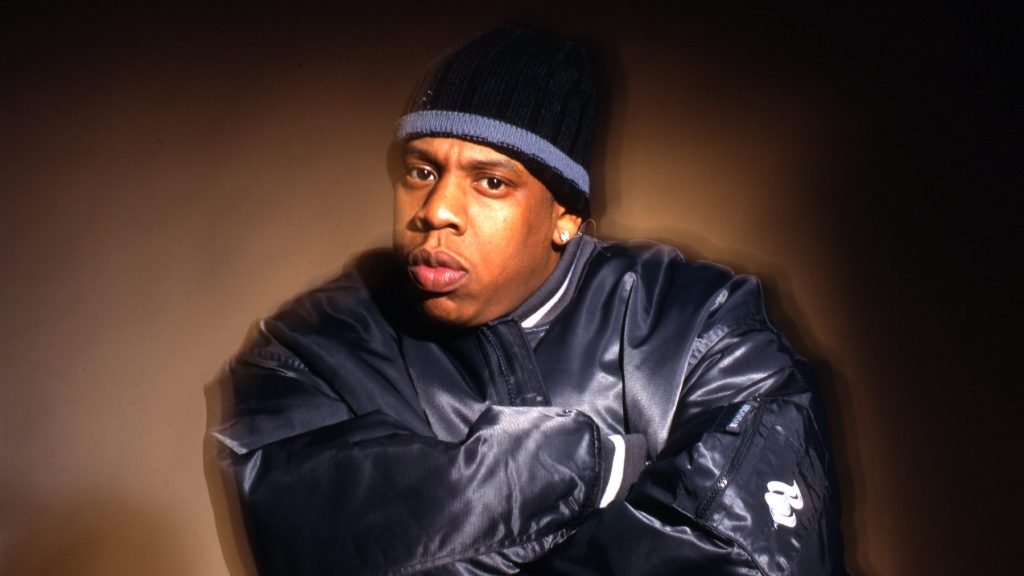
Today, Jay-Z is widely regarded as one of the greatest musicians of all time, who’s defined and transcended hip-hop culture to become a global icon.
The Brooklyn native has amassed a resume overflowing with milestones and achievements, from his business portfolio to his dominance on the Billboard charts. While his financial status and dealings as an executive have become recurring topics attached to his name, the nexus of his greatness stems from the music he’s produced throughout the past three decades, dating back to his 1996 debut Reasonable Doubt.
As much as a personal and artistic achievement as that album was, it arrived before the world truly caught on to Jay-Z’s brilliance, making it a precursor of what was yet to come. That promise would be fully realized with his sixth studio album, The Blueprint, a body of work that fulfilled his prophecy of rap supremacy.
Released on Sept. 11, 2001, The Blueprint was unveiled at a time when Jay-Z’s hometown and the nation as a whole were at a standstill. The terrorist attacks on NYC’s Twin Towers that same day loomed larger than an album release, with the world’s attention fixed on the five boroughs and in a state of uncertainty as to what would come.
For music fans, The Blueprint offered a brief reprieve from the mourning, chaos, and fear engulfing the country, resulting in intimate spins of what many listeners hailed as an instant classic. Merging his lyrical prowess with his penchant for radio hits, The Blueprint was more than a collection of tracks. It marked an unprecedented humanization of Hov at that point in his career, with emotionally raw moments providing a glimpse beyond the hustler ethos and bravado.
Selling over 427,000 copies in its opening week and debuting at No. 1 on the Billboard 200, The Blueprint was a massive success; it earned a triple-Platinum certification from the RIAA and yielded multiple hit singles and Grammy Award nominations, including Best Rap Album. Selected by the Library of Congress for inclusion in the U.S. National Recording Registry, Hov’s album is not only on the shortlist of best Jay-Z albums, but the greatest. Period.
In celebration of The Blueprint‘s 25th anniversary, we’re revisiting the album and ranking its best songs from top to bottom.
“The Ruler’s Back”


Image Credit: Brad Barket/Getty Images Jay-Z opens The Blueprint with “The Ruler’s Back,” an opening salvo that sets the tone with triumph and panache. Scored by Bink!, who flips a sample of “If” by Jackie Moore into a cascade of airy horns and slick percussion, the track doubles as a nod to Slick Rick, with Hov channeling its namesake’s royal aura.
“Jigga That Nigga”

Image Credit: Scott Gries/Getty Images Jigga catches his bounce on this aptly titled heater, beckoning listeners to the dance floor with the help of production duo The Trackmasters. Initially written off as a filler track by critics and fans alike, “Jigga That Nigga” gradually grew on both crowds, becoming a sleeper hit and party starter. The whimsical lyrics, cultural references, and infectious hook – “Jigga” chants included – are simply undeniable.
“All I Need”

Image Credit: Scott Gries/ImageDirect Crew love is shown on “All I Need,” a sterling deep cut that harkens back to The Roc’s apex as Hip-Hop’s preeminent dynasty. A sleek instrumental, driven by a sample of Natalie Cole’s “I Can’t Breakaway (From You),” is supplied by Bink!, with Hov taking a victory lap while showering his team with praise. Shouting out the entirety of his infantry, Jigga asserts himself as a general whose only regard and necessity is the loyalty of his soldiers.
“Hola’ Hovito”

Image Credit: Steve Eichner/WireImage First teased to the public at the end of the “Izzo (H.O.V.A.)” music video, the anticipation for this Jay-Z and Timbaland collaboration was high upon its arrival, and with good reason. For one, the track has a knock that instantly catches your attention, and Hov’s opening bars create the expectation for something epic, which the pair deliver upon, albeit while fudging the landing.
Comparisons to Michael Jordan and The Notorious B.I.G. rank among his most cocksure quotables on the album, and the sonics are worthy of stadium status; however, the hook was another pain point for some listeners upon initial spins. “Hola Hovito” falls slightly short of Jay and Timbo’s signature pairings, but remains a strong inclusion that still moves crowds.
“Izzo (H.O.V.A.)”

Image Credit: Scott Gries/Getty Images Jay-Z‘s commercial appeal was cemented with “Izzo (H.O.V.A.),” a monstrous hit where Hov bridged his crossover sensibilities with street credibility. Released as The Blueprint‘s lead single, the Kanye West-produced standout, which borrows elements of The Jackson 5 hit “I Want You Back,” catapulted up the Billboard Hot 100, scoring him his first Top 10 entry as a soloist.
“Girls, Girls, Girls”

Image Credit: Scott Gries/Getty Images Jay-Z‘s storytelling chops are flexed on “Girls, Girls, Girls,” as Hov waxes poetic about his harem of female companions in his two-way pager over production by Just Blaze. Powered by a sample of Tom Brock’s “There’s Nothing In This World That Can Stop Me From Loving You,” “Girls, Girls, Girls” continues The Blueprint’s subtle homage to Hip-Hop’s golden era, with Hov recruiting Slick Rick, Q-Tip, and Biz Markie for the hook.
“Never Change”

Image Credit: Jason Kirk/Getty Images Wails from David Ruffin’s “Common Man” are layered and sautéed by Kanye West on this reflective offering, as Jigga professes his love for the game and his refusal to stray from his core values. Recollections of his experiences and connections within the criminal underworld are anchored by an emphatic vocal contribution by West, who makes his first of many appearances alongside Jay on the track’s hook.
“Blueprint (Momma Loves Me)”

Image Credit: Scott Gries/Getty Images Hov gets personal on this autobiographical number on The Blueprint, mixing glimpses of his formative years with his rise in the music industry. From detailing the inner workings of his familial structure to doling out words of wisdom and vows of loyalty to Memphis Bleek and Beanie Sigel, Jay-Z sheds his Shawn Carter persona and emerges on this Bink!-produced closing number.
“Takeover”

Image Credit: Brenda Chase Lines are drawn and crossed on “Takeover,” as Jay-Z brings his rivalries with Nas and Prodigy of Mobb Deep to the surface. Addressing years of underlying tension with both artists, Jigga questions Prodigy’s street credibility and Nas’ relevance, picking up where he left off with his headlining set at Hot 97’s Summer Jam concert months earlier. Produced by Kanye West, “Takeover” was a bold gauntlet thrown by Hov and the catalyst for one of the biggest rap battles in hip-hop history.
“Heart of the City (Ain’t No Love)”

Image Credit: Scott Gries/ImageDirect With his back against the wall, Jay-Z goes on the offensive, sending shots at his critics and those opposing his reign. Heavy is the head that wears the crown, a position Hov laments atop a soulful backdrop produced by Kanye West, who reworks a sample of Bobby Bland’s 1974 hit “Ain’t No Love In the Heart of the City.”
“Renegade” Feat. Eminem

Image Credit: Kristian Dowling/Getty Images When two titans meet, the result is a moment crystallized in time that shapes history’s course. For hip-hop, the pairing of Jay-Z and Eminem marked such an occasion, as both were commercially successful artists regarded as generational emcees in the prime of their careers. On “Renegade,” the scene is the sonic equivalent of Robert De Niro and Al Pacino’s famed diner scene in the 1995 film Heat. Hov, like De Niro’s Neil McCauley, moves calculatedly on the track with a clinical approach, while Em, like Pacino’s portrayal of Vincent Hanna, brings bridled fury over his brooding, self-produced backdrop. Matchups of such magnitude can potentially fall flat under the weight of expectation, but “Renegade” is devoid of such a blemish, as its timelessness is only rivaled by debates over who had the superior performance.
“Song Cry”

Image Credit: Scott Gries/ImageDirect After years of a seemingly apathetic view of women in his music, Hov flipped the script with the solemn number, marking an unprecedented display of emotion for the notoriously guarded emcee. Produced by Just Blaze, the song earned a Grammy Award nomination for Best Male Rap Solo Performance and is regarded as one of Hov’s strongest and most pivotal performances of his career.
“U Don’t Know”

Image Credit: George De Sota/Getty Images Years before Hov joined the billionaire’s club, he foreshadowed that ascent in this explosive salvo, where he gives a play-by-play tutorial on how to transcend the streets to the corporate suites. Soundtracked by a raucous Just Blaze beat, “U Don’t Know” captures Jigga fully embracing the capitalist construct, with boasts of flipping illicit proceeds into legitimate wealth over riffs from Bobby Byrd’s “I’m Not to Blame.” When Jay boasts of accumulating and multiplying millions by the tens and the hundreds, the sentiment is one that resonates in the hearts of hustlers worldwide, a testament to an anthem that proves both magnetic and prophetic.