

Nigel Sylvester‘s wheels are spinning. Such a statement likely elicits less than a shrug given his prominence as one of the preeminent BMX athletes of a generation. Commonalities aside, that observation speaks more to his mind than his cyclical stunts, as the former phenom is taking inventory of the pieces that make up the 38-year-old man he’s grown into over the past two decades.
It’s a mid-summer afternoon, and Sylvester and I are in deep conversation about the improbability of a Black teenager from Jamaica, Queens, turning the world of extreme sports on its head despite having the odds stacked against him.
“It was difficult because the BMX world wasn’t in Jamaica, Queens,” Sylvester says of the cultural disparity within the sport during the ’90s and early ’00s. “We didn’t have any skate parks; there were no pros. There was no contest coming through there; there was no BMX media.”
Yet, if Sylvester has proven anything throughout his life, it’s that barriers and guardrails rarely temper his ambition or invoke fear in his heart. He’d rather reserve that energy to continue to blaze trails and build on his legacy, not only that of himself, but also that of his friend and mentor, late BMX icon Dave Mirra, who passed away by suicide in February 2016.
It was Mirra – himself a prodigious BMX athlete who also found fame in the sport as a youth – who helped discover Sylvester. The MirraCo founder plucked the rising star from NYC’s competitive BMX pipeline, took him under his wing, and signed Sylvester to his first professional contract.
To this day, his death continues to weigh on Sylvester. Not in the sense that it brings him down, but in that it drives him and gives him purpose to pay tribute to Mirra through the tutelage he provides to new waves of bicyclists, be it professional or recreational riders.
Sylvester’s popular GO Ride initiative, which recently took over Houston and Culver City, California, in July, keeps him connected to his roots, when there was nothing more enjoyable than cruising along the boulevards, avenues, and roads of his childhood stomping grounds. One key difference now is that he’s doing so with more style than ever, as his partnerships with Nike and Jordan Brand have kept him dipped, with his Brick By Brick and Brick After Brick sneakers sending shoe connoisseurs into a frenzy.
The buzz behind this year’s Brick After Brick collection was so hot that Nigel himself personally gifted Michael Jordan with a pair. According to Sylvester, the meeting was more than a viral moment; it was one of many experiences that fuel his drive to create, serve, and live.
“I’m dedicated,” he says of his outlook on the future. “I love what I do, and I’m able to contribute to the culture and to my community. I’m going to continue to do that in the multitude of ways that I’ve done. People can expect that I’m going to continue to operate at the level of excellence that they’ve come to know me for and continue to ride this thing out til the wheels fall off.”
VIBE: How did growing up in Jamaica shape your perspective and outlook on the world?
Nigel Sylvester: Growing up in Jamaica, Queens as a kid, I thought that was it. I thought that was the world, riding my bicycle around with my friends. Growing up in a Caribbean household, my parents were very strict. They had a lot of order in the house, which, in hindsight, I really appreciate because it gave me structure and discipline. Also, just riding BMX around the streets, I’ve seen a lot because I went from spot to spot. I’m outside all day, going from this park to this school to behind this church to grind this rail. In that environment, I met and rode with friends or people I was cool with in different neighborhoods. It introduced me to different ways of life, which I feel was definitely helpful and contributed to my growth. Jamaica, Queens, was fashion. It was music; it was graffiti. It was sports, hanging out with your friends; it was getting fly. Those things contributed to my childhood and how I grew up there.
How did riding your bicycle transpire into you becoming a BMX rider?
That started in Laurelton, Queens, man. For most kids, riding bicycles is a rite of passage. When a kid reaches around four or five years old and starts to get curious about bicycles. The bicycle is one of those things you learn and never forget. Also, being a kid, that’s your first vehicle. For a lot of those formative years, riding a bicycle give you freedom and a chance to explore. It’s fun; it’s the thing you do with your friends. I first fell in love with bicycle riding in my grandma’s driveway, and it became something I did in every free moment I had.
I would be on my bicycle riding, and my curiosity of, “Well, what else can I do on this bicycle?” started to be very present for me. I would see different cats in the neighborhood popping wheelies or making ramps, and that just excited me. I was like, “I want to do that,” and that led me down this path of really exploring what doing tricks on bicycles was really all about. That was my introduction to BMX riding. I started going to my local corner store and buying BMX magazines. I read the articles, cut out the photos, put them on my wall, and this love for bicycle riding became an obsession. I was like, “Man, I just want to do tricks all day.” It was exciting; it was like this adrenaline rush.
It was also a platform that allowed me to be creative. I had so much creativity inside me that I expressed through the bicycle. Whether it was how I set up my bike, how I painted it, or how I put my stickers on it. Whether it was the tricks I was doing, or how I wanted to style myself while I was on my bicycle. The bicycle gave me many platforms to be creative. Once I understood that you can actually ride BMX bikes professionally and do it at a very high level, I was like, “This is all I want to do for the rest of my life. This is it.” At that point, the dream was born, and I was probably around 12 years old at that point. At that age, a kid has enough muscle mass and energy to really throw the bike around. I’m starting to develop my physique, and I’m like, “Cool. I can really bunny hop higher and jump on ledges and rails now.” I was like, “Man, I need to figure this out. There was a core group of about 10 or 12 of us in the Laurelton, St. Albans, Springfield, and Rosedale area who rode BMX bikes, and we built this brotherhood. Those were some of the happiest, purest moments of my life because I found community with other young Black kids who were into BMX riding, and that meant so much. We would go and try tricks together. We’d push each other, challenge each other, celebrate one another, and that was so important. We had different BMX knowledge and would share it.
It helped fuel my dream of becoming a professional BMX athlete. I stuck with it and started to explore beyond Jamaica, Queens. Once I did, a whole other world opened up to me.
How was New York City’s BMX scene during the ‘90s and early 2000s, during your era?
Manhattan is where I really discovered the BMX industry and how it was present in New York City. I didn’t start going there till probably 2002. I was in 10th grade, and that was the first time I ventured out to Union Square, where a lot of the New York City pros, BMX media, and industry folks hung out. That was the meetup, and once I started going there and really entrenching myself in the scene, I started to understand how a pro or amateur rider would get a photo in a magazine. That is how you link up with top videographers, get your footage into a certain video, or even talk to a team manager or brand representative. The scene was vibrant; you would never know who you might meet. I remember my first time going out there. I met a handful of the New York City pros that I looked up to, and it was game-changing for me. These guys I would see in magazines or watch in videos; they’re actually in front of me.
Seeing that someone is real when you can talk to them makes the dream feel much more obtainable. It makes it that much more real. For me personally, the scene slowly adopted me. The guys around me saw how hard I was working, and they understood the journey I took from Laurelton to downtown Manhattan every single day. That’s not a short journey. I had to ride my bike from my mom’s crib to Jamaica Station, which was like a 25-minute ride, and then jump on a train for an hour just to get to the city. Doing that back and forth every day for years, and then once I got to the city, really doing my thing. They saw how hard I was working, respected it, and adopted me like one of their brothers, man. So the scene was dope. On certain days in the summertime, I’ll get to the city probably like 10 or 11 o’clock, and I wouldn’t leave till like 10, 11, or 12 o’clock. I was there for 12 hours, just riding around with the boys, trying tricks, filming tricks, having conversations, practicing, just searching for different spots to ride. Sometimes it was three or four of us, sometimes it was 20 of us riding. We were just having a good time, man.
We were just young boys, just chasing our dreams. Those were days that I wouldn’t trade for anything. Those days helped form me into the man I am today. There was a lot of creativity, innovation, and individuality. It had its downsides, too, as anything would. Cats would be beefing here and there, and everyone was competing for the same thing, in a sense, but that friendly competition and friction contributed to the overall outcome. The guys who were meant to be in those positions and receive those kinds of accolades and rewards were the ones who got on. Overall, it was a good time.

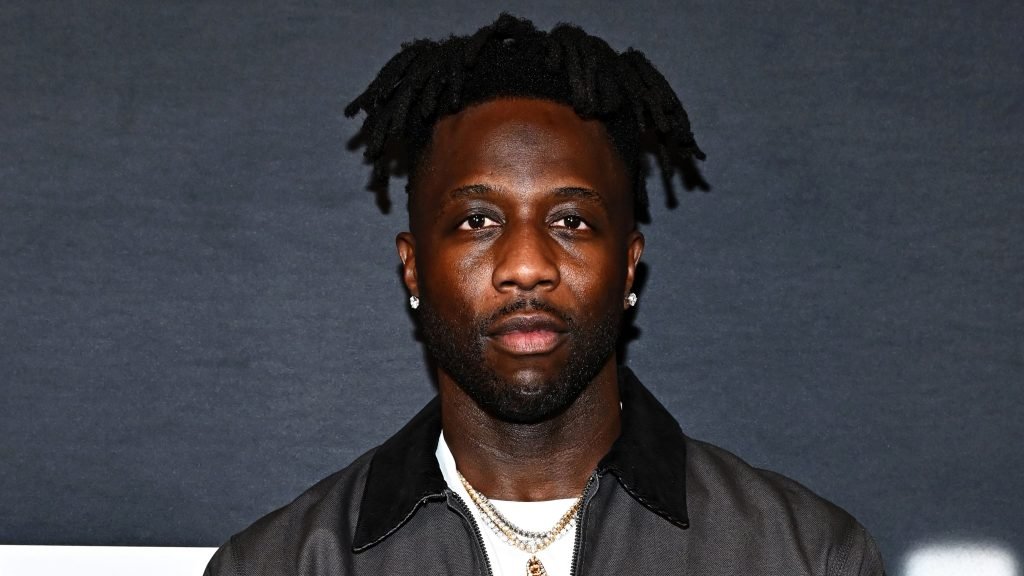
Nigel Sylvester attends the US Open Tennis Championship at the USTA Billie Jean King National Tennis Center on September 02, 2025 in New York City.
John Nacion/Getty Images
You turned pro at 18 years old. What were the steps or moments that led to that choice?
I ingrained myself into the New York City BMX scene in the way I did, which was a big milestone for me, because now I’m hanging out with the guys who are like the top guys in the city. Through that, I linked up with this videographer who was helping young talent in New York City get their big breaks, and through that relationship, I met with Dave Mirra.
Legend.
Super legend, God rest his soul. When I linked up with him, he was at a point in his career where he was like, “Man, I’ve accomplished so much. Now, I want to further cement my legacy and create a platform that I can help the next generation of bike riders coming up.” He signed me to the brand right after my 18th birthday. When he signed me to MirraCo Bikes, he signed me to a professional deal, which classified me as a professional BMX athlete. He turned me pro, and that moment was so surreal for me because those six years, from 12 to 18, were so pivotal in my life. Dave Mirra was one of the north stars to me. He was the biggest BMX athlete in the game. He was on TV all summer. He had billboards, all the gold medals. He had bikes in stores. He’s the Michael Jordan of BMX riding. He was one of my idols, for sure. So to have him be the one to turn me pro is one of those things that’s very surreal. It reassured me that I was aligned. It reassured me that I was on the right path and doing the right thing. It was a complete game-changer for me because now I went from this kid who’s this amateur rider in New York City, doing my thing, and everyone knows that I’m gonna be next up in some capacity. But I don’t think anyone would have seen that coming, and being introduced to the BMX world as a professional athlete with the cosign of Dave Mirra. It was just undeniable, man. It set me off on a path that I’m still on now. When I think about going from that moment all those years ago to now, it gives me goosebumps. I’m just very grateful. It’s one of those things where I know I’m here for a reason, and I’m meant to be here.
Dave Mira was for you what Eminem and Dr. Dre were for 50 Cent.
Exactly.
I could imagine going from being 12 years old to being this BMX prodigy. How did you deal with the hype, the upside, and the downsides of that?
That’s a really good question. I have to credit my family and my friends for my foundation. I’ve had really incredible people around me my entire life, but coming up in those teenage years, certain people didn’t understand what I was doing. I would get called a white boy or certain things of that nature. That definitely affected me, but I channeled it into riding my bike because I have a radical belief in myself.
I just felt it, and that made me develop thick skin for criticism. I felt people were just making fun of me ’cause they didn’t understand what I was doing. I had to push through all that.
Then, turning pro in the way that I did, of course there were other guys who were gunning for that same position. So once I got it, I started to get hate from that side as well. I felt misunderstood in different parts of my life for a long time. But again, I had this unwavering self-belief and faith in God that helped me push through.
You know what they say: if no one’s hating on you, then you’re probably not going hard enough. If you’re doing something that’s elevated, the hate is going to come with it. You’ve got to just push through it.
I really rest on the fact that I developed that thick skin early on in life, even before I turned pro. That has helped me throughout my entire life because, as you can imagine, as I’m putting numbers on the board, W after W, of course there’s going to be hate. They say it’s non-believers coming from every direction, but that’s just a reminder that I’m doing what I’m supposed to do, and I’m doing something right.
I want to talk about Dave Mirra’s death, how that impacted you, and how you’ve moved forward.
That was tough, man. Dave and I shared an agent. I remember I was in Southern California, and down at the agency. We were meeting about one of my projects, and there was actually a photo of Dave on the wall. My agent had walked out of the meeting because he had been called out, and I’m sitting there in the office just looking at this photo of Dave on the wall. Another surreal moment because I was in my early 20s at that point.
10 years prior, I’m just a kid in Jamaica, Queens, trying to figure it out. 10 years later, I’m sitting in my agent’s office, Dave’s photos on the wall, and I’m signed to MirraCo Bikes. I talked to Dave all the time. I’m literally living my dream. I’m a sponsored professional BMX athlete. I’m in California, and I share an agent with the greatest BMX athlete of all time. When my agent walked back into the room, he told me the news. We were just in shock. Complete shock. A weird airiness filled the entire office, and people didn’t even know what to say. The entire BMX world was in shock. No one really knew what to do.
We lost someone so loved, who contributed to so many people’s stories, who changed the industry forever. Someone who affected so many lives and so many families.
It was difficult, for sure. I mean, to even think about it now, it just gives me goosebumps and whatnot. I think it’s one of those things that, for me personally, every time I get an opportunity to celebrate him and celebrate his legacy and to speak about how he’s positively impacted my life, I’m going to do it.
I actually have one of his signature bikes parked in my crib right now. I see her every day. I have a constant reminder of him in my life, you know, and it’s a self-reminder. It’s a reminder of where I came from, where I’m at now, and the endless possibilities of my love for BMX.
When did you realize that you didn’t just want to be one of the best riders, but you wanted to build a brand?
I realized early on, honestly, man. I realized shortly after I turned pro, I could take BMX riding so much further than just being a BMX athlete. My ambitions to create content, design products, host events, and contribute in more ways than just bike tricks became very real.
I got sponsored by Gatorade at 20, and through that partnership, I was able to execute some of those ambitions. That just helped fuel those ambitions even more. BMX riding and the bicycle are my vehicles for exploring the world in many different ways, and that’s what I’ve been doing my entire career.
You recently celebrated 20 years as a Nike athlete. Can you describe your relationship and history with the brand and how it’s grown since you first signed?
Nike is my longest-lasting partnership, and as a whole, Nike has been incredible to me. As a kid growing up watching so many iconic Nike athletes do their thing, from MJ to LeBron to Serena to Deion Sanders to Bo Jackson, there are so many iconic Nike athletes.
It was always a dream to sign with Nike and to get your own signature shoe. That’s probably every kid’s dream growing up, if you were into sports or whatnot. Signing to Nike shortly after I signed to MirraCo Bikes, I felt like I was a first-round draft pick, really and truly. Signing to the best BMX brand, signing to the best sneaker brand, and doing it my way. Going about it in a very unconventional way. BMX riding as a sport is non-traditional.
And then me going about that sport in an unconventional way to accomplish the things that I accomplished early on, it was exciting. It was groundbreaking. It was literally blazing my own path. And that relationship with Nike was a big part of that.
The things we did together early in my career were phenomenal, and the ripple effect of those things helped shape my career and my journey overall. It’s a partnership that I hold very dearly to my heart, and to see what that partnership has evolved into today, it’s one of those things that you can only dream of and wish for. You can work as hard as you possibly can, and you don’t know if it’s actually going to happen or not. So for it to happen, it means the world to me.
In 2021, you became the first BMX athlete signed to Jordan Brand. Beyond making history, what did that partnership symbolize to you?
That partnership was similar to when I signed with Dave Mirra and MirraCo Bikes. I say that because with MirraCo Bikes, Dave himself approved me being signed and welcomed me in. Signing with Jordan Brand is very similar. MJ has to approve which athletes get signed. To know that another GOAT in the world of sports and this culture in general was seeing what I was doing, believing in what I was doing, and wanting me to be a part of this very elite and prestigious roster, it just reminded and reassured me that I was on the right path. That I was in the right place doing what I was supposed to be doing, and every decision I made up to that point was the right thing.
Michael Jordan is, in my opinion, the greatest athlete ever to do it, on and off the court. So being part of what he’s built is directly tied to the story he’s telling and the energy he’s putting out into the world. It was one of those stamps.
Years from now, when people talk about Nigel Sylvester, what do you hope they say meant the most?
My dedication and love to my craft and to my community.