


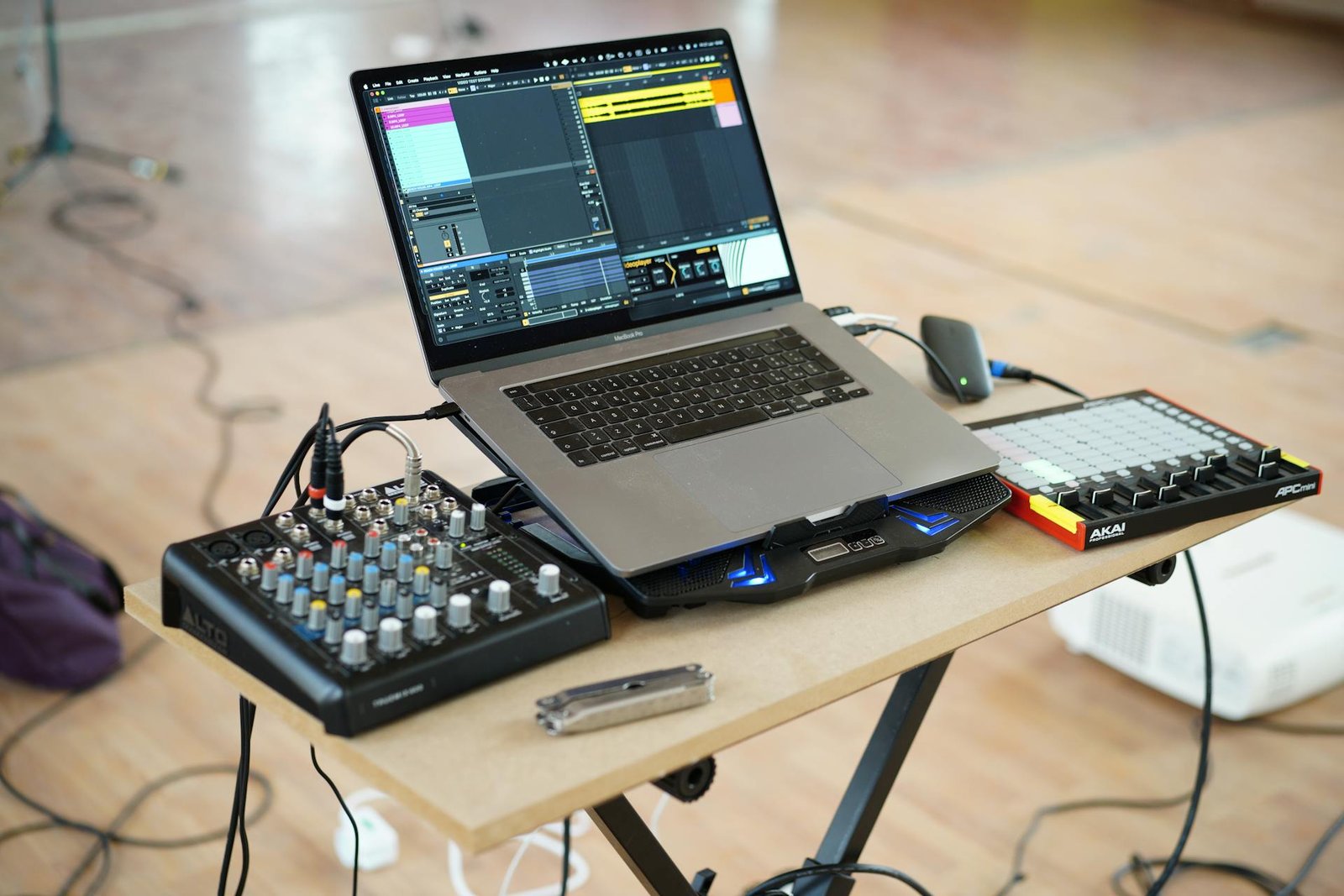

So you’ve decided to produce music. Congratulations, you are now one software update away from greatness and three unfinished projects away from questioning your life choices. Making a solid track doesn’t require you to have a mansion studio or a Grammy winning mentor, but it does require some key ingredients with a little bit of patience and the ability to stop tweaking the high hats at 2:00 AM. Making a solid track takes time so let’s take a look at how you can do it.
Have a clear idea before you touch anything.
Before you open your DAW and scroll down through 4000 presets, ask yourself one question. What am I actually making? A club track? A sad indie ballad? Something that sounds like it belongs in the late night car rides? You don’t need a full plan, but having a rough direction saves hours of aimless clicking and emotional damage.
A DAW you actually understand.
Logic, Ableton, FL Studio, Pro Tools. Pick your weapon. The best DAW is one that you know how to use without watching a tutorial every 5 minutes. You need to learn the shortcuts, learn the basic routing, and learn how not to accidentally delete everything. Comfort equals speed and speed equals finishing tracks.
Decent monitoring so you’re not guessing.
You can’t fix what you can’t hear, so a solid pair of studio headphones or monitors will instantly level up your mixes. No, your laptop speakers do not count. Neither do your old gaming headphones from 2016. You don’t need top tier gear, you just need something that doesn’t lie to you about bass and highs.
A strong core sound.
Every solid track has a backbone. It could be a chord progression, a baseline, a drum groove, or a vocal melody. Find that one element that makes your head nod and build around it. If nothing feels exciting to you, then stop adding layers. Go back and fix the core, because glitter doesn’t save weak foundations.
Vocals that don’t sound like an afterthought.
Whether you’re working with your own voice or you’re hiring someone, vocals can make or break a track if you’re producing music. A good vocal brings emotion, personality, and something that listeners can latch onto and feel good about. Some producers collaborate with singers directly, while others use platforms like Voqlr early in the process to find vocalists that match their sound and save time chasing the right voice.
Arrangements that keep things moving.
If your track feels boring, it’s probably not the sounds, it’s probably the arrangement. Something should be changing every 816 bars, and that could be a new element, a dropout, a filter sweep, or even some silence. Listeners do have short attention spans, so you need to give them a reason to stay to hear the next part. If your arrangement is a solid one, you’re going to have a solid track in the end, but you do need to trust that you know what you’re doing.
Restraint. Yes, this is the thing you need.
More tracks does not equal a better song. If you’re at 72 layers and still not happy, the problem isn’t a lack of synths. Mute things, delete things, leave space. A clean mix starts with not overcrowding the song in the first place. Overlaying too many sounds is actually a bad thing for your music, and the goal here should be to make your music feel good. You don’t want to keep pushing and keep pushing only to have needed that restraint from the beginning. Trust yourself that you can get this right.
Basic mixing skills.
This doesn’t have to be anything fancy and you don’t need to be a mix engineer, but you do need to have the basics. There should be levels that make sense and you should be able to pan for space and enough EQ to remove mud. There should also be compression that doesn’t squash the life out of everything. If your mix is sounding off, it usually is. So trust your ears, take the breaks and stop mixing louder just because it feels exciting.
Reference tracks.
We promise you this is not cheating. Pick one or two professionally released tracks in a similar style and compare. How loud is the base? How bright are the vocals? How full does the drop feel? Referencing keeps you grounded in reality instead of the fantasy where your rough mix somehow already sounds mastered. Referencing isn’t cheating if you’re looking at other tracks, it just means that you’re comparing how your sound feels to everybody else’s. This is a good thing, and it’s a positive to help to keep you on track with your goals.
The ability to call it done.
This is the hardest one. There will always be something you could tweak. At some point you have to stop, bounce the track and let live in the world. Finished and released beats perfect and unfinished every single time. Growth comes from moving on, not endlessly polishing the same loop. You have to have the confidence in your music to be able to say that the track is finished, and even if that means going back over it again after you put it down for a few days, that’s fine, but you do need to say that it’s finished. There’s always going to be something that you can tweak, but the key here is to make sure that you’re not going back 50,000 times.
Producing music is equal parts creativity, patience, and problem solving. Some days you’re going to have everything flowing nicely and other days nothing’s going to sound right and you question why the snare hates you. Personally you should always stick with it though. Finish your tracks and laugh at your old ones and keep learning. Solid tracks aren’t magic, it’s just the result of doing the basics well and not giving up because it doesn’t sound right. Now close your browser and go make something.
Photograph by Giuseppe Di Maria