


Ad feature with Focusrite
“When I was a kid, I had a dream that I was in a studio,” recalls TIEKS, real name Mark Anthony Tieku. “Whitney Houston was in the vocal booth, while I adjusted some gear. I’m not even sure how I knew what a studio was at that age, but I remember waking up with a distinct feeling of incredible joy. Whatever it was I was doing in that dream, I wanted to do more of it.”
Since then, the British hitmaker and engineer has worked with Chaka Khan, Florence + the Machine, The XX, Ed Sheeran, Jax Jones, Jessie Ware, Jess Glynne, and many more. For TIEKS, these collabs are validation that he was right to follow that dream: “When you work with people of that level, you get it”.
Now, just over a decade on from breakout smash Sunshine, TIEKS is putting the pieces of his debut album together—whenever he finds the time, that is. “Just when I get a window where it’s like ‘right, I’m going to do three weeks of just working on my stuff’, another project comes in,” he says. Alongside recently mixing an album for long-term collaborator IAMDD and an EP for rising vocalist Scarlett Fae (“it’s amazing and all played to tape”), he teases that his first LP will span dance bangers to soundscapes.
One iconic record has guided him throughout: David Bowie’s 1977 album Low: “I’ve been trying to make a modern version of that,” TIEKS says; “one half was commercial pop records and the other is like a movie soundtrack”. Despite the contrast, he’s confident his album “will all work together”.

Key to achieving this cohesion has been working with songwriters he admires, including Clementine Douglas, and reuniting with Dan Harkna for the first time since their huge 2015 collaboration Sunshine. “Doing an album is like ticking a box of something I should have done ages ago,” he considers. “The goal is to get it out of my system… I’m not trying to sell a million records. I’ve done that, and it pays the bills, but it’s a really corrosive mentality to get into.”
Having learned from experience, TIEKS has a different mindset. “I’m just trying to make the best records I possibly can. If I do that and people love it, that’s amazing, but if no one loves it then at least I’ve done it. I can park it and move on to something else.”
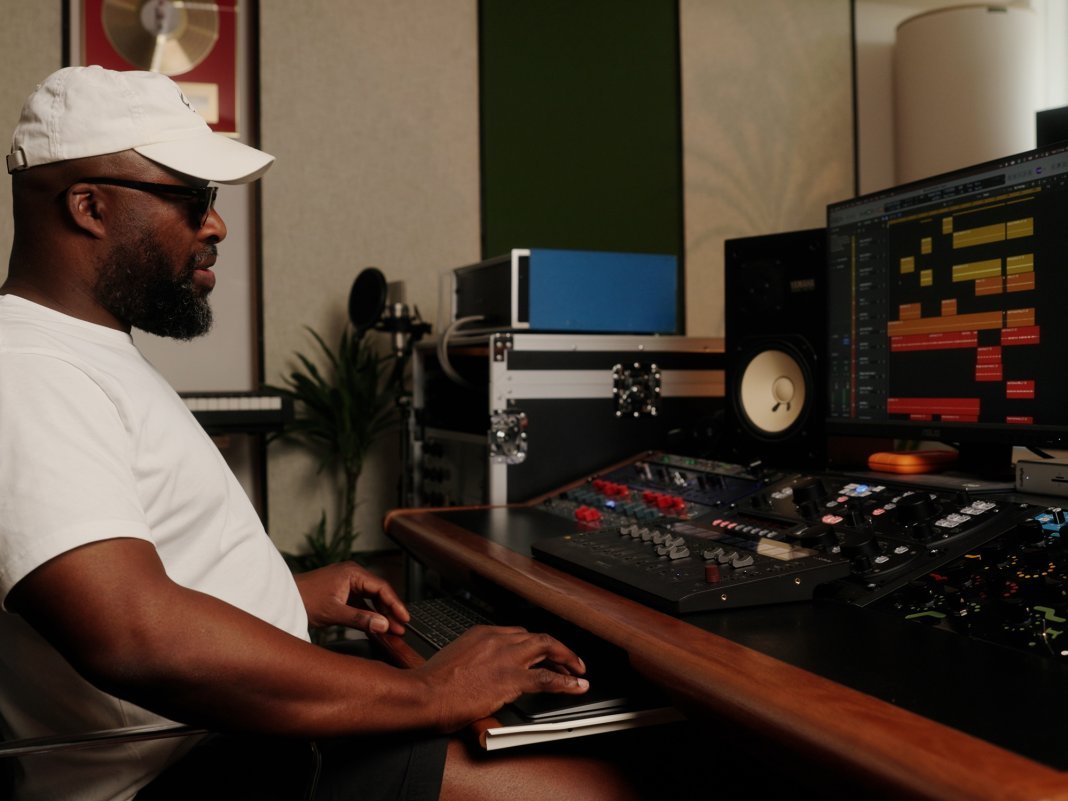
From a creative point of view, kitting out his London studio with Focusrite gear has helped to speed things up. “I’ve used it for years,” TIEKS reflects, having once shared a studio in a flat with Grammy- and BRIT-nominated producer Jax Jones. “He had an ISA One, and that was our main quality microphone preamp [mic pre] in our room,” he recalls. “We did loads of records in that place.”
After moving out of his last studio, TIEKS ended up mixing 30 records with just some headphones going into a Focusrite Scarlett. He happily continued using it for six months while his new studio room was built: “I had gone from mixing everything on an SSL [mixing desk], and none of my clients knew because I didn’t bother telling anyone”.
Upon moving into his new gear-filled studio space, which is named Reality Exists (“I wanted to give artists a place to come where they can break out of their laptop and see how it feels”), TIEKS began looking at RedNet converters for his front end. “Choosing the interface for the room was such a long process, and I went through loads of options,” he admits. By coincidence, he had a chat with Focusrite, and they had a new product, ISA C8X. “It was perfect,” he says, adding that the company’s “great history” and the RedNet conversion informed his decision too.

TIEKS hasn’t looked back since: “The thing I use most every day is the ISA C8X. My initial thought was, ‘it sounds good, but it probably isn’t going to be able to do all the things I need it to do’, but it’s so feature-packed it’s ridiculous”. Alongside running all of his gear, it connects to his converter. “It sounds crystal clear,” he says, adding that he regularly does overdubs through digitally-controlled mic pres. “It’s all on my phone as well so I can go in any part of the room or go outside and control them”.
Moreover, he likes that “everything has been thought about—“even down to if I want to make a stereo channel; you can just press two of the mono channels at the same time, and you’ve got stereo channels. Everything is so simplified.”
As for his own creative processes, they differ depending on whether TIEKS is working on solo music or for another artist. “With my own stuff, the burden of the writing is on me,” he considers, “so I’m acting alone at the inception stage, and then let others in when I’m happy”.
When it comes to collaborating, he believes that having an open conversation is essential. “Often, producers will take things to a certain level, and if you don’t have that conversation with them about what they are aiming for, you’re going to be all at sea”.

He continues to describe his role when it comes to mastering a release: “a lot of the projects I work on, the productions are amazing but, sonically, it’s not where it needs to be in order to compete with all the stuff that’s out there… so I’m regularly getting a hammer and chisel out, building FX Chains and constructing tonalities”.
This human approach to making music has always been hugely important to TIEKS. “Everything’s played,” he says. “I don’t use any AI in my music. I’ve never tried, and I don’t want to try because, for me, making music is about the journey.” While he appreciates that it can make trying to get ideas out easier, his viewpoint is conclusive: “I don’t want anything to interfere in my process. Even when I’m pulling teeth sometimes in the studio, I need those days.”
Learn more about Focusrite’s ISA C8X

Ben is a freelance music journalist based in Cambridgeshire, UK, with 10 years of experience and an interest in all genres. He spends most of his time at gigs and festivals, and regularly writes features, profiles and reviews for MusicTech, Guitar.com, NME, Mixmag, Rolling Stone UK and Beatportal.