


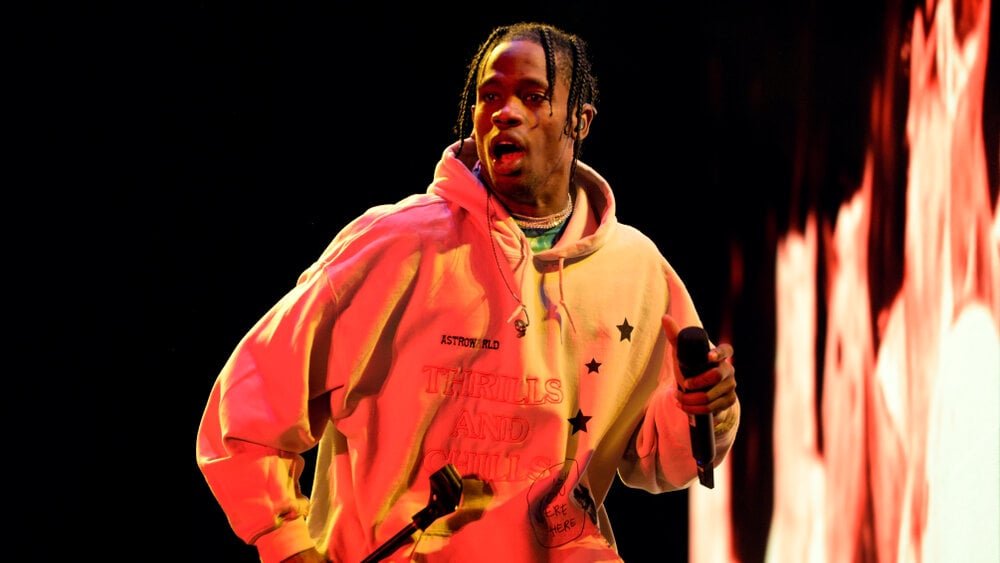
The copyright infringement lawsuit accusing Travis Scott, SZA, and Future of ripping off a demo song to create their 2023 hit Telekinesis has survived a bid to have it thrown out of court.

As MBW first reported in January 2025, Roc Nation-signed singer-songwriter Victory Boyd and her publishing company The Songs of Glory filed suit against Scott, his collaborators, Sony Music Entertainment and other labels and publishers, alleging that they copied her song Like The Way It Sounds to create Telekinesis.
The track, released in July 2023 as part of Scott’s US No.1 album Utopia, has been streamed over 537 million times on Spotify alone. According to the court filing, Scott has performed the song live at least 145 times since its release.
In a 17-page opinion filed on Monday (March 9), which you can read in full here, U.S. District Judge Mary Kay Vyskocil partially trimmed the case – but left Boyd’s core copyright infringement claims intact.
The judge threw out several elements of the complaint. Boyd’s demand for an accounting of revenue derived from the alleged infringement was dismissed, with the court ruling that such a claim is preempted by the Copyright Act, which lays out its own framework for determining profits.
Copyright claims brought by Boyd’s publishing company, The Songs of Glory, were also tossed, as the firm does not appear on either of Boyd’s copyright registrations.
Judge Vyskocil found that the defendants’ arguments were “somewhat confused” and that they had come “nowhere near” shouldering their burden of proving the registrations invalid.
The judge also noted that because Boyd’s first copyright registration only took effect in December 2023 — months after Telekinesis was released — statutory damages and attorney fees will not be available for any claim based on infringement that began before that date.
Crucially, however, the defendants had argued that Boyd’s copyright registrations are not valid because she knowingly omitted material information about the work’s authorship – specifically, that Kanye West (now known as Ye) should have been listed as a co-author.
Judge Vyskocil found that the defendants’ arguments were “somewhat confused” and that they had come “nowhere near” shouldering their burden of proving the registrations invalid. The judge noted that the defendants’ entire argument rested on a single paragraph of the complaint, and that they were effectively asking the court to “make a cascading series of determinations at the pleadings stage that could implicate the rights of various parties… in ways that are rather difficult to predict.”
The court also declined to rely on the complaint’s references to West’s “chords and melodies” to defeat Boyd’s claims, noting that it could not determine at this stage whether those contributions were independently copyrightable.
As a reminder: Boyd alleges that in 2019, she wrote lyrics and completed a demo – recorded as a voice memo – after West provided her with chords and melodies.
West later shared that demo with Scott in a studio in Wyoming, Boyd claims, and Scott subsequently used it with his collaborators to create the allegedly infringing track.
Boyd was credited as a co-writer in the metadata of Telekinesis provided to streaming platforms – but claims she was unaware the track had been commercially released and had planned to finish her original work and release it through her deal with Roc Nation.Music Business Worldwide